


The Indian Institutes of Technology (IITs) are counted among the most prestigious engineering institutions in the country. Today, India has 23 IITs, with IIT Madras holding the top spot in the NIRF rankings. But before talking about where these institutions stand now, it’s worth looking back at how the IIT journey began. The history behind their creation is quite remarkable.
The idea of IITs emerged before independence
The concept of establishing world-class technical institutes in India was being considered even before the country gained independence. After 1947, there was a clear need for advanced institutions that could help India grow in the fields of engineering and modern technology. To work on this vision, the Sir Jogendra Singh Committee was set up. In 1946, the committee proposed the creation of an institute in India modeled after the famous Massachusetts Institute of Technology (MIT) in the United States.
India’s first IIT
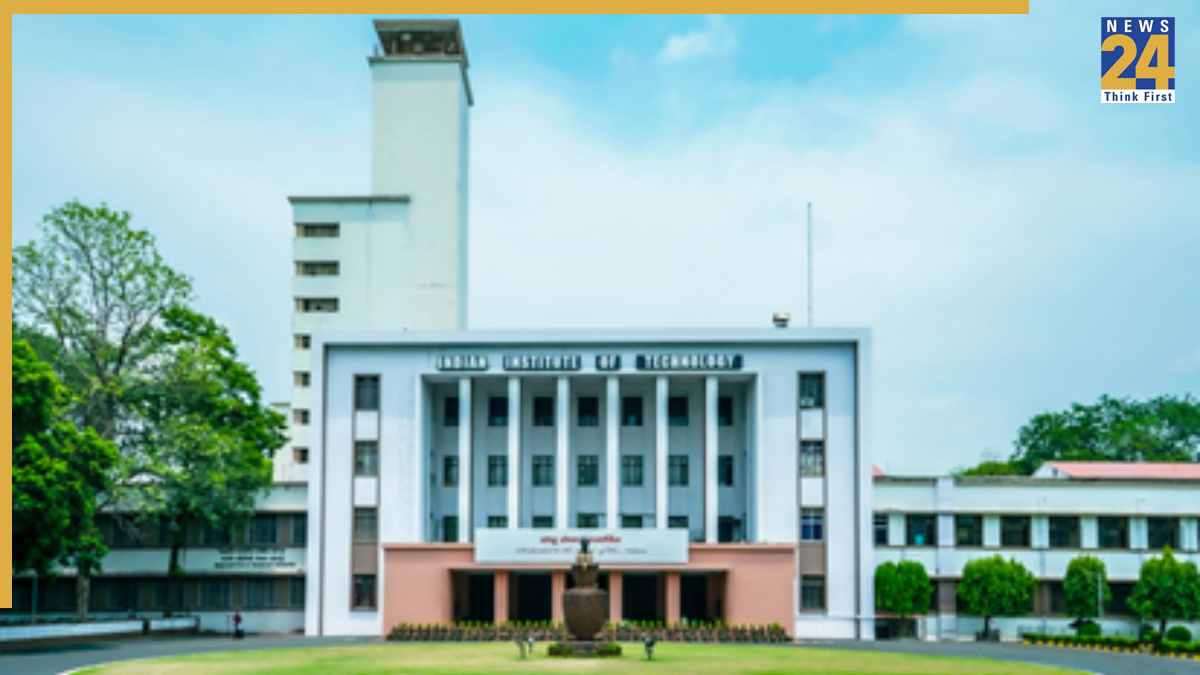
After independence, the government chose to set up the first IIT in Kharagpur, West Bengal, during 1950–51. The site selected for this institute was unusual—Hajli Detention Camp, a former British-era prison used to hold political detainees and freedom fighters. Revolutionaries like Ramakrishna Biswas had once been imprisoned within its walls.
There were several reasons behind choosing this location: the area had a large, ready-to-use structure, it was under government control, and converting a place associated with India’s freedom struggle into a hub of knowledge carried deep emotional meaning. On August 15, 1951, India’s first Education Minister, Maulana Abul Kalam Azad, inaugurated the institute and famously said that it was not just an IIT, but a “temple of modern India.”
Classes began inside prison barracks
In the early years, classes at IIT Kharagpur were held in the old prison barracks and administrative buildings of the detention camp. Even the initial student hostels were set up inside these structures. As time passed, new academic blocks and residential facilities were constructed, and the institute steadily grew into the sprawling campus it is today.
A memorial still stands on campus
Since the Hajli Detention Camp once confined political prisoners, it witnessed several historic events. In the 1930s, a tragic firing incident occurred here in which two revolutionaries lost their lives. A memorial dedicated to them still stands within the IIT Kharagpur campus, known as the Hijli Martyrs’ Memorial.