
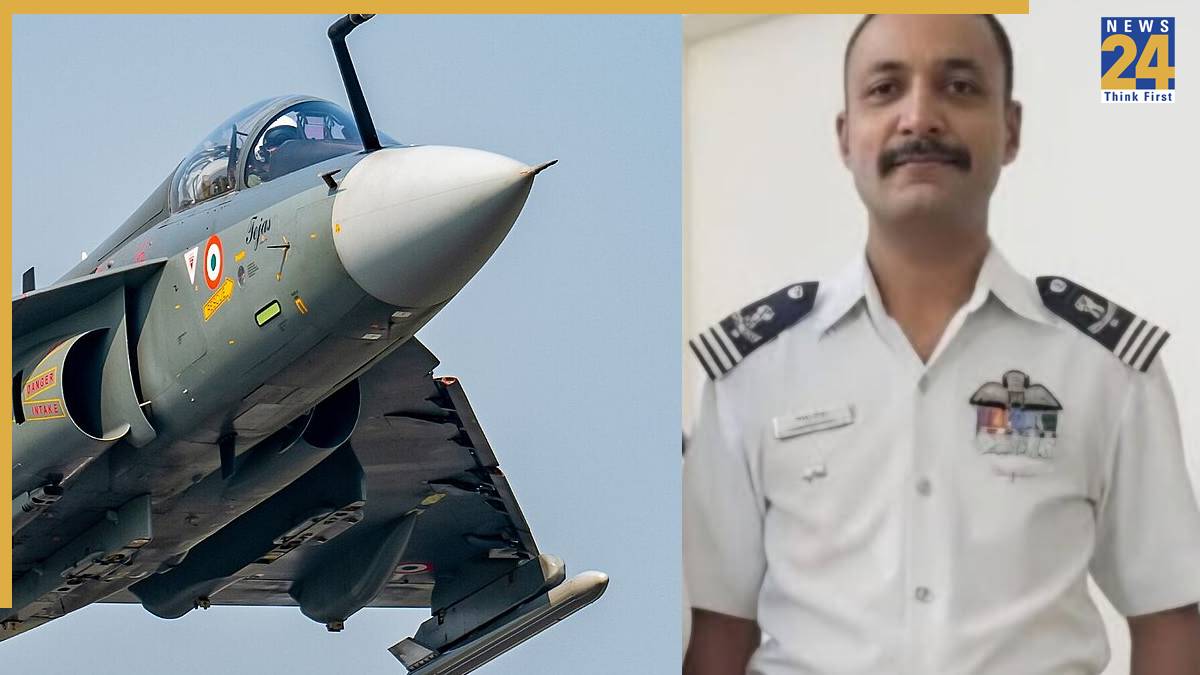


In the aftermath of the Tejas jet crash at the Dubai Air Show, a new, clearer video of the whole maneuver has taken over the internet. As per the video posted on YouTube by WL Tan’s Aviation Videos, it is apparent that the fighter jet was flying at a low altitude, which is generally acceptable for pilots performing strategic maneuvers for the audience.
The video clearly showcases that the Tejas fighter jet was inverted just before the final moments of the flight. All fighter jet seats can eject even when the aircraft is inverted, but pilot survival in such cases depends upon flight direction, speed, and altitude. At high altitude, ejection while inverted is not a problem.
Possibility of Ejection when the Fighter Jet was Inverted
But in the case of Tejas, the jet was inverted at low altitude. While we still await official details of what went wrong, it is possible that Namansh refrained from ejecting while the jet was inverted, as he was flying low. By the time the jet returned to its original position, its rapid descent snatched away the possible chances of ejection.
After the maneuver, the jet went down in a massive fireball as soon as it crash landed into the ground. Several videos of the fighter have shown large plumes of black smoke emanating as the aircraft made contact with the ground. The IAF pilot, Wing Commander Namansh Sayal, who was from Himachal Pradesh, could not survive the crash.
Going by the video, it seems that Namansh tried his best to keep the plane upright, but the rapid drop did not give him enough time to climb back up. The Tejas has had an impeccable safety record; in fact, this is the first fatality linked to the lightweight multi-role fighter jet in its 10 years of service. A Tejas had last crashed near Jaisalmer in March last year; however, the pilot had managed to eject safely at that time.
Video was captured by a spectator
The new video that has surfaced online was captured by a spectator at the air show. The Tejas jet was performing a maneuver known as the barrel roll, in which the jet turns over and then back up again. Just before going down, the jet was seen executing a negative-G turn, but at this point the aircraft was flying at a very low altitude.
The jet descended lower and lower at a rapid pace and crashed into the ground. Aviation experts have pointed out that post the loop formation, the pilot had no room to stabilise the fighter jet to gain altitude. The exact reason for the crash will be known after the enquiry is concluded and can ascertain the cause of the tragedy.
The 37-year-old Wing Commander, a resident of Kangra in Himachal Pradesh, will be cremated on Sunday. His wife is a retired Wing Commander. The couple has a 7-year-old daughter as well.
Also Read: Proud R*** movement influencer Divija Bhasin responds to X suspension rumours, shares this message