
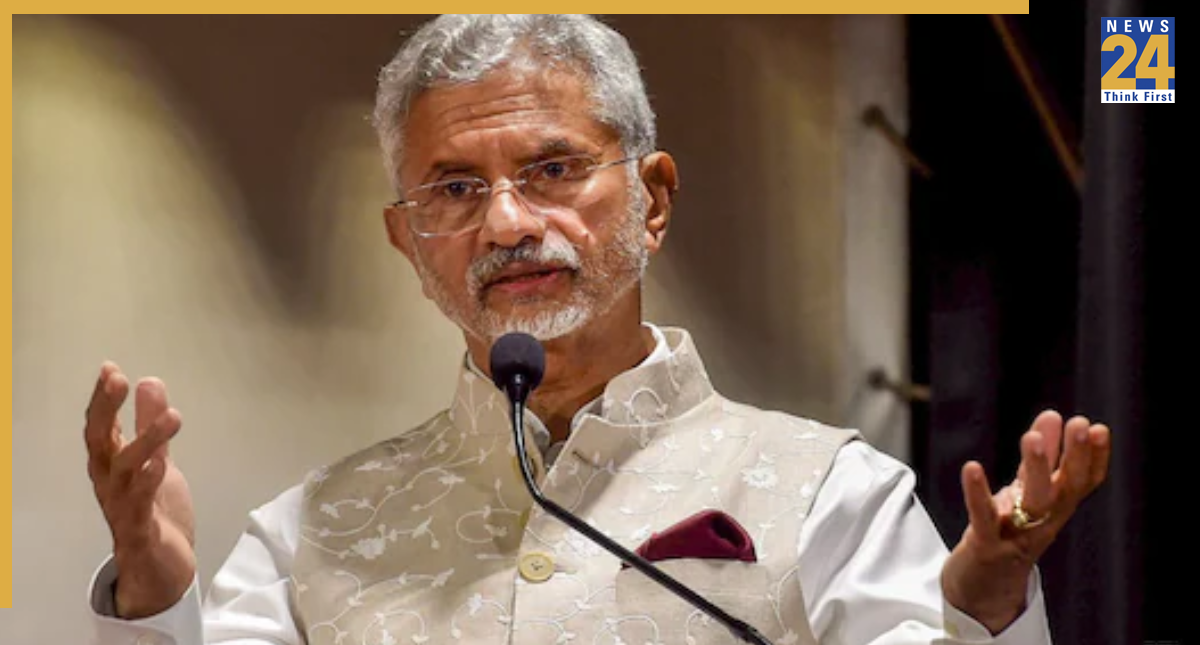


External Affairs Minister S Jaishankar addressed the 23rd edition of the HT Leadership Summit (HTLS) on Saturday, December 6, discussing India’s relations with Russia, trade negotiations with the United States, and regional security challenges. His remarks come a day after the 23rd India-Russia Summit, held in New Delhi.
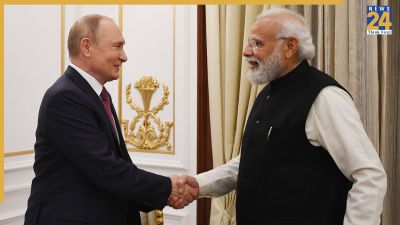
Russian President Vladimir Putin arrived in India on Thursday for his first state visit since Russia’s full-scale invasion of Ukraine. Prime Minister Narendra Modi personally received him at the airport. The visit, aimed at strengthening bilateral ties, reportedly angered the United States and contributed to the imposition of hefty trade tariffs.
India Maintains Independent Foreign Policy
When asked whether India’s relations with Russia complicate trade negotiations with the US, Jaishankar said India maintains multiple international relationships.
‘I think everybody knows that India has relations with all the major countries of the world,” he said. “For any country to expect to have a veto or say in how we develop our relations with others is not a reasonable proposition because remember, the others can expect the same.’
He added, ‘We have multiple relationships and the freedom of choice, and we have always made that very clear.’
‘Generation of Uncertainty’ in Global Politics
At the summit, Jaishankar spoke about a “generation of uncertainty,” noting that many assumptions held just a few years ago are now questionable.
- Globalisation: ‘It is under severe challenge in many ways,’ he said.
- US as a stabiliser: ‘A very questionable assumption.’
- Middle East and West Asia: ‘The landscape has undergone a radical change.’
- Technology: Expected to unify the world, it can also act as a source of fragmentation.
On how India should respond to these changes, Jaishankar emphasized capability. “The best way of dealing with tomorrow is capability, capability and capability. If you have the capability, you can handle contingencies because there will be unforeseen circumstances,” he said.
Sheikh Hasina’s Stay in India
Addressing questions about former Bangladesh Prime Minister Sheikh Hasina, who fled to India in August 2024 after student-led protests toppled her government, Jaishankar said her fate is for her to decide.
“She came under different circumstances, and now the circumstances are different. It is up to her to decide,” he said. Earlier this year, a tribunal court in Dhaka sentenced Hasina and her former interior minister to death for alleged “crimes against humanity” during the student movement.
India-China Ties and Border Stability
Jaishankar also commented on India’s renewed ties with China. Following the Kazhan meeting between Prime Minister Modi and President Xi in October 2024, he said border areas have remained stable, with patrolling mostly resumed.
‘Peace and tranquillity on the border areas is a key requisite for good relationships… It is being maintained and built upon,’ he said. His remarks follow Modi’s recent visit to China for the SCO Summit 2025.
This story balances geopolitical updates, India’s foreign policy stance, and regional security developments while keeping the language clear and journalistic.