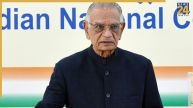

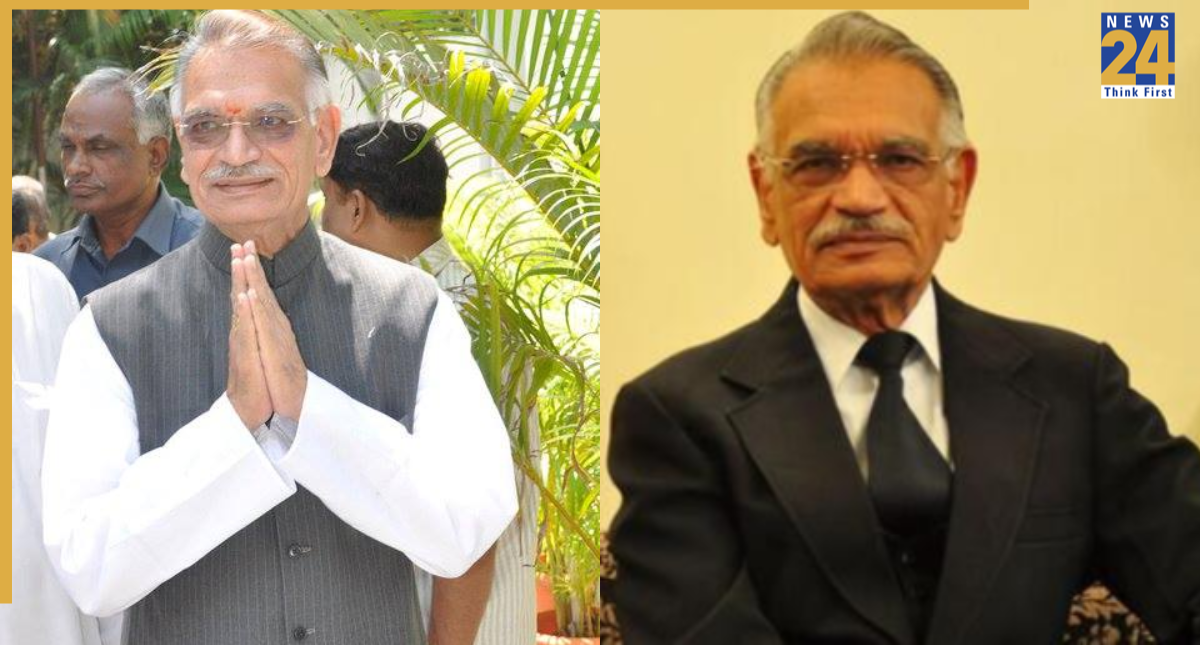


Senior Congress leader and former Union Home Minister Shivraj Patil passed away in Latur today at the age of 91. Patil breathed his last around 6:30 am at his residence, where he had been receiving home care due to prolonged illness. His death marks the end of a long and eventful political career that spanned over five decades.
All About Shivraj Patil
Shivraj Patil was born on 12 October 1935 in Chakur village in Latur district, part of the Marathwada region in the then princely state of Hyderabad (now Maharashtra). He belonged to the Panchamsali Lingayat community. Patil completed his science degree from Osmania University, Hyderabad, and studied law at Bombay University. He married Vijaya Patil in June 1963, and the couple had a son and a daughter. Patil was also known for being a devout follower of Sathya Sai Baba.
Early Political Career
Patil began his political journey at the local level. Between 1967 and 1969, he was actively involved in the Latur Municipality. With support from local leaders Keshavrao and Manikrao Sonawane, he secured his first chance to contest from the Latur constituency.
From 1972 to 1980, Patil served as a legislator in the Maharashtra Legislative Assembly, holding roles such as Chairman of the Public Undertakings Committee, Deputy Minister of Law & Judiciary, Irrigation, Protocol, Deputy Speaker, and eventually Speaker of the Assembly.
Rise to National Politics
In 1980, Shivraj Patil was elected to the 7th Lok Sabha from Latur, eventually winning seven consecutive terms in 1980, 1984, 1989, 1991, 1996, 1998, and 1999. He held various ministerial positions in the Indira Gandhi and Rajiv Gandhi cabinets, including Minister of Defence, Minister of Commerce, and later portfolios in Science and Technology, Civil Aviation, and Tourism. He also served as vice-president of CSIR India from 1983 to 1986.
Speaker of the Lok Sabha and Home Minister
Patil became the 10th Speaker of the Lok Sabha in 1991, serving until 1996. During his tenure, he worked on modernizing parliamentary processes, including computerization, building the Parliament Library, and initiating live broadcasts of Question Hour.
In 2004, after losing the Latur Lok Sabha seat, he was elected to the Rajya Sabha and appointed Union Home Minister. His tenure was marked by criticism following security lapses during the 2008 Mumbai attacks, leading him to resign on 30 November 2008, taking moral responsibility. He also faced criticism for the handling of the 2006 Malegaon bombings and the Nandigram incident in West Bengal.
Shivraj Patil Resigned As Union Home Minister Taking Moral Responsibility After 26/11
Shivraj Patil was the Union Home Minister during the 26/11 Mumbai terror attacks. He resigned from the post after the incident, taking moral responsibility. P. Chidambaram took charge as Home Minister after him.
After resigning as Home Minister, Patil served as Governor of Punjab and Administrator of Chandigarh from 2010 to 2015. He was also instrumental in introducing the Outstanding Parliamentarian Award in 1992 and held key roles in Congress party committees, including chairing the 1999 manifesto committee.
Shivraj Patil’s career reflected both achievements and controversies. He is remembered for his contributions to parliamentary modernization, long-standing public service, and his willingness to take moral responsibility during crises.
Shivraj Patil Leaves A Great Legacy Behind Him
Shivraj Patil leaves behind a legacy of decades-long service to Indian politics, especially representing Latur and Maharashtra. While his tenure included significant challenges, his impact on parliamentary procedures and public life remains a part of India’s political history.