

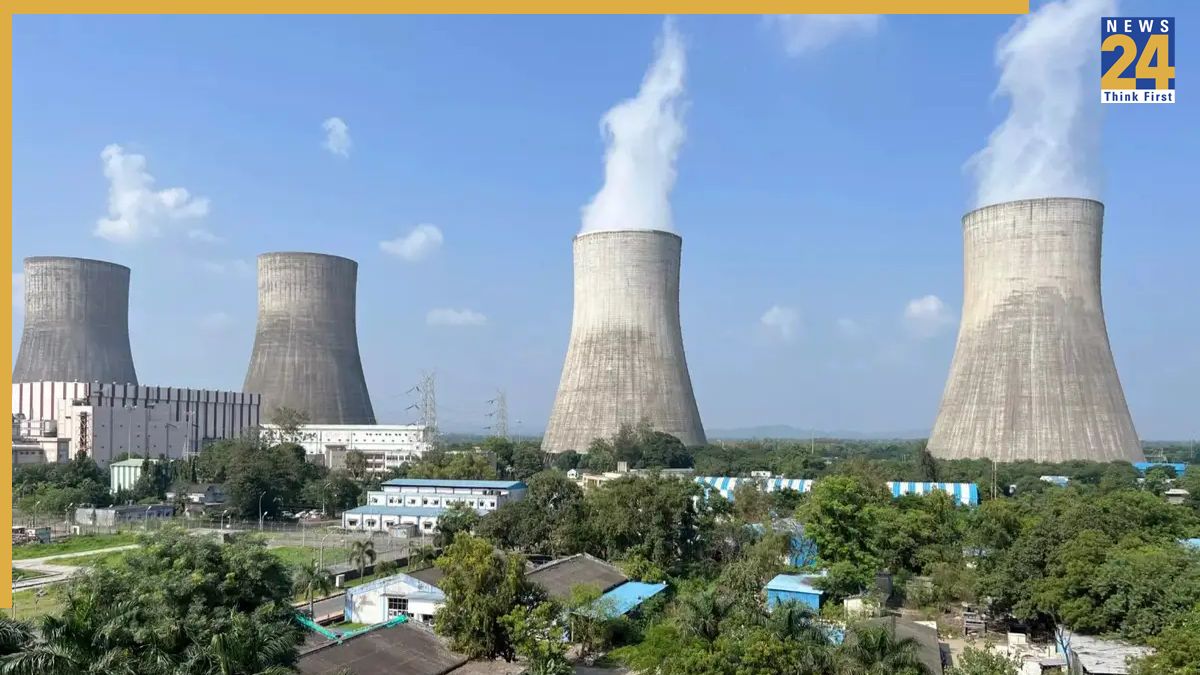


On Monday, the government introduced the SHANTI Bill 2025, short for Sustainable Harnessing and Advancement of Nuclear Energy for Transforming India, in the Lok Sabha. The bill aims to transform India’s civilian nuclear energy sector, ending the decades-long government monopoly and allowing private companies to play a bigger role.
If passed by both Houses of Parliament, the bill will repeal the Atomic Energy Act, 1962 and the Civil Liability for Nuclear Damage Act, 2010. Industry experts and foreign partners have long seen these laws as major hurdles for investment in India’s nuclear energy sector.
According to Minister of State in the Prime Minister’s Office, Jitendra Singh, the SHANTI Bill provides a practical framework for civil liability in case of nuclear accidents and gives statutory powers to the Atomic Energy Regulatory Board. The government says the law is designed to increase nuclear power’s share in India’s energy mix, encourage innovation in nuclear science and technology, expand its use beyond electricity and ensure safety while meeting international commitments.
Private firms can now build and operate nuclear plants
One of the key features of the bill is that Indian private companies can now apply for licences to build, own, operate and decommission nuclear power plants and reactors, a role previously limited to public sector entities. In case of a nuclear accident, liability will rest entirely with the plant operator, while equipment suppliers will not be held responsible. This change addresses concerns that had kept many foreign investors away.
The bill sets the maximum liability for nuclear accidents at 300 million Special Drawing Rights (SDR), in line with international standards. Operators will need insurance or liability funds depending on reactor size, ranging from USD 11 million to USD 330 million. If damages exceed this, a separate nuclear liability fund will cover claims, with the government stepping in for any further losses.
Private Indian firms can also handle nuclear fuel production, transport, storage and import-export of approved equipment, technology and software. However, sensitive activities like fuel enrichment, reprocessing spent fuel and water production will remain under government control.
The SHANTI Bill also supports India’s climate goals, aiming for net-zero emissions by 2070 and expanding nuclear capacity from 8.2 GW today to 100 GW by 2047.