

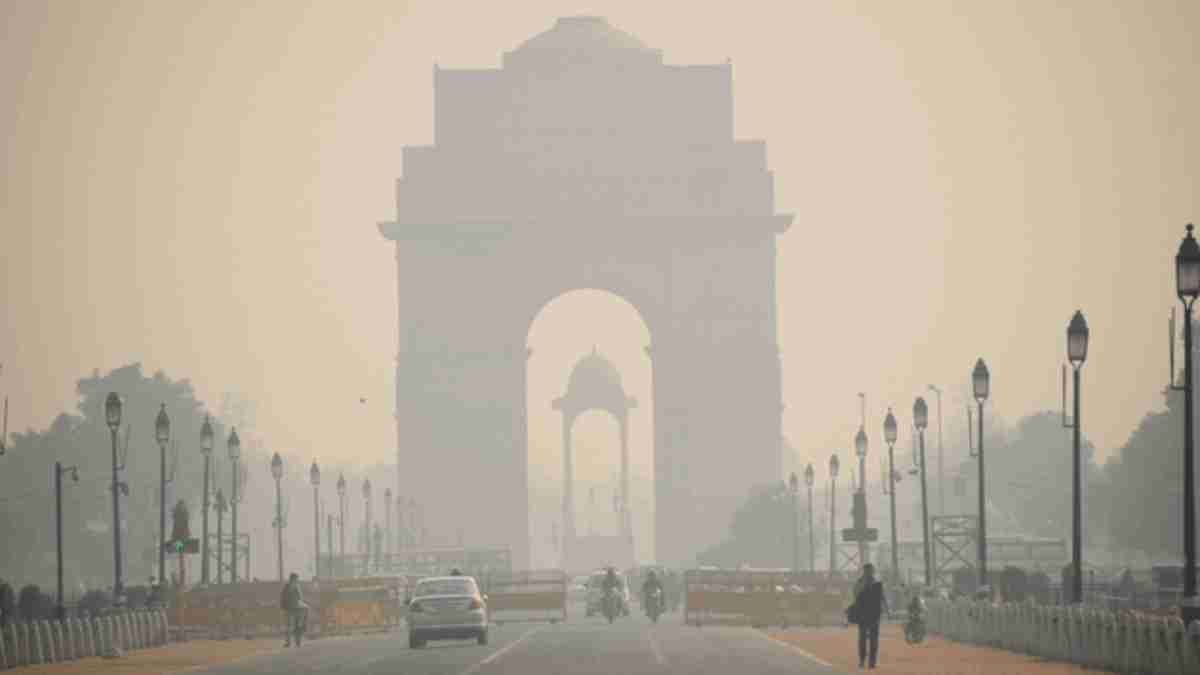


In Delhi’s Anand Vihar, the Air Quality Index (AQI) has been recorded at 433, which falls under the “severe” category. In the NCR region, except for Faridabad, AQI at all stations remains in the “moderate” range. Areas like Gurugram, Noida, Greater Noida, and Ghaziabad are reporting pollution levels below 200.
After days of poor air quality, Delhi residents experienced some relief on Tuesday, but on Wednesday, October 16, 2024, pollution levels started rising again. According to the latest data from the Central Pollution Control Board (CPCB), Delhi’s average AQI crossed 200 once more. Just yesterday, the AQI had improved to 198, placing it in the “moderate” category. While AQI in all NCR regions, except Faridabad, remains moderate, areas such as Gurugram, Noida, Greater Noida, and Ghaziabad continue to show pollution levels below 200. This slight improvement in air quality is attributed to favorable weather conditions, which have helped disperse pollutants. However, this relief does not seem to extend to Delhi for now.
Current AQI in NCR:
- Faridabad: 204
- Ghaziabad: 184
- Greater Noida: 170
- Gurugram: 186
- Noida: 151
Delhi’s AQI today stands at 212 while in the Anand Vihar area, it reached a severe level of 433.
AQI levels across various parts of Delhi:
- Alipur: 235
- Anand Vihar: 433
- Ashok Vihar: 209
- Aya Nagar: 197
- Bawana: 254
- Burari: 244
- Dr. Karni Singh Shooting Range: 205
- Dwarka Sector-8: 252
- IGI Airport: 198
- Dilshad Garden: 155
- ITO: 142
- Jahangirpuri: 252
- Jawaharlal Nehru Stadium: 172
- Lodhi Road: 143
- Mandir Marg: 191
- Mundka: 318
- Dwarka NSIT: 224
- Najafgarh: 180
- Narela: 238
- Nehru Nagar: 198
- North Campus: 183
- Okhla Phase-2: 171
- Patparganj: 231
- Punjabi Bagh: 231
- Pusa DPCC: 181
- Pusa IMD: 155
- RK Puram: 220
- Rohini: 212
- Shadipur: 233
- Siri Fort: 194
- Sonia Vihar: 179
- Aurobindo Marg: 135
- Vivek Vihar: 212
- Wazirpur: 269
How is AQI measured?
If an area’s AQI is between 0-50, it’s considered ‘good’, 51-100 is ‘satisfactory’, 101-200 is ‘moderate’, 201-300 is ‘poor’, 301-400 is ‘very poor’, and an AQI of 401-500 falls into the ‘severe’ category. Air pollution can lead to various health issues.
Current air pollution in Delhi-NCR
Despite slight improvements in Delhi’s air quality yesterday, GRAP-1 restrictions remain in place. GRAP-1 involves the following:
- Regular road cleaning and water sprinkling
- Use of dust suppression at construction sites
- Strict checks on polluting vehicles, better traffic management, and emission control in industries, power plants, and brick kilns
- Ban on open waste burning, limited use of diesel generators, and no use of coal or firewood in eateries
- Use of apps like 311, Green Delhi, Sameer, and others to report and address pollution-related complaints
- Encouraging offices to promote integrated transport for staff to reduce traffic
- Advising people to celebrate festivals in eco-friendly ways, avoiding fireworks
GRAP has four stages based on AQI: Stage I – ‘Poor’ (AQI 201-300) Stage II – ‘Very Poor’ (AQI 301-400) Stage III – ‘Severe’ (AQI 401-450) Stage IV – ‘Severe Plus’ (AQI >450)