
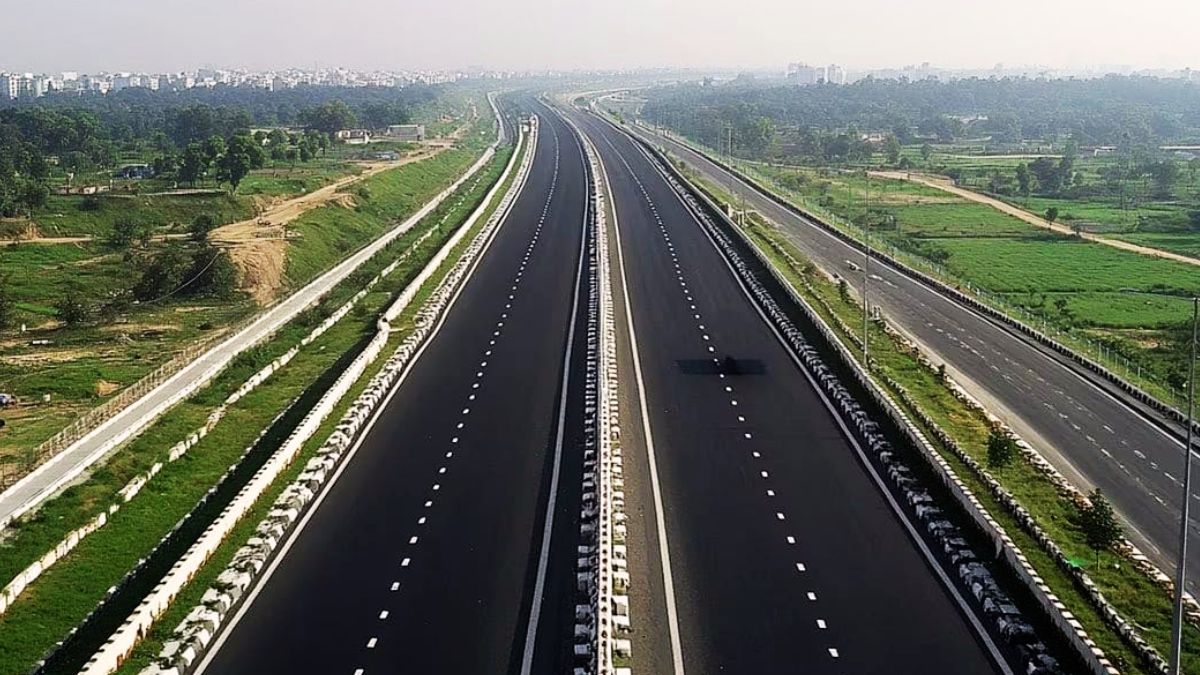


In a major boost to Delhi’s infrastructure and efforts to decongest its choked roads, Prime Minister Narendra Modi is set to inaugurate two crucial expressways this Sunday, the 76-km-long Urban Extension Road-II (UER-II) and the 29-km-long Dwarka Expressway, as reported by Times of India.
Designed as Delhi’s third ring road, these high-speed, access-controlled corridors are expected to significantly ease traffic on the existing Ring Road and arterial routes, while enhancing regional connectivity to Gurugram, Jaipur, and Chandigarh.
Both these highways are access-controlled and are connected to each other. This will allow vehicles coming from Chandigarh to reach Indira Gandhi International Airport, Gurugram and Jaipur directly without stopping. According to sources, all the work related to these two projects has been completed.
The Dwarka Expressway has been built in four parts and its cost has come to about Rs 9,000 crore. At the same time, UER-II has been built in five phases and about Rs 7,716 crore has been spent. Although the Dwarka Expressway is now fully operational, its Haryana part was inaugurated by the Prime Minister in March 2024 before the Lok Sabha elections.
According to the National Highways Authority of India (NHAI), UER-II starts from Alipur (NH-44) in Delhi and connects to NH-9 and NH-48. The project was proposed under the Delhi Master Plan 2021. Of the total length, about 54.2 km is located in Delhi and the remaining 21.5 km in Haryana.
The road also connects the proposed India International Convention Center (IICC) via the Dwarka Expressway. The Dwarka Expressway has been developed as an eight-lane grade-separated highway with at least three-lane service roads on either side. It also has four multi-level interchanges and underpasses at key intersections.