
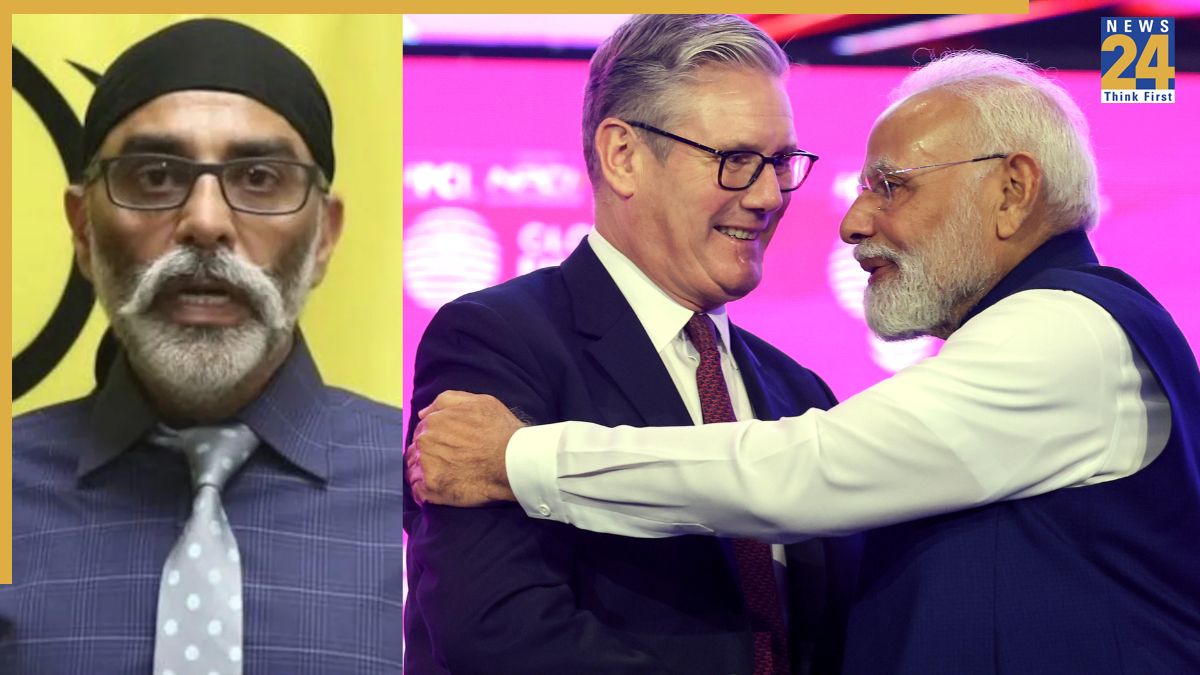


Apart from Khalistani extremism, Prime Minister Narendra Modi and UK Prime Minister Keir Starmer discussed several other issues during their bilateral meeting in Mumbai. The talks focused on strengthening trade, technology cooperation, and strategic ties between the two nations. Starmer also urged for the swift implementation of the free trade agreement signed earlier this year. After the meeting, PM Modi shared details about the discussion on X.
PM Narendra Modi discussed issues like Khalistani extremism with the UK PM Keir Starmer during the meeting held on Thursday. This was confirmed by the ministry of external affairs. According to foreign secretary Vikram Misri, the PM told the British Prime Minister that radicalism and violent extremism should not be “allowed to use or abuse” the freedoms given by societies. “Khalistani extremist issue was discussed during meeting held today between PM Modi and PM Starmer,” Misri said.
---Advertisement---
What Vikram Misri said on Modi- Starmer discussion
“Khalistani extremist issue was discussed during the meeting held today between PM Modi and PM Starmer. The PM emphasised that radicalism & violent extremism had no space in democratic societies & should not be allowed to use or abuse the freedoms provided by societies, and there was a need to move against them in the legal framework available on both sides,” Misri told the media.
---Advertisement---
#WATCH | Mumbai | On visit of UK PM Keir Starmer, Foreign Secretary Vikram Misri says, “Khalistani extremist issue was discussed during meeting held today between PM Modi and PM Starmer. PM emphasised that radicalism & violent extremism had no space in democratic societies &… pic.twitter.com/H7uv3kPCiy
— ANI (@ANI) October 9, 2025
---Advertisement---
The British leader arrived in Mumbai on Wednesday morning, accompanied by a delegation of 125 of the UK’s top business leaders, entrepreneurs, and education experts, for a two-day visit. Starmer’s visit comes two and a half months after India and the UK signed a landmark free trade agreement. The agreement is expected to increase market access, reduce tariffs, and double bilateral trade between the two countries by 2030.