
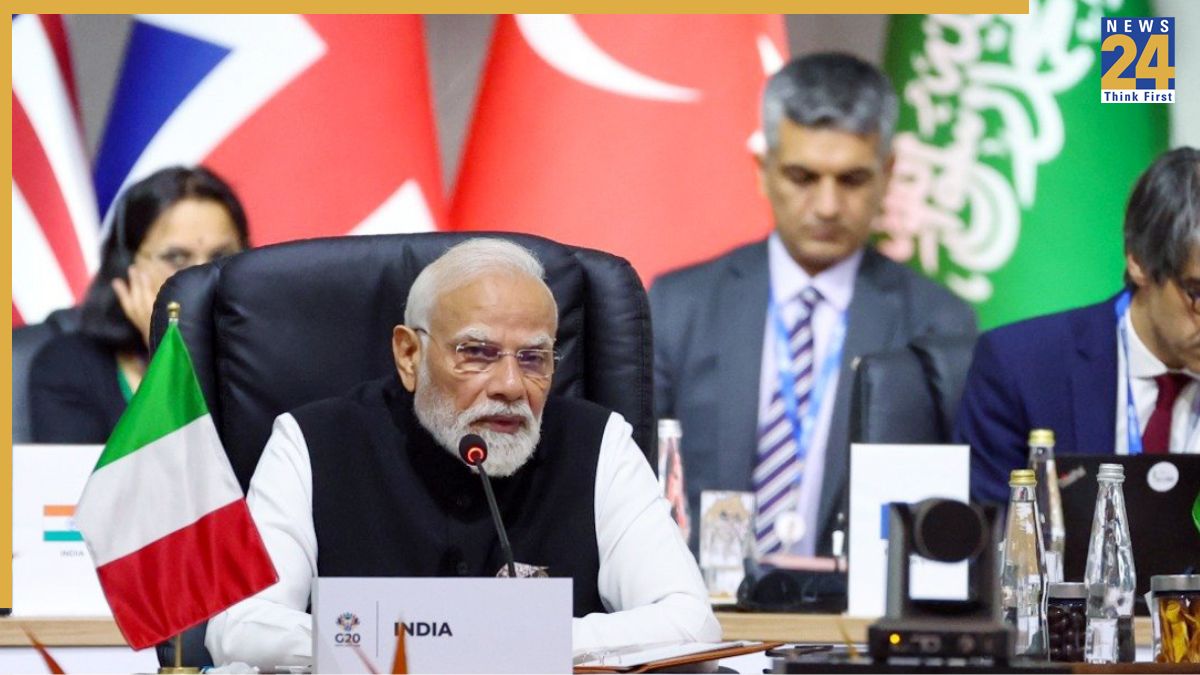


Prime Minister Narendra Modi on Sunday stated that the previous day’s engagements at the G20 Summit in Johannesburg were “fruitful,” highlighting that he participated in two sessions and shared his views on key global issues.
In a post on X, the Prime Minister stated, “Yesterday’s proceedings at the G20 Summit in Johannesburg were fruitful. I took part in two sessions and shared my views on key issues. Also had productive meetings with many world leaders. Watch the highlights…” PM Modi also highlighted a series of interactions with global leaders on the sidelines of the summit, calling the discussions “productive” as he underscored India’s continued engagement on matters of international importance.
Yesterday’s proceedings at the G20 Summit in Johannesburg were fruitful. I took part in two sessions and shared my views on key issues. Also had productive meetings with many world leaders. Watch the highlights… pic.twitter.com/l8EsjxsyRO
— Narendra Modi (@narendramodi) November 23, 2025
These interactions set the stage for India’s broader contributions to the summit’s agenda. Building on these engagements, PM Modi outlined six major global proposals at the G20 Leaders Summit in Johannesburg, where India’s imprint was reflected in the outcome document released by member nations, building on the momentum from his earlier engagements. The three-day summit began on November 21, with PM Modi reaching Johannesburg a day in advance and engaging in a series of meetings with world leaders, including a bilateral discussion with Australian Prime Minister Anthony Albanese, reinforcing the diplomatic outreach referenced in his post.
In a post on X ahead of the summit, PM Modi wrote, “Landed in Johannesburg for the G20 Summit-related engagements. Look forward to productive discussions with world leaders on key global issues.” Participation in the sessions and multiple bilateral interactions aligned with this anticipation, shaping India’s contributions during the summit. This year’s joint statement was released earlier than usual, a move widely viewed as an attempt by G20 nations to convey unified concern over ongoing global tensions, military escalations and economic instability.
The declaration stressed that no nation should attempt to change internationally recognised borders through force, which observers linked to conflicts involving Russia, Israel and Myanmar. (With inputs from ANI).