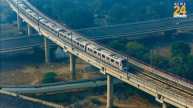

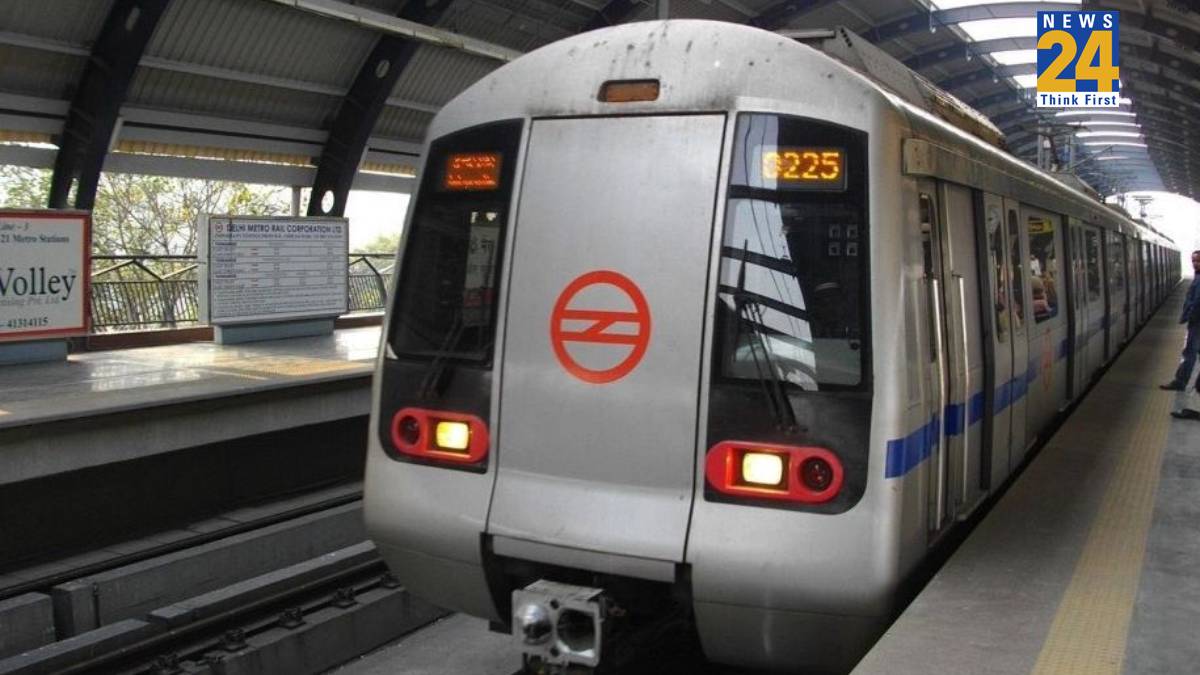


The Union Cabinet, chaired by Prime Minister Narendra Modi, has approved a significant expansion of the Delhi Metro network with the addition of three new corridors under the Phase V (A) project. The network spans a total of 16.076 km. This strategic expansion, for Rs 12,014.91 crore, aims to further integrate the national capital’s transport infrastructure. Throughout its execution, it will be funded by a collaborative effort between the Government of India, the Government of Delhi, and international funding agencies, and is expected to be completed within the next three years.
What Are the Highlights of the New Network?
The highlight of this new expansion is the RK Ashram Marg to Indraprastha corridor, an underground extension of the Botanical Garden–RK Ashram Marg line that spans nearly 10 km. This section is designed to provide seamless connectivity to the Central Vista area, which is currently undergoing redevelopment.
Delhi's infrastructure gets a major boost!
— Narendra Modi (@narendramodi) December 24, 2025
Cabinet's approval for three new corridors as part of Delhi Metro's Phase V(A) Project will expand our capital's metro network, thus boosting 'Ease of Living' and reducing congestion.https://t.co/PiWd4e31oP
By linking landmarks such as Kartavya Bhawan, India Gate, and the War Memorial, this corridor will benefit approximately 60,000 office-goers and 2 lakh daily visitors. For the first time, all Kartavya Bhawans will be accessible via a high-speed transit link, significantly enhancing the “ease of living” for government employees and tourists, while reducing reliance on private vehicles in the high-security zone.
Improved Airport Accessibility
The Central Vista extensions are critically designed stretches that will improve airport accessibility. The Aerocity to Indira Gandhi Domestic Airport Terminal 1 extension and the Tughlakabad to Kalindi Kunj extension will serve as vital branches of the upcoming Aerocity–Tughlakabad corridor.
These extensions will feature 13 new stations—10 underground and three elevated—integrating the southern hubs of Saket, Chhatarpur, and Sarita Vihar directly with the domestic airport. This new development will alleviate road congestion and provide a faster, greener alternative for commuters travelling from South and Southeast Delhi to the aviation hub.
New advancements to upkeep punctuality
With the Delhi Metro already recording peak ridership of over 81 lakh passenger journeys in August 2025, these new corridors are essential for maintaining the system’s reputation for punctuality and safety. Beyond mobility, the project is expected to save approximately 33,000 tonnes of CO₂ emissions annually by reducing the usage of fossil fuels.
As construction for Phase IV, covering 111 km, reaches its final stages with over 80% of civil works completed, Phase V (A) reflects how the Delhi Metro continues to grow as a world-class lifeline of the NCR.
Also Read: Who is Naznin Munni? Bangladesh journalist who received threats over media reporting on…