

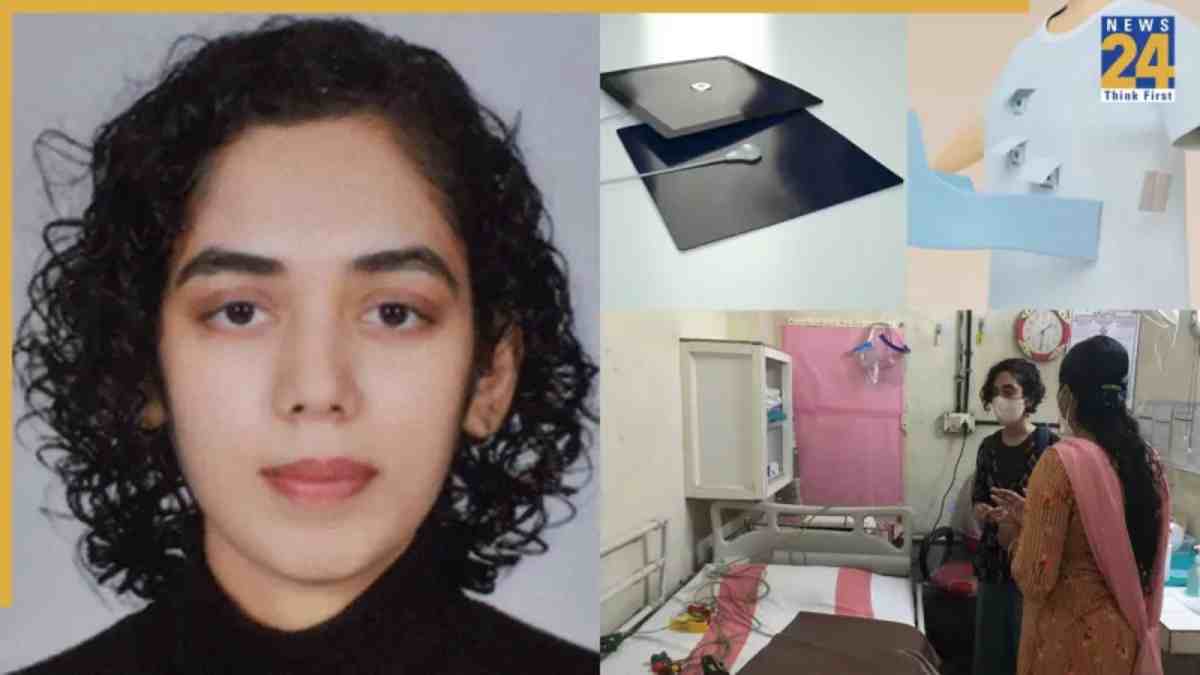


A 29-year-old Malayali student at Ahmedabad’s National Institute of Design (NID) has discovered how the biodegradable properties of tapioca could be harnessed to create eco-friendly ECG (electrocardiogram) electrodes. She has forged an unlikely connection between Kerala’s favourite tuber crop and a medical procedure. In addition to the promising solution to tackle plastic waste, Malavika Byju, a native of Kochi, has also addressed the discomfort faced by many women while undergoing ECG procedures.
Malavika, a post-graduate student, has developed biodegradable ECG electrodes along with a special gown for women patients. She told Onmanorama, “I was always bothered by the enormous amounts of plastic in medical waste. In hospitals, ECG electrodes are used in huge quantities, especially in intensive care units. These electrodes are almost always made from synthetic polymers and are non-recyclable.”
For her ground-breaking research, Malavika has been awarded two grants:
- The prestigious NID–Ford Foundation Grant
- Support from the National Design Business Incubator under the Student Start-up Innovation Policy (SSIP), Gujarat.
The project took around 1.5 years to complete. Malavika spent her first two months talking to medical techs as well as researching the ECG technology. According to her, Kappa or Tapioca is a staple of Kerala. After collecting and studying samples from the tuber crop’s wastewater, she made a surprising discovery. She found that each litre contained around 86 milligrams of soluble starch.
From the tapioca starch, Malavika created a biopolymer film as a substitute for synthetic plastic that was used in ECG electrodes. She said, “The electrodes that we currently use take 35-45 years to decompose. The ones designed by me break down in 40-55 days and are the same price.”
However, it wasn’t all Malavika did, and she kept pushing boundaries. While visiting hospitals, Malavika spotted a woman preparing for an ECG. The patient looked visibly uncomfortable as she took off her clothing to attach electrodes. In an effort to come up with a comfortable solution, Malavika designed a special medical gown.
The hospital gown has velcro-secured pockets and pouches, allowing healthcare professionals to attach the sensors without requiring the female patients to undress. Onmanorama quoted her as saying, “It is a minimal design that will solve a very difficult problem.”