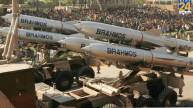



It took precisely 25 minutes from 1.25 am on Wednesday to carry out 24 missile strikes on nine terror sites in Pakistan and Pakistan-occupied Kashmir. This was the first tri-service military operation – involving the Army, Navy, and Air Force – by India since the 1971 war with Pakistan. According to the Indian military, the operation named ‘Sindoor’ is said to have claimed 80-90 terrorists. Here’s a breakdown of India’s past military operations against Pakistan.
Operation Sindoor
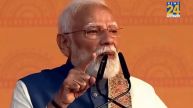
There are reports that India’s Prime Minister, Narendra Modi, personally chose the name ‘Sindoor’ for the operation to avenge the Pahalgam attack. However, an official statement on the naming is yet to be released. Experts interpret the choice of the name ‘Sindoor’ as a symbolic representation of the sacred bond between husband and wife, with sindoor traditionally signifying the marital status and dignity of a married woman. According to Hindu mythology, Sindoor is a mark that married Hindu women apply on their foreheads.
As per the government, Operation Sindoor was a “measured, non-escalatory, proportionate, and responsible” answer to Pak’s continuing support of terrorism. The strike killed 70 terrorists and injured more than 60 at nine different places. These locations included camps where David Headley and Ajmal Kasab were trained. Both were involved in the 26/11 Mumbai attacks. Some of the other camps had trained terrorists who attacked civilians in Jammu and Kashmir. Other anti-terror operations by the Indian military were given more war-like names, such as ‘Vijay’ during the Kargil War in 1999 and ‘Trident’ and ‘Python’ during the 1971 war.
How The Mission Was Named ‘Bandar’
It was India’s ‘Bandar’ that conducted air strikes in Pakistan’s Balakot in February 2019, which avenged the blowing up of a security forces convoy in J&K’s Pulwama on February 26. Here’s a breakdown of India’s military operations against Pakistan. Asked about the operation being named “Bandar”, the former Air Marshal recalled that it was instead a codeword to convey the success of the mission.
“It is on 25th that my farewell by the Air Force was going on. I had a big banquet on 25th in Akash Mess. The Chief had taken me across to the lawns outside to just reconfirm that everything is just okay. At that time, all he said was When this is done, give me a call and if you say “Bandar”, that means it is successful and everybody is safe. It was a codeword to say the mission was successful,” he said.
Response To Uri Surgical Strikes
Though response operations often have war-like names, there have been instances where they were named to reflect the specific situation or sentiment of the moment. The military response to the Uri attack was unnamed, but it was a striking display of India’s military might. The Indian Army crossed the LoC to destroy Jaish terror camps and launchpads.
The ‘Uri surgical strikes’, as they were dubbed, also underlined India’s tactical nous. Carried out over the intervening night of September 28 and 29, it saw commandos of the Army’s elite 4 and 9 Para Special Forces engaging multiple targets on either side of the Pir Panjal range.
During Kargil War, India Carried Out Two Special Operations- ‘Vijay’ And ‘Safed Sagar‘
‘Operation Vijay’ was launched to take back the areas that Pakistan had captured early in the conflict. Operation Safed Sagar’ was an Indian Air Force mission to drive out Pakistani soldiers from high positions that were earlier held by India. This was the first time since the 1971 war that India used air power on such a large scale. Both missions were successful, and India regained the lost territory.
Before the Kargil War, there was another important conflict in 1984 over control of the Siachen Glacier in Ladakh. India launched ‘Operation Meghdoot’ in response to Pakistan’s ‘Operation Ababeel’, which aimed to claim the glacier by letting mountaineers into the area.
Operation Meghdoot
Between the 1971 war and the Kargil conflict, one of the lesser-known but significant military standoffs took place high up in the icy heights of Ladakh. In 1984, India and Pakistan came face to face over the Siachen Glacier- the world’s highest battlefield. As Pakistan tried to assert its claim over the glacier by quietly sending in mountaineering expeditions, India acted swiftly. In a bold and risky move, Indian troops launched ‘Operation Meghdoot’ to take control of the glacier before Pakistan could establish a presence. It was a race against time, and India’s success ensured its strategic hold over the treacherous terrain — a position it maintains to this day.
It too was a success. The op was launched on April 13, 1984, and involved Indian troops being airlifted to capture strategic positions, including Bilafond La and Sia La.
Cactus Lily
In the 1971 war, ‘Cactus Lily’, ‘Trident’, and ‘Python’ were in place. Cactus Lily was an aerial operation that involved crossing the Meghna River, skirting a Pak stronghold, and reach Dhaka. ‘Trident’ and ‘Python’ were naval operations, and so stand out on this list. India used anti-ship missiles in combat scenarios in the region.
Riddle And Ablaze
Operation ‘Riddle’ was India’s sharp answer to a serious provocation when Pakistani forces crossed the Line of Control and entered Jammu and Kashmir in 1965. It was a message that India wouldn’t stand by if its boundaries were violated. A few months before this, the Army had already been quietly preparing. That preparation came under the name ‘Ablaze’, a defensive operation focused on strengthening India’s readiness, especially in vulnerable regions like Gujarat and the Rann of Kutch. Together, these movements reflected a mix of caution and resolve — a balance between being prepared and being firm when lines were crossed