

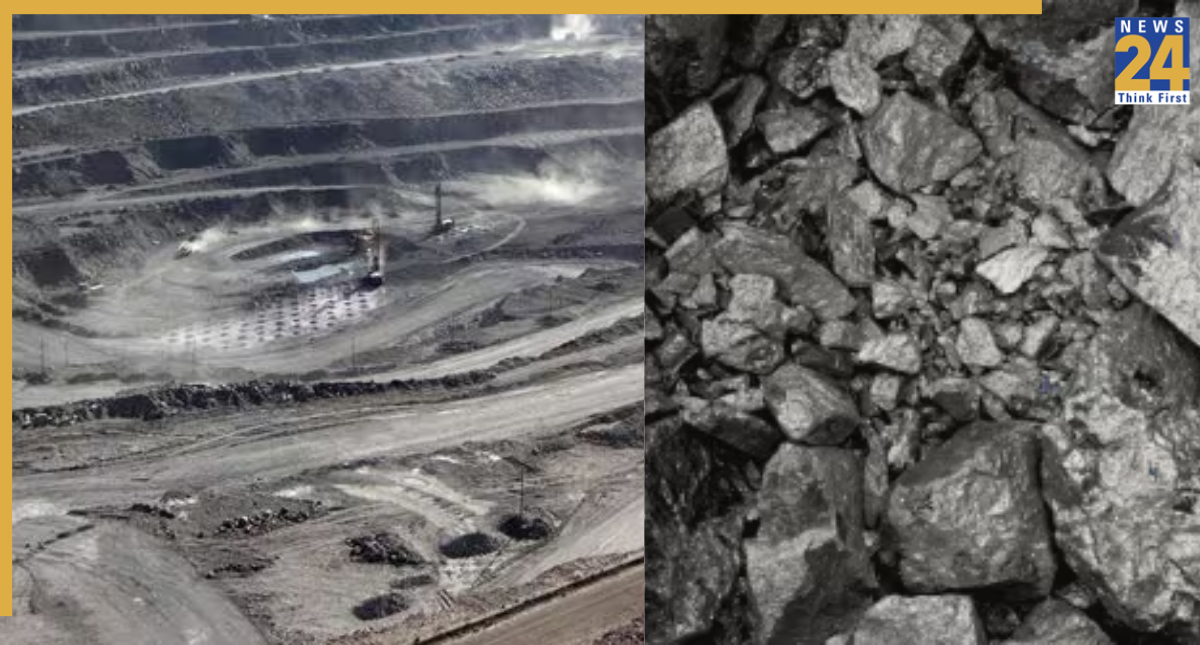


India has taken a major step toward becoming self-reliant in the production of rare earth magnets—materials that are essential for electric vehicles, wind turbines, smartphones, medical equipment, defence systems and advanced fighter jets like Rafale, Tejas and the F-35. These magnets are rarely visible to the public but power some of the world’s most important technologies. For decades, China has maintained a near-monopoly over global rare earth supplies, often using its dominance to control exports. Now, with a new ₹7,280-crore national plan, India aims to reduce this heavy dependence and build a strong domestic supply chain for rare earth permanent magnets (REPM).
Government Approves Full Domestic Manufacturing Ecosystem
The Union Cabinet has approved the creation of a complete Indian ecosystem for manufacturing rare earth permanent magnets. The project will be carried out under the government’s Aatmanirbhar Bharat initiative. India currently relies almost entirely on imports for REPMs, making the new facilities critical for national interests and future technological growth.
The decision was taken during a meeting chaired by Prime Minister Narendra Modi. Under the plan, REPM centres will be set up to manage the entire process—from raw materials to finished high-performance magnets.
What Will Happen Inside the REPM Facilities?
The new REPM facilities aim to create a continuous supply chain that can convert NdPr (neodymium-praseodymium) oxide into NdFeB (neodymium-iron-boron) magnets. These magnets are widely used in:
- Electric vehicle motors
- Wind turbines
- Defence and aerospace systems
- Consumer electronics
- Medical imaging machines
A single electric car needs 1–2 kg of NdFeB magnets, while one 3-MW offshore wind turbine requires nearly 600 kg. This highlights how crucial these materials are for modern technology.
China Controls 90% of Global Rare Earth Supply
Reports indicate that China controls more than 90% of global rare earth production and over 70% of mining. India’s plan comes at a time when China has been tightening export rules, creating supply shortages for many industries.
In April, China imposed strict export controls on several rare earth materials, citing national security. This disrupted shipments to India and severely affected automobile manufacturers dependent on imported magnets. Although some export licences were later issued, the restrictions continue.
India’s Roadmap to Self-Reliance
India will now build its first integrated REPM manufacturing ecosystem. The government aims to achieve the capacity to produce 6,000 metric tonnes of REPMs every year. The plan will be implemented over 7–10 years through:
- Capital subsidies
- Viability gap funding
- Production-linked incentives
The ecosystem will include the full process converting rare earth oxides to metals, metals to alloys, and alloys to refined magnets.
Why Rare Earth Magnets Matter for India’s Future
India wants 30% of all vehicles to be electric by 2030 and is rapidly expanding its renewable energy capacity. This will sharply increase the demand for rare earth magnets. At present, India imports most of its requirements, creating supply risks whenever China tightens export controls.
India Has Fifth-Largest Rare Earth Reserves
India holds about 6.9 million tonnes of rare earth oxide making it the world’s fifth-largest reserve. Most resources are located in southern India. The richest deposits are found in:
- Kerala (especially Kollam–Alappuzha–Kanyakumari belt)
- Odisha (Ganjam, Balasore, Mayurbhanj)
- Andhra Pradesh (Srikakulam, Visakhapatnam, Krishna-Godavari region)
- Tamil Nadu (Thoothukudi, Tirunelveli, Kanyakumari)
Smaller deposits also exist in Rajasthan, Bihar and Jharkhand.
Extraction Is Complex and Highly Regulated
Extracting rare earth elements is difficult because minerals like monazite contain radioactive elements such as thorium and uranium. Separation requires hundreds of chemical processes and generates large amounts of toxic and radioactive waste. This makes production expensive and highly regulated by the Atomic Energy Regulatory Board.
India Will Be Self-Reliant in 3-4 Years: Ashwini Vaishnaw
Union Minister Ashwini Vaishnaw said India will become self-reliant in rare earth magnets within the next three to four years. Former NITI Aayog CEO Amitabh Kant added that the REPM plan will help India break free from China’s dominance and build long-term technological strength.