


The Indian government has initiated a landmark step in labour regulation by notifying the four consolidated labour codes: the Occupational Safety, Health and Working Conditions Code, 2020 (OSHWC Code); the Code on Social Security, 2020; the Industrial Relations Code, 2020; and the Code on Wages, 2019. These codes rationalize 29 existing central labour laws, ushering in a more streamlined, coherent legal framework for worker protection and compliance.
Under these new reforms, the drugs and pharmaceutical sector is placed under a unified and comprehensive regulatory framework. Together, these new labour codes lay the foundation for a safer, smarter, and prevention-driven regulatory ecosystem that strengthens the pharmaceutical sector’s growth while ensuring protection for its workforce.
The Evolution of the Sector
The drugs and pharmaceutical sector, notified as a hazardous process industry under the Factories Act, 1948, historically operated under fragmented regulatory mechanisms that primarily emphasized chemical hazards, industrial ventilation, and accident prevention in conventional manufacturing environments. These provisions mandated site appraisal committees, disclosure of chemical hazards, safety audits, on-site emergency planning, worker training, and specialized medical examinations.
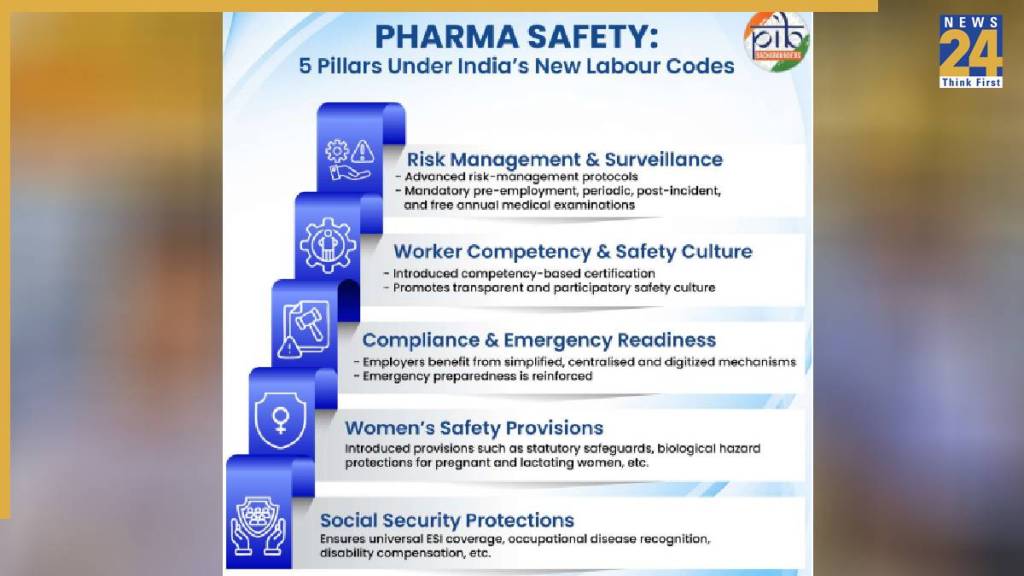
The evolution of the biomedical sector created the need for a more comprehensive system capable of addressing integrated chemical-biological-radioactive process risks, occupational exposure limits, and modern clean-room biosafety requirements.
The Occupational Safety, Health and Working Conditions (OSHWC) Code, 2020, consolidates, updates, and strengthens the previously scattered safety and health regulations into a unified governance framework. It not only preserves and builds upon the earlier hazardous process regime—with its detailed rules and schedules—but also expands its regulatory reach to address newer risks in the pharmaceutical sector. These include exposure to biological agents, mutagenic and teratogenic substances, AI-driven manufacturing systems, robotics, nano-material handling, and advanced sterile-barrier monitoring technologies.
Compliance and Emergency Readiness
Employers benefit from single-window clearances, risk-based inspection mechanisms, centralized licensing, and digitized returns, reducing compliance complexity while strengthening accountability, workplace hygiene, and process discipline. Emergency preparedness is reinforced through on-site emergency plans, periodic mock drills, integrated incident-command structures, and chemical and biological spill-response systems.
These reforms mark a transformative shift in India’s drugs and pharmaceuticals sector and reinforce its role as the global pharmacy, vaccine hub, and forefront biotechnology manufacturing destination. The OSHWC Code transforms industrial governance from a reactive compliance model to a proactive, data-supported, worker-centered, technology-enabled architecture—enhancing bio-risk control, chemical safety, clean-room sterility assurance, process-safety integration, emergency readiness, workforce well-being, and global competitiveness.
Also Read: Who is Jemima Khan? A look at Imran Khan’s first wife and their nine-year marriage