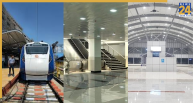

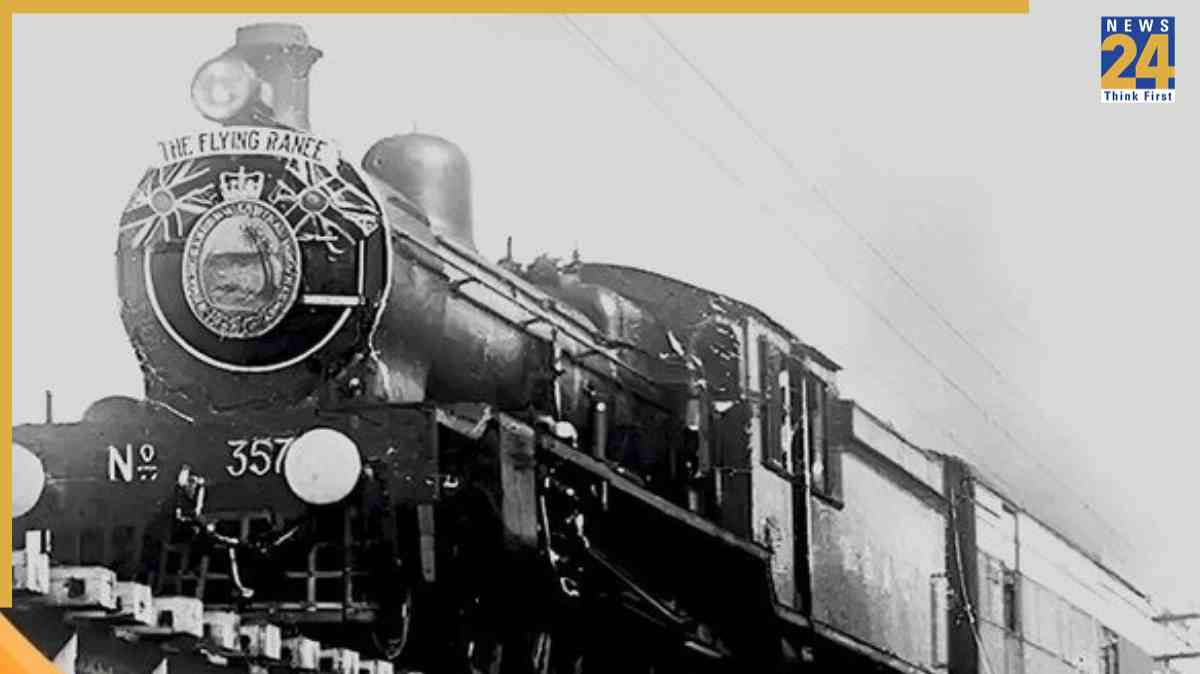


‘Flying Ranee’, a name that invokes nostalgia, has long been a favorite train of many passengers. This historic train connects two key destinations, catering to the needs of daily commuters. But for all rail enthusiasts, here’s an important question: Can you guess the places that the iconic train connects?
Well, there’s an interesting story behind the ‘Flying Ranee’ express. Popularly known as ‘the Queen of Western Railway, the train’s name was given by the wife of the then District Superintendent of Bulsar (now Valsad) at Bombay Central. It first ran in 1906, but was discontinued intermittently in between. It has been permanently resumed again since 1950.
Which Places Does ‘Flying Ranee’ Connect?
The country’s first double-decker coach train, the Flying Ranee Express, connects Mumbai Central to Surat. However, it was replaced with an LHB rake from July 16th, 2023. To meet the passengers’ demand, Western Railway revised the coach composition of the train w.e.f. July 27, 2023.
Interesting Story About The Flying Ranee Express
The Flying Ranee Express started its inaugural trial run on November 01, 1950, with eight coaches departing from Surat railway station. It carried 600 passengers on board in the second and third class accommodations. It also had a dining car for vegetarians and non-vegetarians. This was the first time that the national transporter introduced the reservation facility for Third Class passengers.
According to reports, the Flying Ranee Express train ran six days a week except on Sunday in the 1950s and 1930s. This was the fastest train that connected two key cities with limited stoppage points: Borivali, Palghar, Dahanu, Daman, Udvada, Valsad, Bilimora, and Navsari. Over the years, the Indian Railways revised its stoppages: Gholvad, Umbergaon Road, and Sanjan.
In 1965, Flying Ranee became the fastest medium-distance train in the country. The train was painted with a distinct light and dark coat of blue. Later, in 1976, the train’s colour was changed to a shade of light and dark green. It reportedly started running on electric traction from June 1977. It was the first train to be attached to the double-decker coaches on December 18, 1979.