

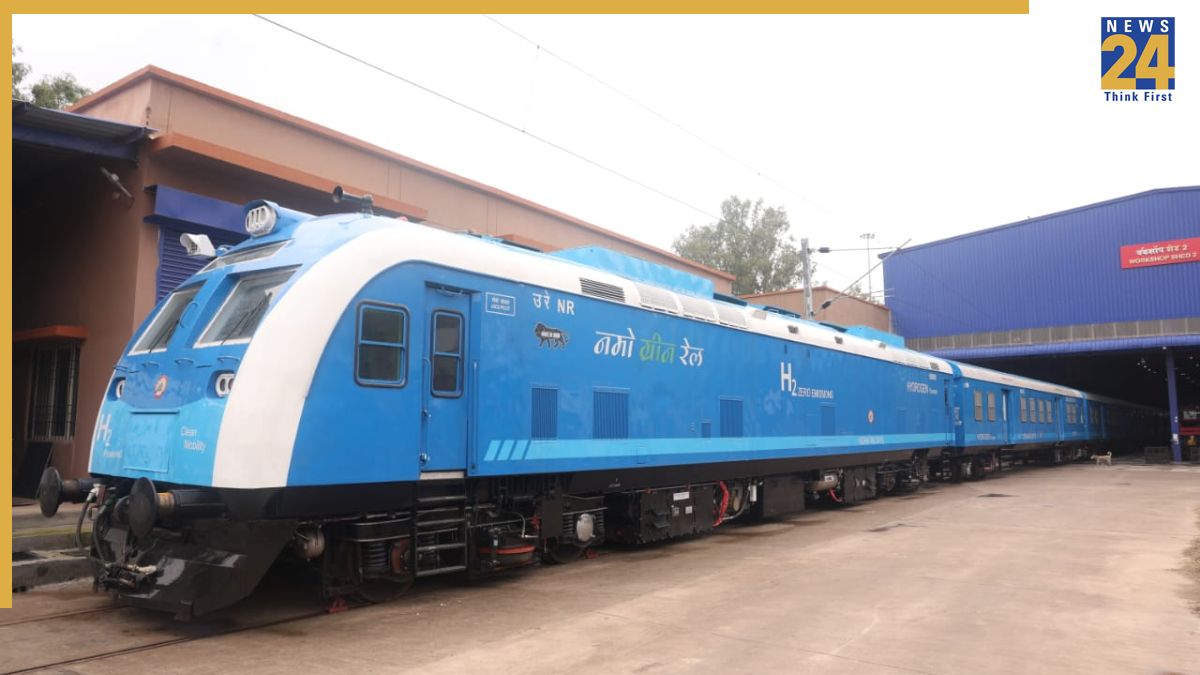


After coal, diesel and electricity, Indian Railways is now looking at hydrogen fuel to run trains. The first hydrogen-powered train is planned on the Jind-Sonipat route. If this experiment succeeds and is expanded, it could become a big step toward reducing carbon emissions in rail travel. However, the project is still in its early stage and a lot of work remains before hydrogen trains become common in India.
What is hydrogen fuel and how does it work?
Hydrogen is rarely found in its free form on Earth. It is usually present in water or natural gas, so it has to be produced. One method is electrolysis, where electricity splits water into hydrogen and oxygen. If renewable energy like solar or wind power is used, it is called green hydrogen, which produces little to no carbon emissions. Another method is extracting hydrogen from natural gas, which creates carbon dioxide and is known as grey hydrogen. When emissions are reduced using carbon capture, it is called blue hydrogen. Hydrogen can also be made from coal, but this method creates the highest pollution.
In trains, hydrogen is used in fuel cells, where it reacts with oxygen to produce electricity. The only thing released from the train is water, which means there is no direct carbon emission from the exhaust.
Why hydrogen trains matter and what comes next
Hydrogen is already widely used in industries like oil refining, fertiliser production, steel making and methanol manufacturing. In transport, its biggest advantage is that trains can run on non-electrified routes without overhead wires, carrying their own fuel onboard.
Many countries are already using or testing hydrogen trains. Germany runs them in regular passenger service, while Canada operates hydrogen-powered trains. Countries like France, Italy, Sweden, Poland, the Netherlands and China have also conducted trials. With its plan, India could become one of the few nations adopting this technology.
According to the Railway Minister, India’s first hydrogen-powered train set will be the world’s longest hydrogen train, with 10 coaches and also the most powerful hydrogen train operating on a broad-gauge network. The train set will have a total power output of 2400 kW. It will include two Driving Power Cars (DPCs), each with a capacity of 1200 kW, making it one of the most advanced hydrogen-powered trains globally.
For Indian Railways, hydrogen trains could reduce diesel use, cut noise and air pollution around stations and support cleaner travel, especially if green hydrogen is used. However, success will depend on building proper fuel infrastructure, ensuring safety standards and maintaining steady fuel supply. Hydrogen may not be a perfect solution yet, but it offers a promising path toward cleaner rail transport in India.