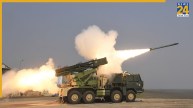

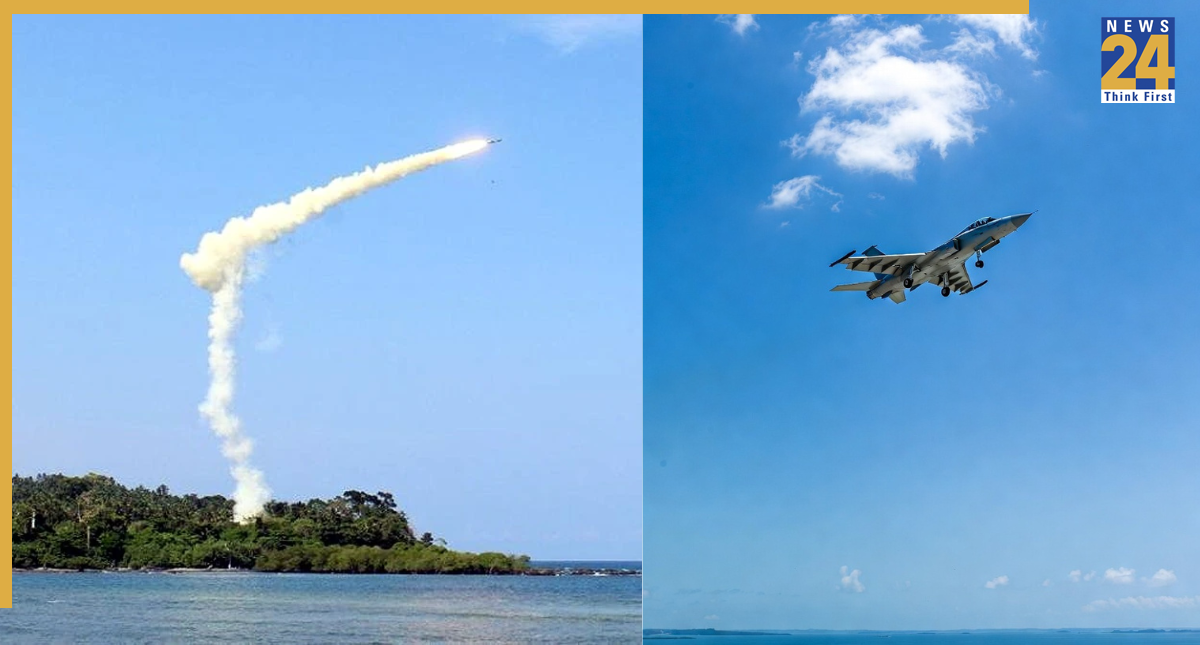


India is preparing for a major strategic test in the Bay of Bengal, prompting authorities to issue a large Notice to Airmen/Air Mission (NOTAM) covering a stretch of nearly 2,520 kilometres. The move signals an upcoming missile trial and has resulted in a temporary no-fly and no-ship zone in the region.
The restricted area will be in force between December 17 and December 20, 2025, from 6 am to 6 pm (IST) each day. During this period, no civilian aircraft or commercial ships will be allowed to pass through the notified corridor to prevent any risk of accidents.
Bigger Restricted Zone Hints at Long-Range Missile Test
Defence experts note that the size of the restricted area is significantly larger than earlier missile tests. In October, a similar exercise covered around 1,480 kilometres, making the current NOTAM much wider in scope.
The expanded zone has led analysts to believe that India may be testing a long-range missile system, possibly one launched from a submarine. The Indian Air Force and Navy will closely monitor the area during the test, as debris from missile launches can fall into surrounding waters.
Test Comes Amid Regional Unrest
The timing of the missile test is also drawing attention. The announcement comes at a time when Pakistan and Bangladesh are witnessing internal political and security turmoil.
In Bangladesh, unrest has been reported after angry crowds allegedly set fire to the Election Commission office. In Pakistan, former ISI chief Faiz Hameed, once considered close to the establishment, has reportedly faced court martial proceedings. Against this backdrop, India’s strategic exercise underlines its focus on national security preparedness.
DRDO Plans Missile Trial Between December 17 and 20
According to defence sources, the missile test is being conducted by the Defence Research and Development Organisation (DRDO). The trial window suggests advanced preparations, with safety protocols in place for both air and sea traffic.
Reports from Indian Defence News indicate that the test aligns with the profile of the K-4 submarine-launched ballistic missile (SLBM), a key component of India’s nuclear deterrence programme.
What Is the K-4 Missile?
The K-4 missile is a solid-fuel ballistic missile developed for launch from nuclear-powered submarines. It is based on technologies from the Agni missile series and is designed to strengthen the sea-based leg of India’s nuclear triad land, air and sea.
The missile was developed under the leadership of DRDO’s Defence Research and Development Laboratory (DRDL). Its development began after the launch of INS Arihant in 2009.
Why the K-4 Is Strategically Important
INS Arihant, commissioned in 2016, and INS Arighat, inducted in 2024, are each equipped with four K-4 missiles. Future S4-category submarines, expected after 2025, will be able to carry up to eight missiles each.
By mid-2025, the K-4 missile had achieved full operational capability on Arihant-class submarines. The current NOTAM, covering a range between 2,520 and 3,550 kilometres, is likely meant for final validation or user trials.
The K-4 gives India the ability to strike targets in China and Pakistan from deep ocean waters, significantly enhancing second-strike capability.
Technical Features of the K-4 Missile
The K-4 missile is 10–12 metres long, has a diameter of 1.3 metres, and weighs between 17 and 20 tonnes. It can carry a payload of up to 2 tonnes, including multiple warheads.
Its operational range is 3,000 to 3,500 kilometres, which can extend to 4,000 kilometres with a lighter payload. The missile uses an advanced inertial navigation system, supported by GPS and NavIC, giving it accuracy of less than 10 metres.
It can be launched from submarines at depths of 20 to 50 metres using a vertical launch system.
Following the K-4, India is working on more advanced submarine-launched missiles. The K-5, with a range of over 5,000 kilometres, and the K-6, capable of 8,000 kilometres with MIRV technology, are under development for future S5-class submarines.
Much of this effort is linked to expanding indigenous defence production and the strategic growth of the Eastern Naval Command based in Visakhapatnam.