



‘Sindoor’ – This word strikes a chord between husband and wife, where sindoor is considered a traditional and holy symbol in their relationship. Yeah, this was the name given to the operation that struck Pakistan to avenge the Pahalgam terror attack. The attack took place on April 22 and claimed the lives of 26 tourists, most of them men, who were reportedly asked about their religion and then shot dead in front of their wives. The women stood there helpless, forced to watch their loved ones die simply for who they were. The horror didn’t end there. The terrorists spared the women, telling them to go back and narrate what had happened- “Go tell Modi.”
Who Gave The Name ‘Sindoor’?
There are reports that India’s Prime Minister, Narendra Modi, personally chose the name ‘Sindoor’ for the operation to avenge the Pahalgam attack. However, an official statement on the naming is yet to be released. Experts interpret the choice of the name ‘Sindoor’ as a symbolic representation of the sacred bond between husband and wife, with sindoor traditionally signifying the marital status and dignity of a married woman. According to Hindu mythology, Sindoor is a mark that married Hindu women apply on their forehead.
A statement released just after 1:30am confirmed the action was in direct response to the April 22 massacre in Pahalgam, in which 26 people, including one Nepali national, were killed. The ministry stated, “We are living up to the commitment that those responsible for this attack will be held accountable.”PM Modi had earlier given the armed forces complete operational freedom to determine the response to the Pahalgam incident, signalling a major shift in India’s counter-terror posture. The strikes were coordinated with top military leadership, and air defence units along the border remain on high alert. Defence Minister Rajnath Singh posted “Bharat Mata Ki Jai” on X shortly after the operation, while the Indian Army stated: “Justice is served.”
What Happened On May 7?
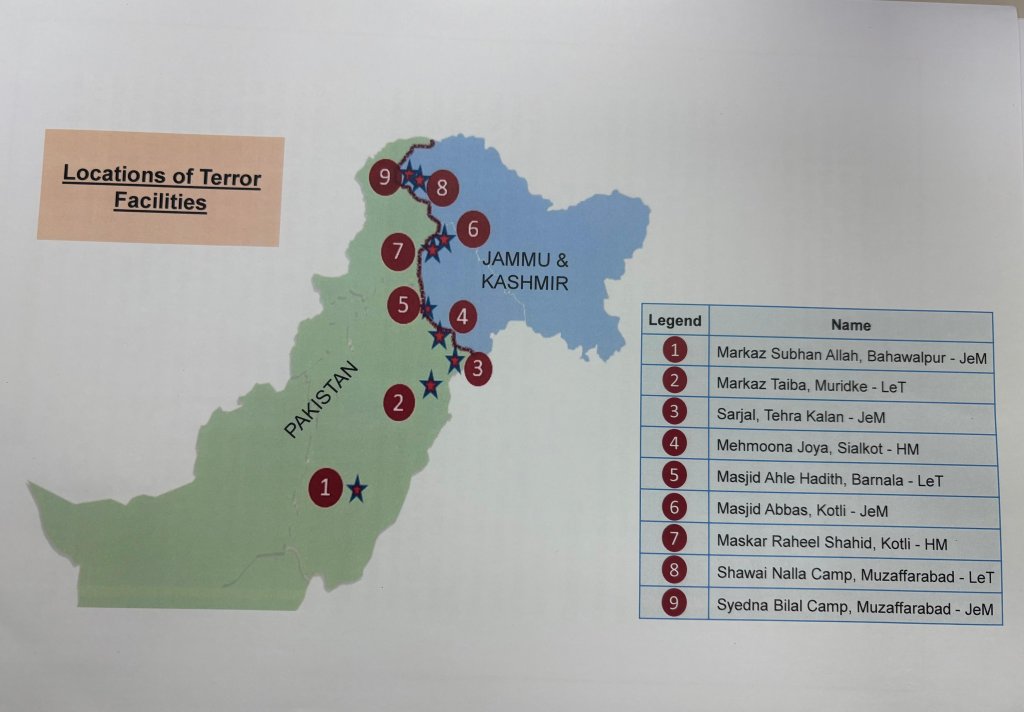
Finally, India has retaliated against the terrorist organisations operating from Pakistan. In a bold move, the Indian Air Force carried out airstrikes late Tuesday night, targeting areas inside Pakistan and Pakistan-occupied Kashmir (PoK). The strikes hit nine terrorist hideouts across seven cities. According to initial reports, over 100 terrorists have been killed in the operation.
This decisive action comes 15 days after the brutal Pahalgam attack and has been named ‘Operation Sindoor’– a tribute to the women who lost their husbands on April 22 in Pahalgam.
Lieutenant General Ahmed Sharif Chaudhary, Director of Pakistan’s Inter-Services Public Relations (ISPR), confirmed that India fired 24 missiles. According to sources quoted by news agency ANI, Prime Minister Modi monitored Operation Sindoor throughout the night.
9 Terrorist Sites Targeted
- Markaz Subhan Allah Bahawalpur
- Markaz Taiba, Muridke
- Sarjal / Tehra Kalan
- Mehmoona Joya Facility, Sialkot
- Markaz Ahle Hadith Barnala, Bhimber
- Markaz Abbas, Kotli
- Maskar Raheel Shahid, located in Kotli District
- Shawai Nallah Cam in Muzaffarabad
- Markaz Syedna Bilal
Why Were These Specific Terror Bases Chosen?
India selected nine specific locations for the operation, each of which had a known connection to major terrorist attacks and infiltration attempts targeting the country. These sites were not chosen randomly; they were identified after thorough assessments that highlighted their importance within the broader terrorist network operating across the India-Pakistan border.