

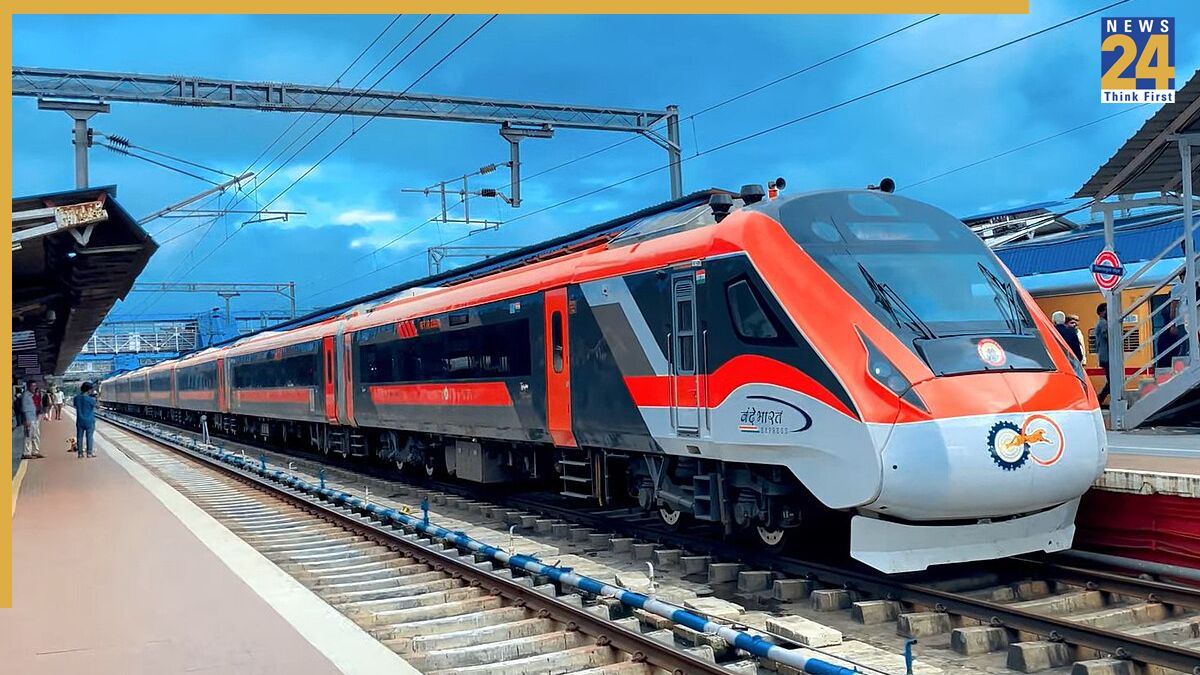


India has made remarkable progress in railway electrification over the past 75 years. In 1950, only 0.7% of the country’s railway network was electrified, a figure that has now surged to 98.8%. Along with China, India is among the leading countries in railway electrification. Globally, only a few nations have achieved full electrification, while in developed countries like the United States and Canada, less than 1% of rail networks run on electricity, with most trains still relying on diesel.
Slow start, steady growth
Railway electrification in India began after independence, but the initial pace was slow. By 1961, only 1.3% of the network was electrified. Ten years later, in 1971, this figure increased to 7.6%. However, progress stagnated between 1971 and 1981, reaching just 8.7%. The pace picked up from 1981 to 1991, doubling to 16% and by 2001, it had grown further to 23.6%.
🇮🇳 Indian Railways Electrification Progress:
— World of Statistics (@stats_feed) December 11, 2025
2025: 98.8%
2024: 90.8%
2023: 84.7%
2022: 76.1%
2021: 67.2%
2020: 58.7%
2019: 50.9%
2018: 43.7%
2017: 37.9%
2016: 35.6%
2015: 33.9%
2014: 33.0%
2011: 29.6%
2001: 23.6%
1991: 16.0%
1981: 8.7%
1971: 7.6%
1961: 1.3%
1950: 0.7%
Rapid acceleration in the last decade
By 2011, India’s electrified railway network stood at 29.6%, rising to 33% in 2014. The next 11 years witnessed unprecedented acceleration. By 2020, 58.7% of the railway network was electrified and by 2025, India achieved 98.8% electrification. Comparatively, countries like Switzerland and Singapore operate fully electrified rail networks. Belgium has 82%, South Korea, the Netherlands, Sweden, Austria and Japan operate 75-78% electrified networks, while the UK has 38% and Australia just 10%.
This achievement marks a significant milestone in India’s push towards sustainable and efficient rail transport, reducing reliance on fossil fuels and contributing to environmental conservation. The electrification drive has not only modernised the railways but also positioned India among the global leaders in rail infrastructure modernization.
India’s journey from a mere 0.7% electrified network in 1950 to nearly full electrification today reflects the country’s long-term commitment to building a green, efficient and modern railway system.