


News24 Exclusive: In the early hours of May 7, 2025, the Indian Armed Forces responded to the April 22 Pahalgam attack with “Operation Sindoor.” They avenged the death of the 26 tourists in a series of precision missile strikes targeting nine terrorist infrastructure sites across Pakistan and Pakistan-administered Kashmir. On Tuesday, Maj Gen KVS Lalotra AVSM, YSM, SM ( Retd), a veteran of the Indian army, recalls how ‘he practiced the mock drills as a young child’.
“I belong to a village near Pathankot. My family came from Shakar Garh. We lived in what is now Pakistan, and came as migrants, like the Pakistani Chief has gone the other side, we came this side, and we decided that our destiny lay with India, so we decided to settle over here,” Maj Gen Lalotra said. He deeply reflected on how deeply rooted civil preparedness once was, saying, “What you are practising now is something which every village practiced, every student practiced.” He advocates for the integration of such training into the school level.
“The drilling has to start at the school level. I studied in a school where you had to fall in within 30 seconds; we were taught how to do all the blackouts, get into trenches, and gutters. We prepared emergency rations, and we stored them over there.” Meanwhile, he also emphasized, “If Pakistanis have to practice the mock drills, they better store up water and all sorts of stuff – basic things like flour.”
Recounting his formative years spent in the border regions of Punjab and Jammu & Kashmir, Maj Gen Lalotra said, “Each one of us, in 1975 and 1961, had an underground bunker within our own homes. Every time there was an air raid siren, we could identify the sound of Indian aircraft and Pakistani aircraft. India has a civil defence organisation, but you can’t be reactive; For any drill to be perfect, it requires years of practice.”
In a striking commentary on Pakistan’s long-standing hostile doctrine toward India – ‘Bleed India With A Thousand Cuts’, he elaborates, ” The quote is attributed to Former Pakistani PM Zulfikar Ali Bhutto. Pakistan is about to start eating grass…Soon they will eat grass. They said they will use a thousand cuts, because we know an elephant cannot be cut by one cut.” The real consequence, he highlights, is that Pakistan has inflicted wounds upon itself.
The Indian army veteran offered a piercing critique of how that strategy has played out in reality, noting, “In the last 75 years, the graph doesn’t show us bleeding. By now, we should have been in the ICU, but we are up and about, SHINING. Reflecting upon, “Has the current chief changed the strategy?” he said, “One way to win a war is also to know who your opponent is. Here, the opponent doesn’t seem to be the Paskitani army but the ISI-trained generals who keep coming and going, and the fundamentalist – The person who can’t even recognize that he is sitting in our ancient Indian city called Takshila. If he can’t recognize his roots, and has gone from India and settle there. This man hasn’t changed; he is just doing what Mr. Bhutto did. He is just following that, and he is a fundamentalist. He has been part of the ISI, unable to face the Indian soldiers. Each one of them who comes here comes with a way passport. Many had gone back and they find this as a cheaper option, so Munir’s worry is not only India, his worry is Pakistan imploding.”
Drawing on his own experience as part of the generation shaped by the wars of 1962, 1965, and especially 1971, Maj Gen Lalotra (Retd) said, “I am a product of immediately after the 1971 war; we did see the 1962, 1965 wars as students. The 1971 war was more or less like people who were part of the moment of crushing Pakistan at that time. We were about to join the academy at that time, and we were immediately deployed on commissioning in the border areas, and thereafter we have seen ‘no war, no peace’, which means most of us of my vintage have had many tenures in Jammu and Kashmir.”
He also offered a contrast between what they faced and what the current soldiers would face, noting, “This time Pakistan will not go unpunished, the punishment has started.” He sees a visible shift in both capability and confidence – “The difference is at every level, from a soldier to a sub-unit commander to a unit commander, For Mission Commander, Chief, and the Prime Minister of the country. Each of the wars is fought differently, and no war will be seen as the last war. In any case, the last war that you fought or the skirmish that you had with Pakistan was Kargil. And before that was 1971. The war was in 1971. The battlefield is far more transparent. So everyone knows who’s moving with how much and where to. But today’s soldiers are far brighter. Today’s commanding officers are far better informed, better trained than we were. Let me tell you, we were excellent, by all standards. But today, they are even better than us in all ways. We were the successors of a victorious army, therefore, we had to live up to the standards. The Prime Minister said they are free the services are free to do what they wish. It didn’t happen at that time, this is the difference now. Our capabilities are immense now.”
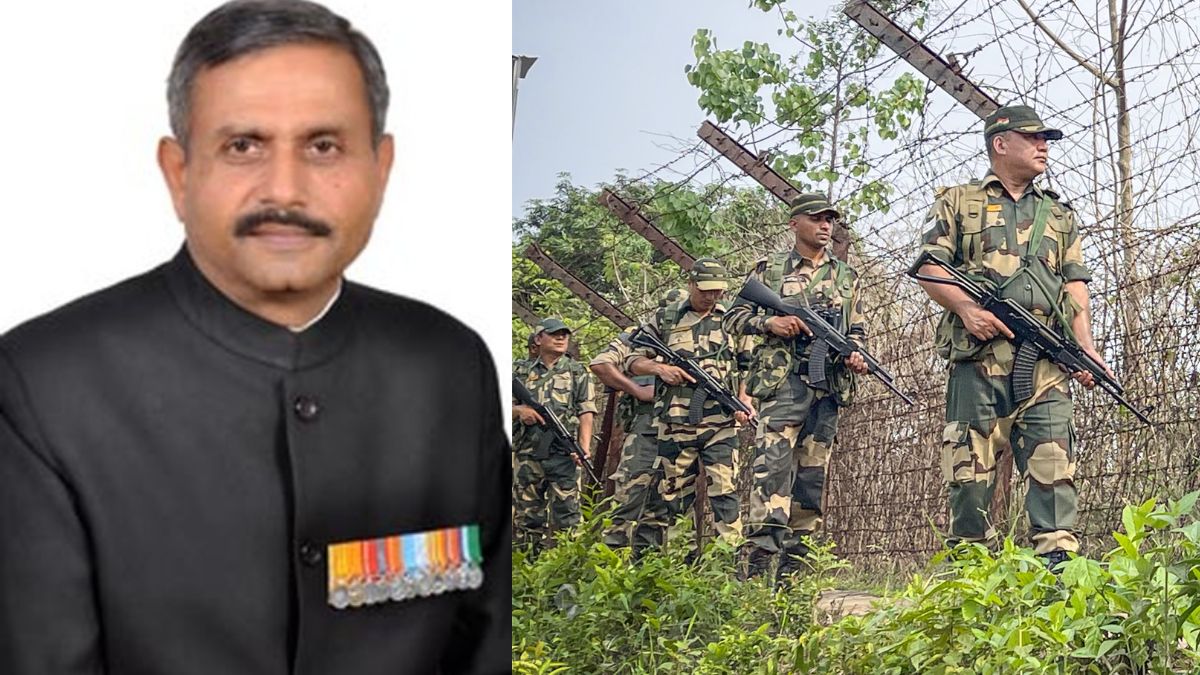
About Maj Gen KVS Lalotra (Retd)
Maj Gen K.V.S. Lalotra, AVSM, YSM, SM (Retd), is a veteran of the Indian Army with a distinguished career spanning over three decades. Known for his expertise in mountain and jungle warfare, he held several key command, staff, and instructional roles throughout his service. He was commissioned into the 1/11 Gorkha Rifles and commanded the 2/11 Gorkha Rifles along the Line of Control in Bhimber Gali, Rajauri sector. He has also led a brigade in the same region and a Mountain Division in Sikkim, and concluded his military career as the head of the Territorial Army. His operational insights and experience make him a critical voice in understanding India’s evolving security dynamics.
Also Read: China Reacts To Operation Sindoor, Says ‘India And Pakistan Will always Remain…’