


The Election Commission of India (ECI) on Sunday announced a one-week extension to the schedule for the ongoing Special Intensive Revision (SIR) of electoral rolls in 12 States and Union Territories, moving key deadlines forward as the commission pushes to finalise the voter lists with 1 January 2026 as the qualifying date.
What changed in the revised timeline
In an official press note issued by Apurva Kumar Singh, AD, ECI, the commission said it has issued a revised schedule that shifts all relevant dates by one week. Under the updated calendar:
- Enumeration and rationalisation/re-arrangement of polling stations must now be completed by December 11, 2025 (Thursday).
- Updation of the control table and preparation of the draft roll will take place from December 12–15, 2025 (Friday–Monday).
- The draft electoral roll will be published on December 16, 2025 (Tuesday).
- Claims and objections on the draft can be filed from December 16, 2025 to January 15, 2026 (Tuesday–Thursday).
- The notice phase: including issuance, hearing, verification and disposal of claims and objections by Electoral Registration Officers (EROs), will run concurrently from December 16, 2025 to February 7, 2026 (Saturday).
- ECI has set February 10, 2026 (Tuesday) as the deadline for checking health parameters of the rolls and obtaining the Commission’s approval for final publication.
- The final electoral roll is slated for publication on February 14, 2026 (Saturday).
The revision keeps 1 January 2026 as the qualifying date for inclusion in the rolls.
How the SIR is being executed on the ground
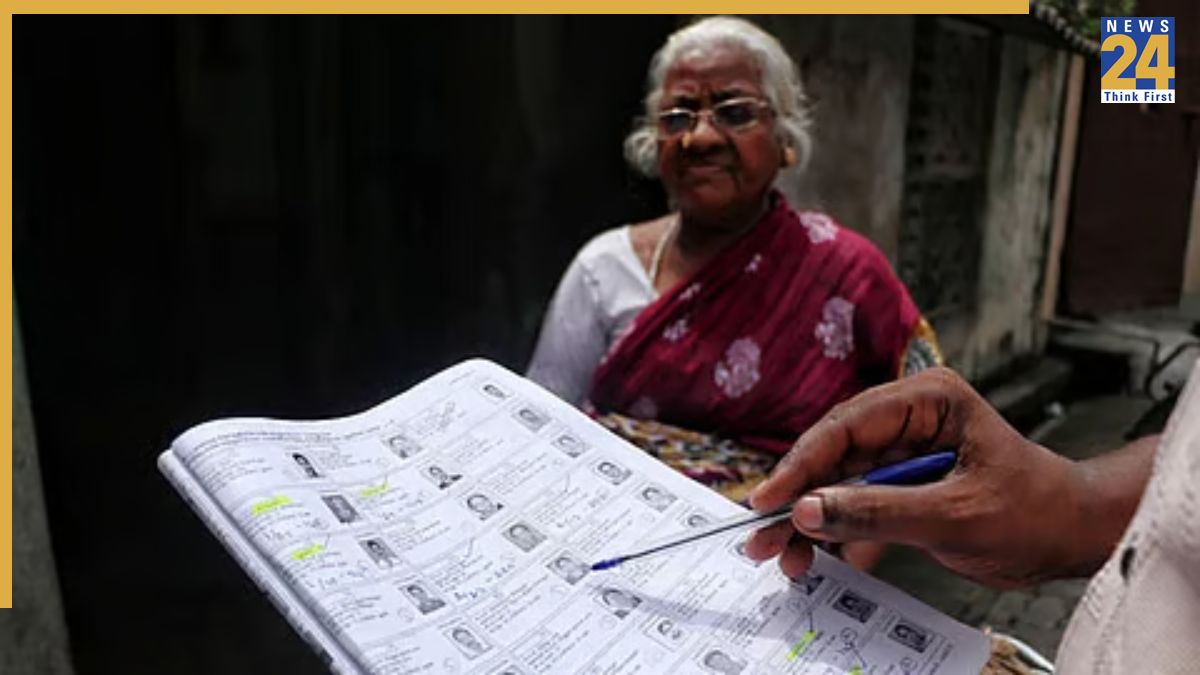
The SIR, which began on November 6, is being rolled out across nine States and three Union Territories. Booth-level officers have been deployed to distribute semi-filled enumeration forms to electors and assist them in completing required details, a step the ECI says will accelerate enrolment and corrections ahead of the qualifying date.
Where the SIR is taking place
The 12 States and UTs covered in this round are: Andaman and Nicobar Islands, Lakshadweep, Chhattisgarh, Goa, Gujarat, Kerala, Madhya Pradesh, Puducherry, Rajasthan, Tamil Nadu, Uttar Pradesh and West Bengal.
Political heat and differing reactions
The SIR has ignited sharp political reactions in several regions. The Trinamool Congress (TMC) has criticised the exercise, calling it a ‘con job’ by what it describes as a compromised poll body. TMC leader Derek O’Brien has been among those vocally questioning the timing and intent of the drive. In Tamil Nadu, the ruling DMK and its allies have opposed the revision and even challenged the ECI’s October 27 notification in the Supreme Court, characterising the exercise as a ‘de facto NRC.’
By contrast, the Bharatiya Janata Party (BJP) has welcomed the SIR as a transparency measure, and its ally AIADMK in Tamil Nadu has backed the exercise. In Uttar Pradesh, the SIR is being carried out under the theme ‘Shuddh Nirvachak Namavali – Majboot Loktantra’ (Clean Electoral Roll – Strong Democracy).
Special cases and the wider rollout
This is the second round of SIR after Bihar, where the final voter list of nearly 7.42 crore electors was published on September 30. Assam will follow a different timeline because a Supreme Court-supervised citizenship verification exercise is underway there, including questions around the applicability of separate provisions of the Citizenship Act.
What’s next
With the revised schedule, the ECI aims to complete objections, hearings and administrative checks well before the February 14 final publication date. As the exercise continues, political parties and civil society are likely to keep up scrutiny, especially in states headed for elections in 2026.