

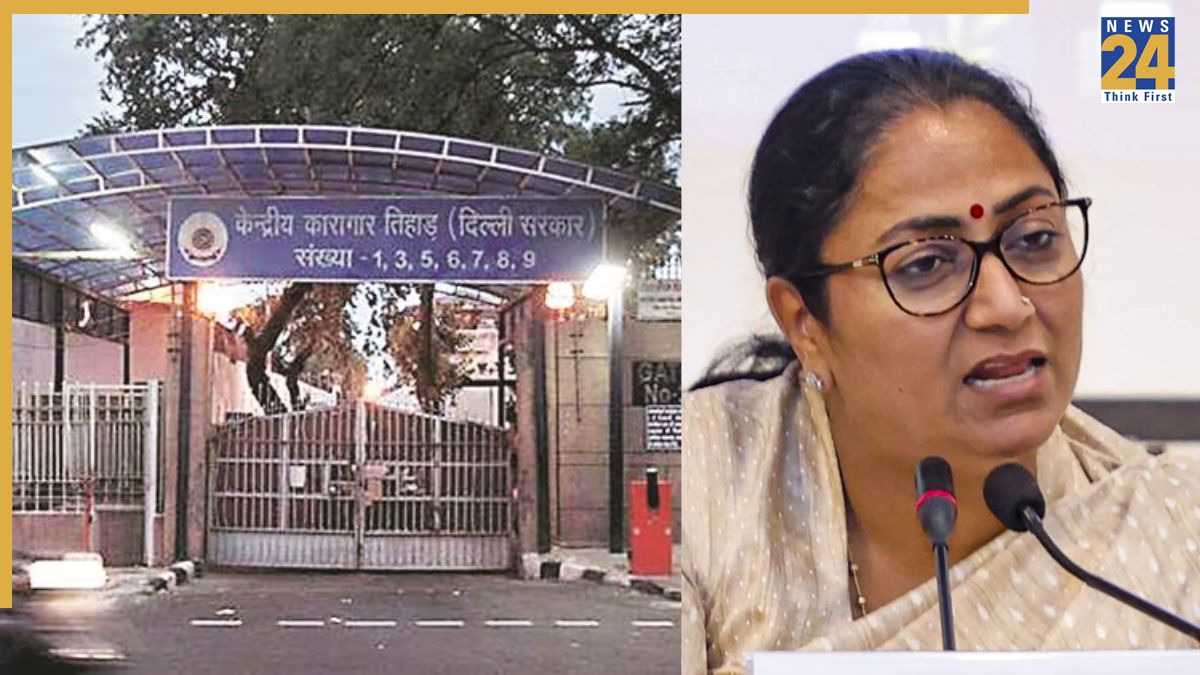


Delhi Chief Minister Rekha Gupta on Saturday said the state government is working on a proposal to move Tihar Jail out of the city and relocate it to Delhi’s outskirts. She said the move is part of a broader effort to improve the justice system by easing pressure on existing facilities and expanding judicial infrastructure across the capital.
The chief minister also announced plans to construct new court blocks and additional courtrooms, stressing that widening access to justice is a major focus area for the Delhi administration. Her remarks came during an event organised by the Society of Indian Law Firms (SILF), which marked 25 years since its establishment. The programme brought together senior policymakers, judges and members of the legal fraternity to discuss the future of justice delivery in the country, PTI reported.
‘Justice reforms essential for better living’
Speaking at the event, Gupta linked quality of life with the effectiveness of the justice system. ‘Ease of living cannot be achieved unless ease of justice is fulfilled. This is why, after the Modi government came to power, hundreds of obsolete laws were repealed, and nearly 1,500 laws were removed,’ she said.
She further explained the steps being taken by the Delhi government. ‘We are working to maximise the reach of justice by building additional court blocks and courtrooms, strengthening fast-track courts, and we are also working towards shifting the Tihar Jail to the outskirts of Delhi,’ Gupta said.
The chief minister also congratulated SILF on completing its 25-year journey and remembered late BJP leader Arun Jaitley, noting that the organisation was launched under his guidance. She said SILF has played a key role in offering a common platform for legal professionals from different sectors.
How Tihar Jail evolved over the years
Tihar Jail, formally known as Tihar Prisons, came into existence in 1958 with the setting up of a central jail in Tihar village in west New Delhi. At the time, it had the capacity to house 1,273 inmates and was managed by the Punjab government.
Administrative control of the prison was transferred to the Delhi government in 1966. Since then, the complex has grown into one of the largest prison systems in the country, comprising multiple central jails and accommodating thousands of prisoners.