

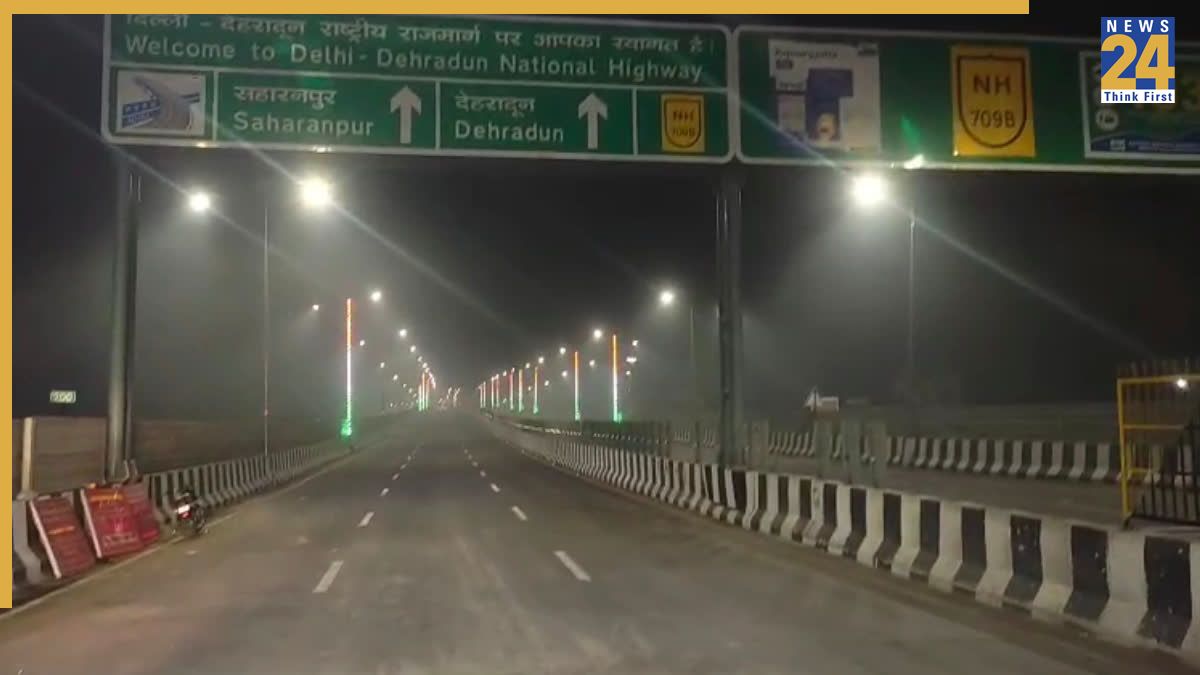


One of India’s most ambitious highway projects, the Delhi–Saharanpur–Dehradun Expressway, was opened to the public today for trial use. With all barricades removed early in the morning, vehicles started moving smoothly on this newly built 210-kilometre, 6-lane expressway.
Major relief from traffic jams
Commuters expressed relief as traffic began flowing on the route. A motorcyclist on the expressway shared, ‘It has been opened today for a trial run. This expressway will help us avoid traffic jams and save time. We hope the government inaugurates it fully for public use soon.’
#WATCH | Delhi | Delhi–Saharanpur–Dehradun Expressway opened for trial run today
— ANI (@ANI) December 1, 2025
Once fully operational, the expressway is expected to reduce the Delhi-Dehradun journey from the usual 6-6.5 hours to 2-2.5 hours
A motorcyclist says, "Today it has been opened for a trial run.… pic.twitter.com/0KQjjGT1ee
Key features of the expressway:
- The Delhi–Dehradun Expressway is approximately 210 km long and designed as a 12/6-lane expressway.
- Travel time between Delhi and Dehradun will reduce drastically from 6.5 hours to around 2.5 hours.
- The project has been built at an estimated cost of Rs 13,000 crore.
- It includes essential amenities such as emergency services, restaurants and fuel stations.
- Special emphasis was placed on environmental protection, with abundant greenery visible along the route.
- It is positioned to be one of India’s most modern expressways, offering a smooth and pleasant travel experience.
Boost to connectivity and regional growth
As a flagship project of the central government, the expressway is expected to benefit millions of commuters. Its primary aim is to provide a faster connection between Delhi, the national capital, and Dehradun, the capital of Uttarakhand. Along with reducing travel time, the project is expected to boost economic development, tourism, and trade in the region.
Route and construction highlights
The expressway begins at Akshardham in Delhi and reaches Dehradun, passing through major cities like Baghpat, Shamli and Saharanpur. It also connects with the Eastern Peripheral Expressway at Khekra.
Constructed in four phases, the first phase, between Akshardham and the Eastern Peripheral Expressway junction, was completed six months ago. The project also includes Asia’s longest 12-kilometre elevated corridor in the Rajaji National Park area and six underpasses for safe movement of wildlife.
Public opening timeline
With trial operations now in progress and the final touches being added across remaining stretches, authorities expect the expressway to be fully operational for public use by early 2026. The official inauguration will take place once all four phases pass safety checks and receive final clearance from central agencies overseeing the project.