
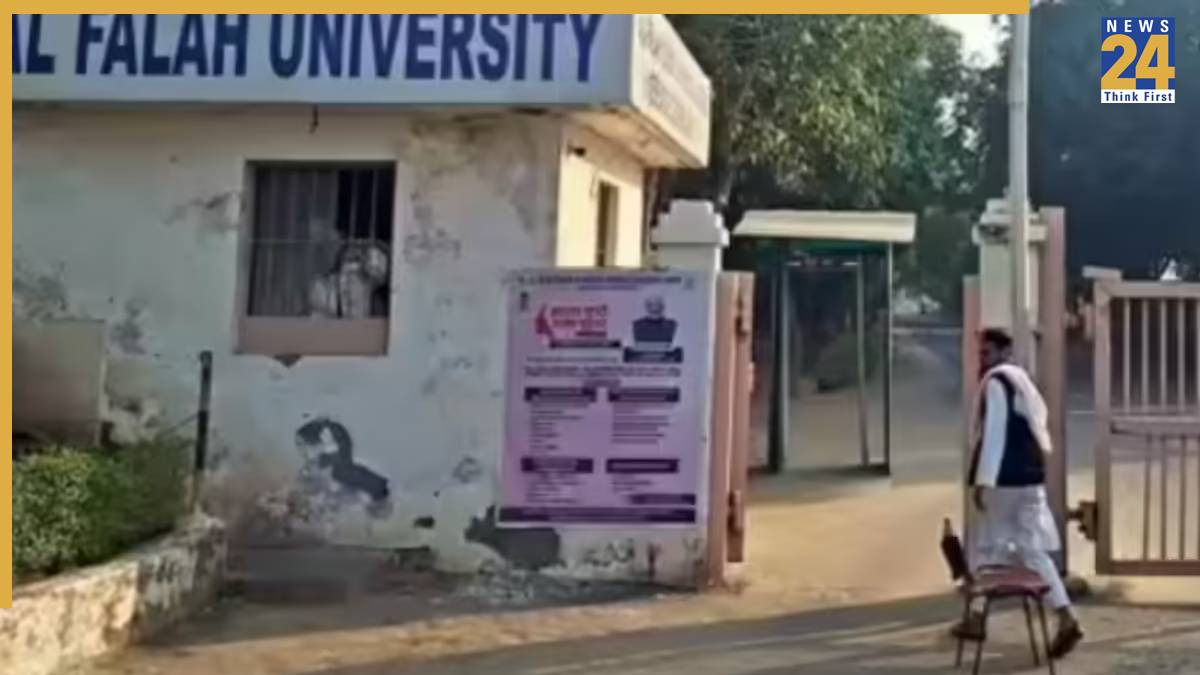


In the aftermath of the deadly Delhi car blast, Al Falah University has come under intense scrutiny. The university has become the subject of critical allegations, as investigations have revealed that it was providing wrongful information and indulging in financial fraud. The University Chairman, Javed Ahmed Siddiqui, has been taken into ED custody for 13 days.
ED has arrested the chairman under Section 19 of the Prevention of Money Laundering Act (PMLA), 2002. Several terrorists arrested in the Delhi blast case—and in the terror module that was busted in Faridabad—were linked to Al-Falah University, further raising suspicion about the institution’s activities.
10 Big Lies About the University
1. According to the Enforcement Directorate (ED) and police sources, the university misused its recognition. Even after its accreditation expired, it made false regulatory claims and diverted crores of rupees collected from students through companies linked to the university.
2. Senior officials involved in the investigation told News18 that archived versions of the university’s old website showcased National Assessment and Accreditation Council (NAAC) grades for the School of Engineering and Technology and the Teacher Education Department, even though these accreditations had already expired.
3. As per media reports, expired certifications were being falsely shown as valid on the website. A source said this was not an accidental occurrence but a deliberate and ongoing practice.
4. The university also claimed eligibility under Section 12(B) of the University Grants Commission (UGC) Act, which allows institutions to receive government grants.
5. Investigators highlighted that Al-Falah University never applied for such recognition and therefore had no legal right to claim it.
6. Officials pointed out that these false claims enhanced the university’s credibility and legal standing, directly impacting admissions. Media reports claim that students and parents paid fees based on these claims, believing they were enrolling in accredited and approved programs.
7. A financial analysis conducted by the ED revealed that the university’s affiliated colleges earned an educational income of approximately Rs 415.10 crore between financial years 2018–19 and 2024–25. The agency says this money constitutes “proceeds of crime” because it was allegedly earned through fraud, deception, and forgery.
8. The investigation also uncovered an organised money-laundering network. Officials say hostel and mess fees were funneled into a firm called Amla Enterprises LLP, allegedly controlled by family members linked to the institute.
9. Investigations further revealed that companies such as Karkun Constructions and Developers were allegedly used to divert and conceal construction-related funds. Financial records obtained by the ED documented these transactions.
10. Investigators also found that all major institutions affiliated with the university—its colleges and charitable trust—were operating under a single PAN number (AAATA0235F). Income tax returns were filed solely in the name of the trust. According to media reports, this created a single financial channel that concealed the actual revenue flows of individual institutions.
Also Read: Bihar Politics: Deputy CM Vijay Kumar Sinha vs Samrat Chaudhary, who is richer?