
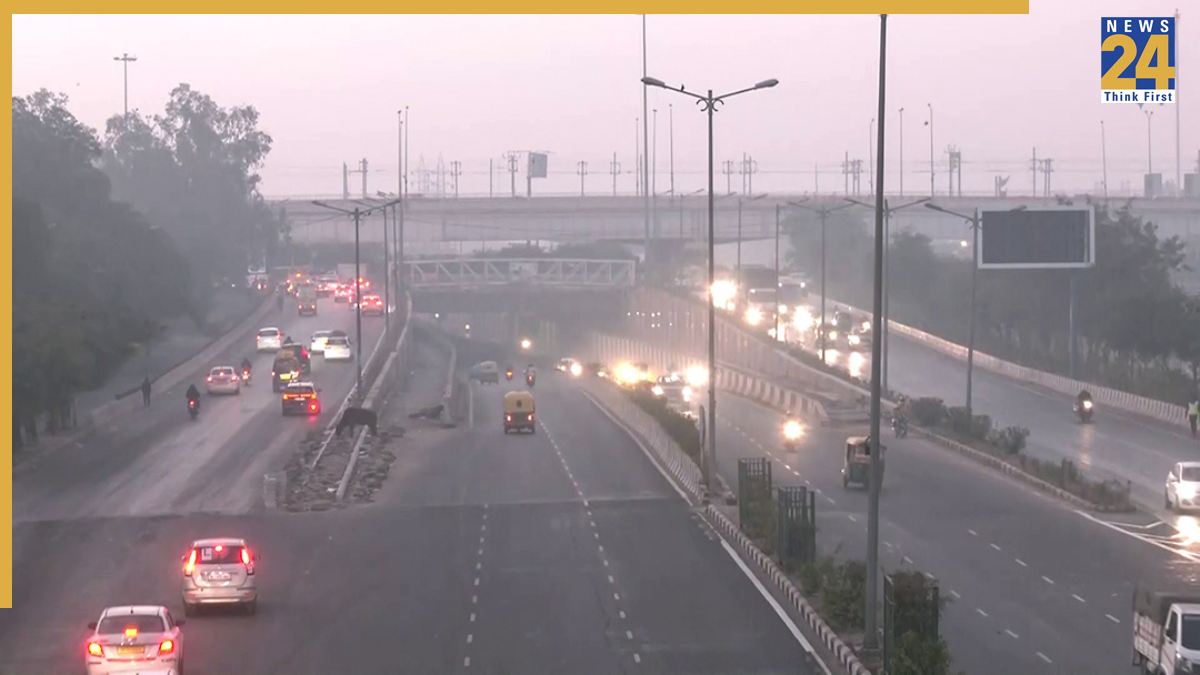


The Central Pollution Control Board (CPCB) reported that Delhi’s average Air Quality Index (AQI) stood at 323 on Friday morning at 8 am, keeping the city in the “very poor” category as residents woke up to a thick layer of haze. Although air quality had shown some improvement over the past few weeks, many areas of the capital were still covered in dense pollution. Early morning reports noted particularly heavy smog in Ghazipur and Akshardham, where visibility was significantly limited. Several other parts of the city also remained in the “very poor” category, according to the CPCB. The region around Anand Vihar faced the worst conditions, with the AQI reaching 348, blanketed under a heavy layer of toxic fog.
Bawana and Akshardham Worst Hit as AQI Stays ‘Very Poor’
At 8 a.m. today, Bawana recorded the highest Air Quality Index (AQI) in Delhi at 325, placing it in the “very poor” category. By contrast, NSIT Dwarka had an AQI of 269, which is classified as “poor,” according to the Central Pollution Control Board (CPCB). The Akshardham area continues to be blanketed in a thick layer of toxic smog, with an AQI reading of 348, also falling in the “very poor” range. For context, the AQI is measured on a scale from 0 to 500 and is divided into six categories to indicate the severity of air pollution and its potential health impact. An AQI of 0–50 is considered “good,” 51–100 is “satisfactory,” 101–200 is “moderate,” 201–300 is “poor,” 301–400 is “very poor,” and 401–500 is classified as “severe,” as defined by the CPCB.
Isolated cold wave conditions continues to be weak
Difficult weather circumstances exacerbate the dangerous air. For Friday, the India Meteorological Department (IMD) forecast mostly cloudy skies with isolated cold wave conditions and shallow morning fog, with minimum temperatures of about 5 degrees Celsius. It is anticipated that winds will continue to be weak, mostly from the northwest, with speeds of less than 12 kmph, which will not significantly disperse the deeply ingrained pollutants. This smog crisis’s timing highlights a concerning pattern that the Centre for Science and Environment (CSE) recently examined. Its assessment, which was made public earlier this week, evaluated annual and early winter trends in air quality and found increasing toxicity and a deteriorating state in the NCR’s smaller towns.
CSE points to local pollution as key reason for Delhi AQI
Crucially, the CSE evaluation noted that, despite a “significantly lower contribution from farm fires,” Delhi’s air quality had declined to the “very poor” to “severe” range this season. This research highlights the significant impact of emissions from vehicles and other combustion sources, firmly shifting the attention to local pollution sources within the city and the NCR. Long-term improvements in the city’s air quality could be reversed, according to the analysis.