



The nature of warfare has changed rapidly in the 21st century. After the First and Second World Wars, defence technology has moved far beyond traditional ground forces. While the army once played the most dominant role, today advanced technology such as stealth fighter jets, drones and even sixth-generation aircraft are shaping modern battles. Countries around the world are investing heavily in next-generation defence systems, and India is not far behind.
A few months ago, India launched the Advanced Medium Combat Aircraft (AMCA) project, which focuses on developing fifth- and sixth-generation fighter jet technologies. The government has allocated Rs 15,000 crore for the project’s initial phase. Along with fighter jets and drones, India is also strengthening its missile technology. Reports suggest that India is now developing a missile that can confirm its target before launching a final attack. This missile is being designed specifically for the Indian Air Force and once inducted, it is expected to multiply the IAF’s combat capability.
DRDO developing smart next-generation cruise missile
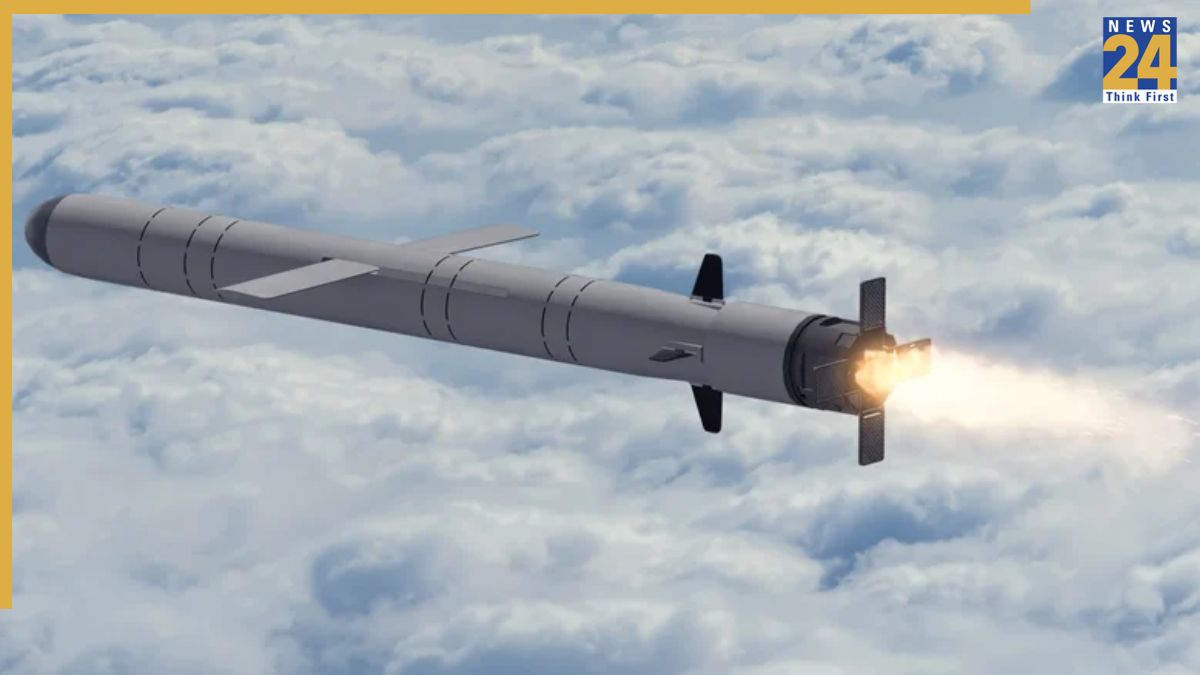
The Defence Research and Development Organisation (DRDO) is working on a next-generation cruise missile for the Indian Air Force. With a strike range of around 250 kilometres, the missile will introduce a completely new operational approach. It will combine the power of a traditional cruise missile with surveillance and loitering munition capability.
According to the Indian Defence Research Wing, after being launched, the missile will be able to hover over a target area for a certain period, gathering real-time information. Unlike current cruise missiles, where the target is fixed at launch, this system allows the weapon systems officer in the launching fighter jet to confirm the target before approving the strike. This is expected to reduce the chances of wrong attacks and civilian damage. Existing missiles like BrahMos and the Agni series do not have this feature.
Why it could be more powerful than BrahMos
The missile’s biggest strength is its target-confirmation feature. It will strike only after the target is verified, helping avoid collateral damage. The missile can carry a warhead of at least 50 kg, enough to destroy different types of targets.
It will have a modular design, allowing different payloads based on mission needs, including infrared sensors and advanced guidance systems. Navigation will be supported by INS and GPS, while its loitering ability will allow it to send live images back to the aircraft, enabling human-controlled precision strikes. The missile will be capable of attacking both land and sea targets, including moving warships and hidden or time-sensitive enemy positions.