

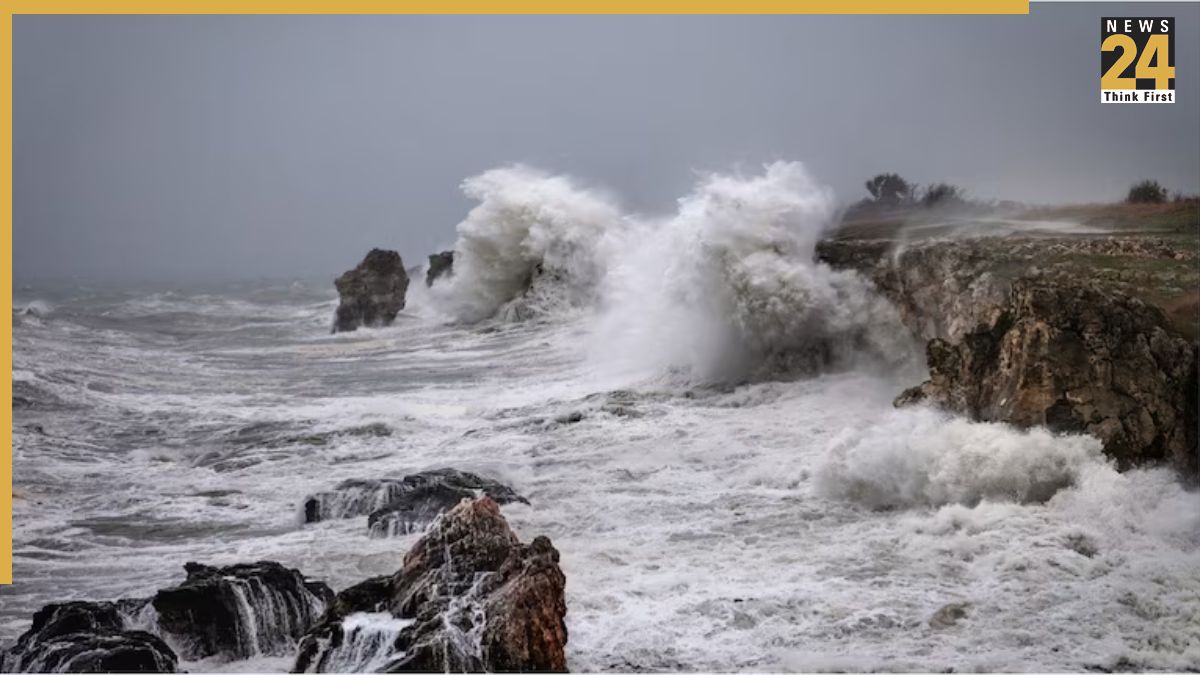


The India Meteorological Department (IMD) on Saturday warned that Cyclone Shakti, the first cyclonic storm of the season in the Arabian Sea, has strengthened into a severe storm. It is likely to cause heavy rainfall and strong winds along the Maharashtra coast in the next few days. There has always been discussion about how hurricanes, typhoons, and cyclones are named. Here’s a break up of these cylones are named.
How are cyclones named?
Hurricanes, typhoons, and cyclones are named according to a list created by regional meteorological organisations. Each region (like the Atlantic, Pacific, or Indian Ocean) has its own list of names, which are used in alphabetical order each season. Names are usually chosen to be short, easy to remember, and culturally familiar. If a storm is particularly deadly or costly, its name is retired and replaced with a new one.
Cyclone Shakti
IMD had classified Cyclone Shakti as a Severe Cyclonic Storm (SCS). It developed in the east-central Arabian Sea, with wind speeds expected to reach 130–145 km/h. Cyclones are a representative example for studying the physical processes of tropical cyclone development, the role of ocean heat, Earth’s rotation, and unstable air. Cyclones like this are common in the North Indian Ocean Basin.
How did this cyclonic storm in the Arabian Sea get its name Shakti?
Name and Regional Origin: The name ‘Shakti’ for the cyclone was contributed by Sri Lanka. It follows the naming convention maintained by the World Meteorological Organisation (WMO) and the United Nations Economic and Social Commission for Asia and the Pacific (ESCAP) Panel on Tropical Cyclones. This is a panel with 13 member countries bordering the Bay of Bengal and the Arabian Sea. It include including India, Bangladesh, Oman, and Myanmar. Each country is responsible for suggesting names from pre-approved lists.
IMD’s Role in Naming Storms
The IMD is the Regional Specialised Meteorological Centre (RSMC) for tropical cyclones in the North Indian Ocean. It gives official names to storms using a regional system. Naming storms helps people identify them quickly, share warnings, and stay aware of approaching cyclones.
Cyclone Shakti: Maharashtra under high alert!
Maharashtra has put many coastal and inland districts on moderate to high alert. Winds of 45–55 km/h, with gusts up to 65 km/h, and very rough seas have been reported along the northern coast. The state government has activated disaster management plans and prepared for evacuations. People, especially fishermen and those living near the coast, are advised to stay indoors and follow official warnings. Heavy rain may also cause flooding and waterlogging in inland areas.
How is Cyclone Shakti formed?
Cyclone Shakti formed over the east-central Arabian Sea near 21°N and 66.8°E, southwest of Naliya, east of Porbandar, and south of Karachi as of October 3, 2025. Moving northwest under subtropical winds, the cyclone was fueled by the Arabian Sea’s geography, which traps heat and moisture, creating ideal conditions for its formation during the post-monsoon season.