
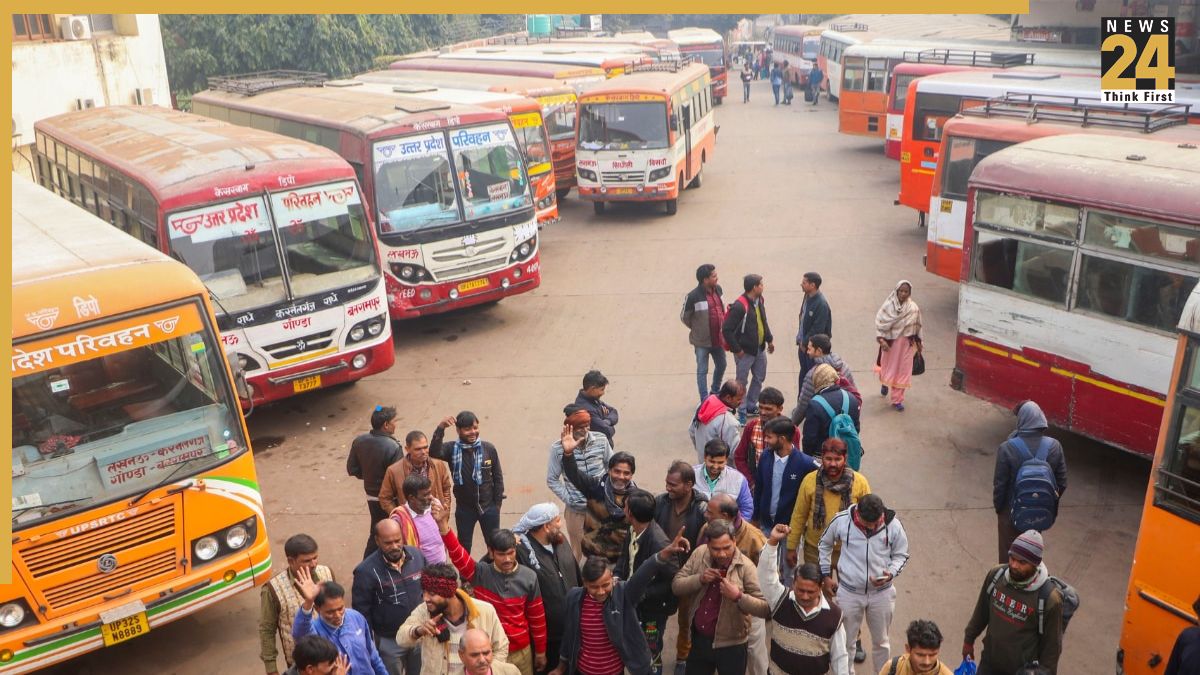


Ghaziabad news: In a major development for Uttar Pradesh, one of its districts is set to get an interstate bus terminal that will offer direct bus services to various parts of the state, as well as to Uttarakhand, Bihar, and Nepal. The ₹161 crore project will be completed in two years.
Where will the project come?
Until now, UPSRTC buses to several states, including Nepal, have been running from Delhi’s major bus terminals—Kashmere Gate and Anand Vihar. Ghaziabad is now set to house this project. The terminal will be built in Ghaziabad’s Sahibabad.
How will the project operate?
This proposed modern bus terminal in Sahibabad is being developed on a Public-Private Partnership (PPP) model. Significantly, upon its completion, passengers will not only enjoy direct bus services to Uttar Pradesh and surrounding states—Bihar, Uttarakhand, and Rajasthan—but buses will also operate from here on major routes to Nepal.
High-class facility to be provided
This state-of-the-art bus terminal, being built at a cost of ₹161 crore, is planned in a way to provide airport-like facilities to passengers, including an open waiting area, clean lounges, digital ticketing, a food court, ample parking, and a high-tech monitoring system.
Companies involved in the Interstate bus terminal project
UPSRTC has also signed an agreement with M/s Anand Habitat Company for this project. The company has set up its site office in the Sahibabad depot workshop, and construction work is expected to begin soon.
With the opening of the Sahibabad ISBT, bus connectivity in the Ghaziabad region will be revitalized, providing passengers with convenient travel options to multiple states and Nepal from a single location.
Ghaziabad bus stand to be built under PPP model
Along with Sahibabad, the Ghaziabad bus stand is also being built under the PPP mode. This ₹161 crore project is being developed by Omaxe Private Limited, and construction has been ongoing for a year. Meanwhile, the Kaushambi bus stand is to be modernised at a cost of ₹266 crore, but the project is currently stalled due to a lack of operational space.