
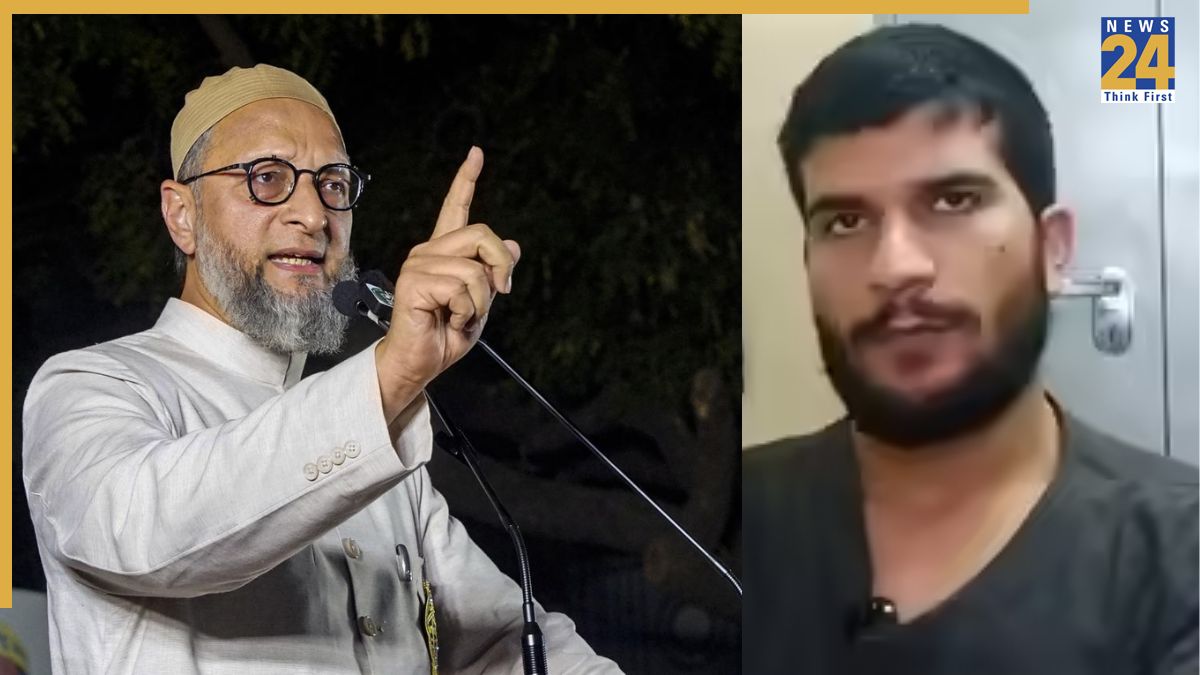


AIMIM chief Asaduddin Owaisi has issued a sharp condemnation after an undated video surfaced featuring Delhi blast accused Umar-un-Nabi justifying suicide bombing as ‘martyrdom.’ In a strongly worded post on X, Owaisi said there was ‘nothing misunderstood’ about such acts, calling them terrorism, plain and simple.
Umar-un-Nabi, an accused in the recent Red Fort car blast case, is seen in the video describing suicide attacks as a legitimate religious act. Owaisi countered this narrative, reminding that suicide is forbidden in Islam and the killing of innocents is a ‘grave sin.’ He added that such acts are also crimes under Indian law, making Umar’s justification completely unacceptable.
There is an undated video of Delhi blasts accused Umar Nabi justifying suicide bombing as “martyrdom,” and that it’s “misunderstood.” Suicide is haram in Islam and the killing of innocents is a grave sin. Such acts are also against the law of the land. They are not…
— Asaduddin Owaisi (@asadowaisi) November 19, 2025
The AIMIM leader also questioned the Union Home Ministry’s intelligence assessment, recalling that the government had earlier assured Parliament that no local Kashmiri had joined terrorist groups in recent months. ‘Where did this group come from then? Who is accountable for the failure to detect this group?’ Owaisi asked.
Inside the video: Umar’s disturbing justification of suicide bombing
In the video, Umar speaks calmly while trying to redefine a suicide attack as a ‘martyrdom operation.’ He claims the concept is ‘misunderstood’ and insists that such attackers ‘expect their death’ and consider it spiritually meaningful. He further says people should ‘not fear death,’ revealing a disturbing level of radicalisation.
Security experts believe the video shows signs of deep ideological indoctrination, pointing to a mindset that glorifies violence while masking it in religious language. Investigators say the clip is central to understanding Umar’s motivations and the planning behind the Red Fort blast.
Political and security concerns intensify
Owaisi’s remarks have added a political dimension to the case, raising questions about local radicalisation and potential intelligence gaps. With investigations still underway, security agencies are now examining the origins of Umar Nabi’s network and whether others were influenced by similar extremist material.
The video, now widely discussed, has amplified concerns about the rise of lone-wolf radicalisation and the need for tighter monitoring of extremist content.