

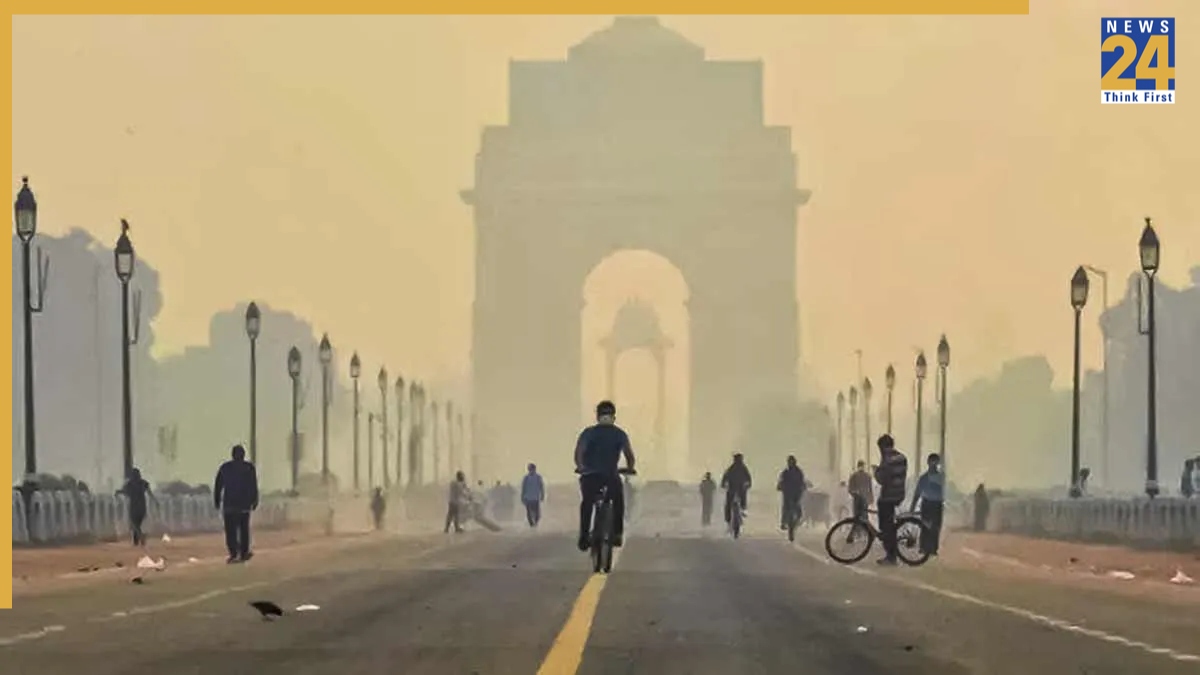


New Delhi: The national capital’s air quality turned into the ‘severe’ category on Monday, leaving residents struggling with thick smog and breathing issues. According to the Central Pollution Control Board(CPCB), the city’s AQI stood at 483 at 3 pm.
Several areas, including Anand Vihar (493), Jahangirpuri (498), AIIMS, Akshardham, Kartavya Path, and Yashobhoomi, remained covered in dense fog.
What Does ‘Severe’ AQI Mean?
As per CPCB standards, an AQI between 401 and 500 falls under the ‘severe’ category. At this level, even healthy people may experience serious health effects.
How Delhi’s Air Pollution is Affecting Your Health
As Delhi’s AQI reaches the ‘severe’ category, the National Institute of Environmental Health Sciences (NIEHS) stated that short-term exposures to high pollution levels can reduce lung function, trigger asthma attacks, and cause health problems.
Long-term exposure to fine particles like PM2.5 raises the risk of early death and can cause diseases such as cancer and diabetes.
According to WHO reports, nearly 89% of pollution-related premature deaths occur in low and middle-income countries.
5 Health Effects of Air Pollution
- Reduced Brain Function: Studies show that air pollution can reduce concentration and intelligence. Pollutants like PM2.5, sulphur dioxide, and nitrogen dioxide harm the nervous system and affect daily thinking skills.
- Higher Risk of Dementia: Tiny pollution particles can enter the bloodstream through the nose and reach the brain. Research links long-term exposure to dementia and Alzheimer’s disease due to damage to brain cells.
- Mental Stress and Sleep Problems: Breathing polluted air increases stress, anxiety, and sleep disorders. It also weakens immunity and can disturb blood pressure, affecting both adults and children.
- Depression in Children: Children growing up in polluted areas face a higher risk of depression and emotional stress. Poor air quality also disrupts sleep, affecting mental development and behavior.
- Risks During Pregnancy: Air pollution during pregnancy can harm both mother and baby. Studies compare its effects to smoking, linking it to heart problems, breathing issues, and delayed brain development in unborn children.
Who Is Most Affected by Delhi Air Pollution?
Although pollution affects everyone, children, elderly people, and pregnant women can face more danger, and those with asthma or heart disease.
Supreme Court to Hear Delhi-NCR Pollution Case
The Supreme Court will hear a plea on the Delhi-NCR air pollution crisis on December 17. The court noted that while measures exist, poor implementation remains a major concern.
With AQI levels touching nearly 500, health experts advise people to stay indoors, avoid outdoor exercise, and use masks or air purifiers whenever possible.