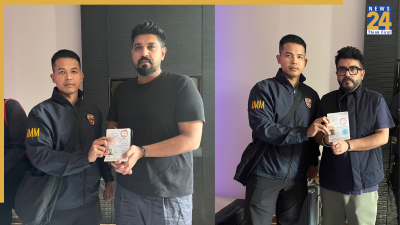




Anmol Bishnoi, the younger brother of infamous gangster Lawrence Bishnoi, has been deported from the United States and brought back to India, marking a significant milestone in the country’s fight against cross-border organised crime. Anmol’s return is expected to provide law enforcement agencies with critical insights into the operations of one of India’s most notorious criminal networks.
He is currently wanted in at least 18 criminal cases, ranging from murder and attempted murder to extortion and firing incidents. Some of the most high-profile cases linked to him include the October 2024 assassination of NCP leader Baba Siddique, the April 2024 firing outside Bollywood star Salman Khan’s Bandra residence and the 2022 murder of Punjabi singer Sidhu Moosewala. Officials believe Anmol acted as a key operative for his brother Lawrence, coordinating criminal activities overseas and maintaining contacts in countries including the United States, West Asia, and East Africa.
Authorities have described him as a crucial link in the Bishnoi gang’s network, handling communications, planning attacks and overseeing financial transactions. His deportation is expected to strengthen ongoing investigations and help uncover the broader network behind these violent crimes.
Interrogation and legal proceedings ahead
The Mumbai Police had been pursuing Anmol’s extradition from the U.S. for nearly a year. During this period, he applied for asylum, claiming political persecution, but his plea was rejected by a U.S. court, paving the way for his deportation.
Once back in India, Anmol will be taken into custody by the National Investigation Agency (NIA) and other law enforcement agencies for interrogation. Investigators hope he can provide vital information about the Bishnoi gang’s leadership, cross-border operations, recruitment strategies and financing of criminal activities.
His statements could reveal who ordered major attacks such as the Siddique assassination and the Moosewala murder, potentially leading to further arrests. Law enforcement officials are optimistic that Anmol’s cooperation may help dismantle significant parts of the gang’s network and prevent future crimes.
This development has also sparked a broader discussion on organised crime in India and the challenges law enforcement faces in tackling gangs with international connections. Analysts say Anmol’s return could mark a turning point in India’s efforts to bring high-profile criminals to justice while sending a strong message that criminal activities abroad will not allow impunity.