
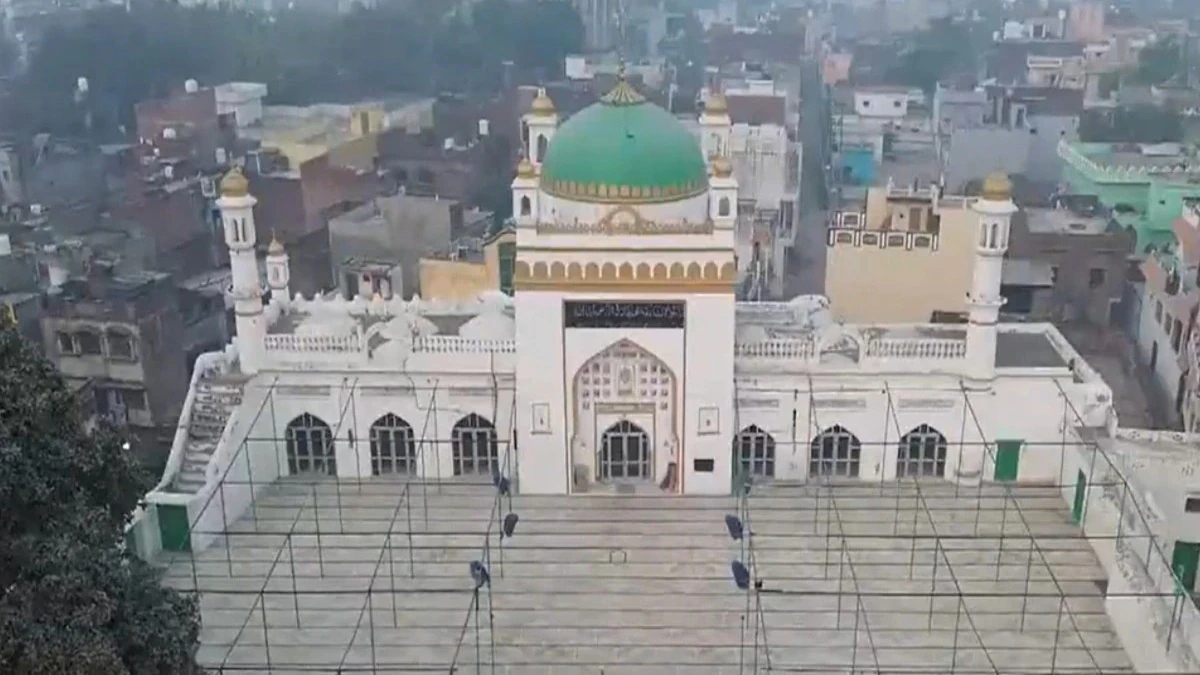


In a decision that has stirred emotions and ignited debates across the country, the Allahabad High Court delivered a significant verdict about Sambhal’s Jama Masjid. The court has sanctioned the painting and restoration of the mosque, subject to stringent conditions, thereby delivering an unexpected setback to vociferous Hindu organizations voicing their apprehensions. Yet, the judgment comes with a caveat, reflecting an earnest attempt to find a middle ground amidst the turmoil surrounding this monumental edifice.
A Painting Project Under Watchful Eyes
The court has stipulated that the painting and restoration work shall proceed under the vigilant supervision of a newly constituted three-member committee. This group, encompassing an Archaeological Survey of India (ASI) official, a scientist, and a local administrative officer, is tasked with ensuring that the structural integrity of the mosque is preserved throughout the process.
The roadmap reveals an immediate site visit by the committee, determining the scope and ensuring meticulous execution during the painting, without inflicting any harm on the mosque’s infrastructure. The court considers this imperative, underscoring its commitment to maintaining the mosque’s historical and cultural essence.
A Historic Dilemma Unfolds
The issue of the mosque’s restoration was initially raised by the mosque committee’s legal representative, Furman Naqvi. During courtroom exchanges, he articulated concerns about the mosque’s long-overdue maintenance. He referred to an existing agreement underscoring the necessity of cleaning and minor repairs, which the ASI confirmed during the proceedings.
While the courtroom wrestled with the spectacle of contention between preservation and religious sentiment, it was the Hindu factions, represented by lawyer Harishankar Jain, who passionately opposed the move. Jain voiced strong objections, suggesting ulterior motives aimed at obliterating Hindu artifacts nestled within the mosque.
Voices of Dissent Meet Judicial Prudence
Responding to these grave concerns, the High Court emphasized understanding the sentiments of the opposing parties. The initial approval for the restoration included directives to conduct meticulous videography of the process to provide transparency and reassurance. Ensuring that meticulous documentation is kept during the task was explicitly mentioned in the court’s directive, aimed at allaying the apprehensions of the Hindu groups.
Echoing a balanced approach, the judgment seeks to orchestrate a careful dance of faith, where religious sentiments don’t overwhelm heritage preservation. The words of the court carried gravitas — reassuring that the restoration work would indeed proceed, but with an awareness of its implications on historical artifacts deemed significant by the Hindu community.
An Echo to the Past: Testimonies of Time and Tradition
As we witness this drama unfolding in the Allahabad High Court, the Jama Masjid of Sambhal becomes more than just a contested site; it embodies a microcosm of India’s rich and diverse history. Caught between two worlds—where faith intersects with antiquity—it stands as a testament to centuries of shared history that refuses to bow under the weight of division.
The infrastructural renovation of the mosque, though seemingly a simple act of maintenance, walks the precarious tightrope of national sentiment and historical reverence. As the layers of paint embellish its historic walls, every stroke tells a tale of resilience, reminiscent of times bygone, echoing the voices of those who stood there before.
Thus, the High Court’s decision not only reflects judicial prudence but also encapsulates a narrative of respect and mutual coexistence, a chronicle of our collective destiny that thrives on the backbone of shared cultural legacy. A courtroom debate has undoubtedly reignited the dynamics of faith and history; yet, it serves as a gentle reminder that amid disparate voices, a singular melody of humanity and understanding prevails, leading the path ahead.