


On a quiet Sunday morning in Ethiopia’s Afar region, the ground shook, the sky blackened, and a volcano long considered dormant suddenly came alive. At 8:30 am UTC on 23 November 2025, Hayli Gubbi – a low shield volcano in one of the most remote corners of Africa — erupted without warning. According to global volcanic databases, it had never been recorded erupting in the entire Holocene period, the last 12,000 years.
By midday, its ash and sulphur plume had climbed nearly 14 km into the upper atmosphere and begun drifting across the Red Sea towards Yemen, Oman, Pakistan, and India. While Indian media focused on aviation delays and haze over Delhi, the real story runs deeper. This eruption reveals three uncomfortable truths: India’s overlooked dependence on African geology, its ignorance of African risks, and its tendency to act only when crises cross its own skies.
A Volcano We Weren’t Watching
Hayli Gubbi lies in Ethiopia’s Afar Rift, near the Danakil Depression, one of the hottest and lowest places on Earth. Temperatures here regularly cross 50°C. Around 9,000 Afar pastoralists live within 30 km of the volcano, relying on fragile grazing lands and scarce water.
Ethiopia hosts about 50 Holocene volcanoes. Studies led by the British Geological Survey estimate that over 59 volcanoes have erupted in recent geological history, with nearly half of Ethiopia’s population living within 100 km of one. Yet most of these volcanoes rank among the highest in terms of hazard uncertainty. In simpler terms, we know they exist, but we don’t know enough about their behaviour.
Hayli Gubbi was one of these blind spots. Until now, the Smithsonian Global Volcanism Program has listed it with no known Holocene activity. Then suddenly, it delivered an eruption strong enough to send ash thousands of kilometres away.
What Happened on 23 November
According to the Toulouse Volcanic Ash Advisory Centre and satellite data, the eruption began around 8:30 am UTC. The ash plume rose to 3 km initially, then surged to 14 km at peak. Infrared sensors picked up a large sulphur dioxide (SO₂) plume concentrated between 5 and 17 km altitude, with nearly 60,000 tonnes of SO₂ spreading across 8 lakh square kilometres toward the Arabian Peninsula and Indian Ocean.
Nearby, the town of Afdera was blanketed in ash. Locals described it as sounding like a bomb, followed by shockwaves and darkness during daylight hours. While no deaths have been reported, the ash has likely damaged grazing land and contaminated water in a region already battling extreme heat and drought. By 24 November, the eruption had stopped, though its impact continued in the skies.
From Afar to Ahmedabad and Delhi
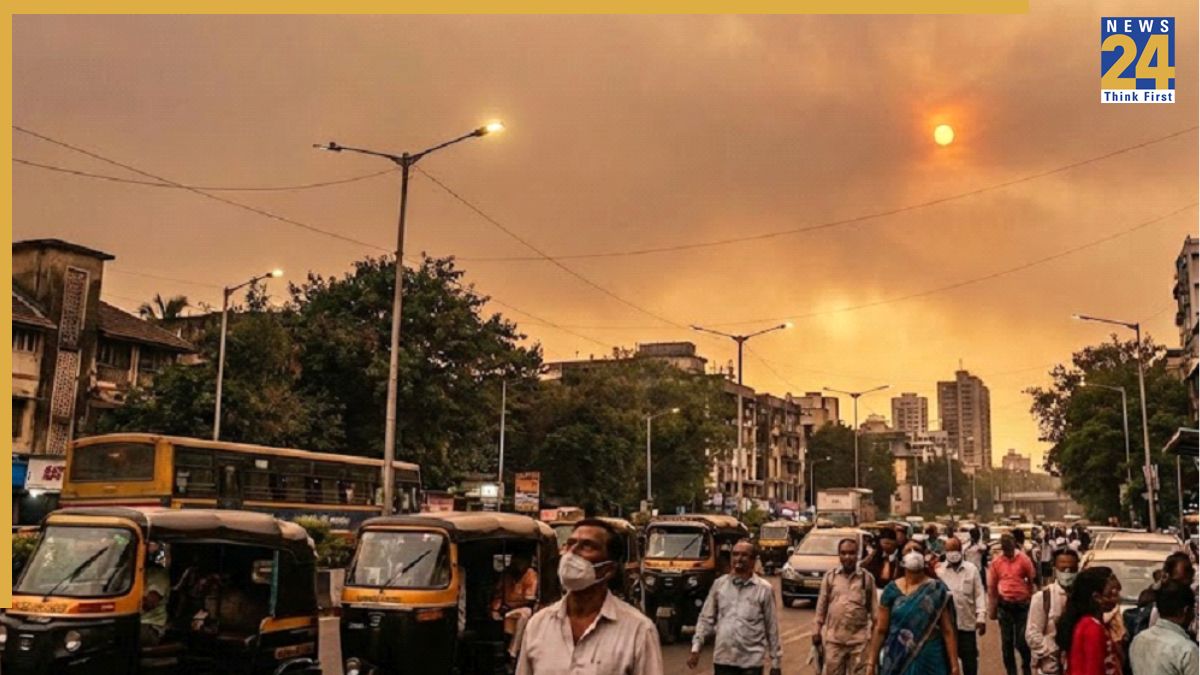
Once volcanic particles reach the upper troposphere or lower stratosphere, they can travel vast distances, guided by jet stream winds. That’s how ash from an Ethiopian volcano made its way to the skies above Yemen, Oman, and eventually parts of India. Indian agencies have confirmed ash and SO₂ detection over Gujarat, Rajasthan, Maharashtra, Delhi, Haryana, and Punjab. The Directorate General of Civil Aviation issued warnings, leading to flight cancellations and reroutes on Gulf and Europe-bound paths. Airlines like Air India and Akasa cancelled several flights to avoid engine risk.
The India Meteorological Department (IMD) expects most ash to remain high in the atmosphere and fade within a day. While hazy skies and vivid sunsets may appear, health impacts are expected to be minimal, especially compared to India’s winter pollution. In contrast, Ethiopian communities closer to the volcano face much greater risks to their livelihood and water security.
Ethiopia’s Rift Is Our Neighbourhood Too
Geologically, the Afar Triangle is a place where three tectonic plates are pulling apart, one of the most active rift zones on the planet. It’s home to strange features like salt volcanoes (e.g. Dallol), lava lakes (e.g. Erta Ale), and frequent earthquakes.
Studies over the past 20 years have detected shallow magma activity beneath multiple Ethiopian volcanoes, including Aluto and Corbetti, which are closer to large towns and infrastructure. Hayli Gubbi wasn’t the only volcano showing signs. It was just the first to blow.
For India, this isn’t just a geography lesson. Most westbound international flights pass through the Red Sea and Arabian Peninsula. Even a moderate eruption like Hayli Gubbi caused route disruptions. A stronger eruption in the region could cause chaos on par with Iceland’s Eyjafjallajökull eruption in 2010, which shut down over 100,000 flights and cost airlines $1.7 billion. We’ve treated East Africa’s volcanoes as exotic destinations. They are, in fact, part of our environmental security sphere.
Clean Energy Beneath the Ash
There’s also a quieter story here. The heat that fuels these eruptions makes the East African Rift one of the world’s top geothermal hotspots. High-temperature geothermal systems exist under volcanoes like Aluto and Corbetti. Ethiopia’s pilot geothermal plant at Aluto is just the beginning plans are in place to scale geothermal energy across East Africa.
This is crucial in a warming world. Geothermal energy offers a low-carbon path to development, unlike the fossil-fuel-heavy growth of richer nations. For India, now exploring geothermal options in Ladakh and the Andamans, this is a moment to act. India and Ethiopia can collaborate on research, satellite monitoring, scientist training, and co-financed geothermal projects. This transforms a shared threat into a shared opportunity.
What India Should Do Next
Hayli Gubbi shouldn’t be a one-day headline. It’s a rehearsal. India needs to respond with clarity and purpose:
⦁ Include African volcanoes in Indian risk models: Update aviation and supply chain contingency plans to factor in East African eruptions, as Europe did post-Iceland 2010.
⦁ Invest in joint early warning systems: Fund monitoring equipment and research with African nations to reduce uncertainty around volcano behaviour.
⦁ Integrate volcanic aerosols in air quality alerts: Don’t treat volcanic ash and SO₂ as separate from domestic pollution — update advisories when such plumes arrive.
⦁ Support impacted communities at the source: As a development partner of Ethiopia, India can channel resources to help regions like Afar recover and adapt.
⦁ Use this as a science outreach opportunity: Explain how ash travels, how satellites work, and how India is tied to Africa’s geology. Let ISRO, IMD and universities lead the conversation.
A Shared Sky
Right now, a herder in Afar is brushing ash off a goat, wondering where to find grass. A passenger in Delhi is staring at delayed flight boards, irritated by a volcano they’ve never heard of.
Both are breathing air touched by the same eruption. Hayli Gubbi didn’t unleash a global disaster. But it did offer something equally important: a reminder that nature’s movements don’t stop at national borders. It’s up to us whether we treat it as a weather anomaly or a wake-up call for deeper cooperation.