


When we think of Pakistan and division, most of us remember 1971—the year Bangladesh was born after breaking away from Pakistan. But today, Pakistan is talking about a completely different kind of division, and this time, it’s their own government pushing for it. On December 7, Pakistan’s Federal Minister Abdul Aleem Khan announced that the country will “definitely” create new, smaller provinces. He claims this will make governance better and help deliver services more efficiently. But many experts are raising serious doubts about whether this plan will actually help or create even bigger problems.
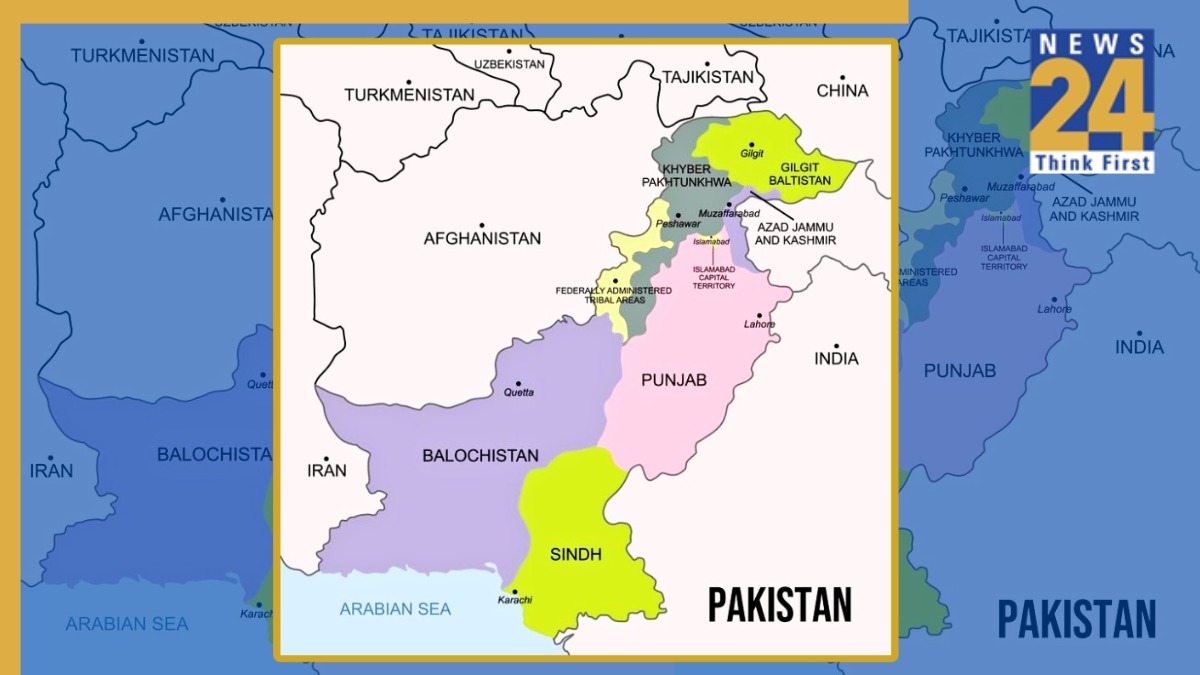
Let’s understand Pakistan’s provincial structure first. When Pakistan became independent in 1947, it had five provinces: East Bengal, West Punjab, Sindh, North-West Frontier Province, and Balochistan. East Bengal became Bangladesh in 1971 after a bloody war. West Punjab became simply Punjab, the North-West Frontier Province was renamed Khyber Pakhtunkhwa, while Sindh and Balochistan remained the same. So currently, Pakistan has four provinces. Now the government wants to break each of these four provinces into three smaller ones, which would give Pakistan twelve provinces instead of four.
Abdul Aleem Khan argues that all of Pakistan’s neighbouring countries have many small provinces, so Pakistan should too. His party, the Istehkam-e-Pakistan Party (which means Pakistan Stability Party), is part of Prime Minister Shehbaz Sharif’s government and is strongly pushing this idea. Another party called Muttahida Qaumi Movement–Pakistan (which means United National Movement–Pakistan), which is based in Sindh, also supports creating new provinces and says it will use all legal methods to make this happen through a constitutional amendment.
But here’s where it gets interesting. The Pakistan People’s Party, led by Bilawal Bhutto Zardari, is actually a bigger partner in Sharif’s government than Khan’s party, and they are completely against dividing Sindh province. In November, Sindh’s Chief Minister Murad Ali Shah clearly warned that his party would never accept any plan to split their province. This shows that even within the government, there’s no agreement on this idea.
This isn’t the first time Pakistan has discussed creating more provinces. They’ve been talking about it for years, but nothing has ever actually happened. However, according to India Today, this time the discussion seems more serious, with think tanks and political parties actively debating it on TV shows and in newspapers.
So why are experts worried? Syed Akhtar Ali Shah, a senior Pakistani bureaucrat and former top police officer, points out that Pakistan has tried many different governance experiments over its history. From different administrative systems to various reforms, nothing has really worked because the real problems were never addressed. According to him, Pakistan’s main issues are weak institutions, unequal law enforcement, poor local governance, and lack of accountability. Simply drawing new provincial boundaries won’t fix any of these fundamental problems.
Think of it this way: if your house has a weak foundation and leaking pipes, painting new rooms in different colours won’t solve anything. You need to fix the foundation and the plumbing first. Similarly, Pakistan’s governance problems run much deeper than just the size or number of provinces.
Ahmed Bilal Mehboob, who heads a Pakistani think tank called Pakistan Institute of Legislative Development and Transparency, agrees with this view. He says that creating new provinces would be expensive, extremely complicated, and politically dangerous. He points out that the real problem isn’t that provinces are too big, but that local governments don’t have enough power to do their jobs properly. Pakistan’s Constitution actually requires empowering local governments, but this has never been properly implemented.
There’s also a timing issue here. This push for new provinces is happening while Pakistan is already facing serious unrest in Balochistan and Khyber Pakhtunkhwa, where there are strong independence movements and resistance against the central government. Breaking up provinces at a time when some regions are already demanding separation could backfire badly.
Shah warns in his article that without fixing the core issues of weak institutions and poor governance, creating more provinces could actually make inequalities worse. More provinces mean more governments, more bureaucracy, more expenses, and potentially more corruption—all without solving the actual problems ordinary Pakistanis face daily.
The debate over new provinces shows Pakistan’s ongoing struggle to find the right governance model. But as experts keep pointing out, the number of provinces isn’t the real issue. What Pakistan desperately needs is strong institutions, fair law enforcement, empowered local governments, and leaders who are accountable to the people. Until these basics are in place, redrawing provincial maps is just rearranging deck chairs on a sinking ship.
As Pakistan moves forward with these plans, only time will tell whether this administrative restructuring brings improvement or creates new complications for an already troubled nation.