


The sky ignites with eerie and erotic anxieties as debutant director Arjun Sajnani unleashes a furious drama of passion on screen. Agni Varsha, which clocks 23 years, is a ravishing romp into an ancient past. The locations salute the sultry intuitions of the emotionally overwrought characters as they play out their cosmic karma in a high-pitched battle of Good and Evil.
As this enchanting excursion into a nebulous past begins we see Jackie Shroff, sans moustache, as the priest Paravasu performing a furious yagna (penance) to bring rains to a drought-stricken area. The parched unproductive area becomes a metaphor for the priest’s sexually unfulfilled wife Vishakha’s psycho-erotic yearnings.
Raveena Tandon’s deeply questioning eyes express the theme’s ambivalent ramifications with tremendous force. In many ways the karmic cycle of Sajnani’s passionate adaptation hinges on the character of the priest’s wife. To the role of the priest’s parched wife who’s abandoned by her husband for a larger cause, bullied and verbally molested by her aggressive father-in-law (Mohan Agashe, spewing fire and ire in a tandav in a tandem), seduced by her husband’s wilful and self-seeking cousin Yavakri (Nagarjuna) and protected and pampered by her young and callow devar Aravasu (Milind Soman), Raveena imbues an enchanting eroticism. In her song sequence Prem ki Varsha Raveena is shot by the maverick image-maker Anil Mehta (of Hum Dil De Chuke Sanam and Lagaan fame) as a tribute to complete womanhood. Raveena has never looked more fetching.
It’s easy to get carried away by the battery of brilliant eye-catching performances that Sajnani has extracted from his impressive actors including, incredibly enough, Milind Soman who as the naïve and artless Aravasu changes his entire body language and sinewy persona to merge unto the simpleton’s part.
Agnivarsha is a sum total of all the technical virtuosity, and then a lot more. It gathers its strength from the crisscross of characters in Girish Karnad’s intricately woven play which Sajnani transposes wholesale to the screen creating a wondrous play-on-film, but with the inbuilt disadvantages of the transposition. For instance, time passages which are so essential to cinematic narration are here condensed to a blur of activities. Creative boundaries that separate the character’s actions and reactions appear in a grand unified mass seen from a detached height rather than in compassionate closeups.
Sajnani is not conversant with the language of cinema. That’s both an advantage and disadvantage in his debut film. While we celebrate the pungent periodicity and the spirit of earthy wistfulness that the play-on-film spontaneously generates we also miss those pauses and punctuations that constitute a complete and self-contained cinematic experience.
In the absence of some vital cinematic qualities Agnivarsha simply rains its fiery theme of feudal, religious and patriarchal conflicts without creating a mood of stimulating and absorbing involvement among the audience. That sense of distance that separates us from the mythological Mahabharat-ian time, isn’t bridged by the film’s visual and emotional content.
We desperately seek a centrality in the rapidly swirling narration and come up with the innocent and non-judgemental love of Pravasu’s younger brother Aravasu (Milind Soman) for the tribal girl Nittilai (Sonali Kulkarni). The contrast that the couple provides to the Brahminical intrigues which grip the narrative’s main thrusts, is greatly comforting and illuminating to the intricate design of this exquisitely constructed primeval fable.
To his credit, Sajnani isn’t uncomfortable doing the song-and-dance routine. These are meshed into the aggravated drama with assuaging subtlety. There’s a separate idiom of musical expression for the Brahminical clan and the tribal village, and kudos to song composer Sandesh Shandilya and background scorer Taufiq Qureshi for creating many strands and segregations in the sound design.
Without a shred of doubt Arjun Sajnani’s directorial debut evokes strong feelings of curiosity, intrigue, anxiety and enigma. But we as viewers never become absorbed in Karnad’s primal protean passions. The characters belong to the realm of a stage play rather than a motion picture. More often than not their words speak louder than their action. Their voices never quite achieve a one-ness with their emotions. To further complicate matters the entire story of love during times of hierarchical war unfolds in a flashback with sutradhar Raghuveer Yadav performing a symbolical narrative dance that immobilizes the emotional persuasions of the plot.
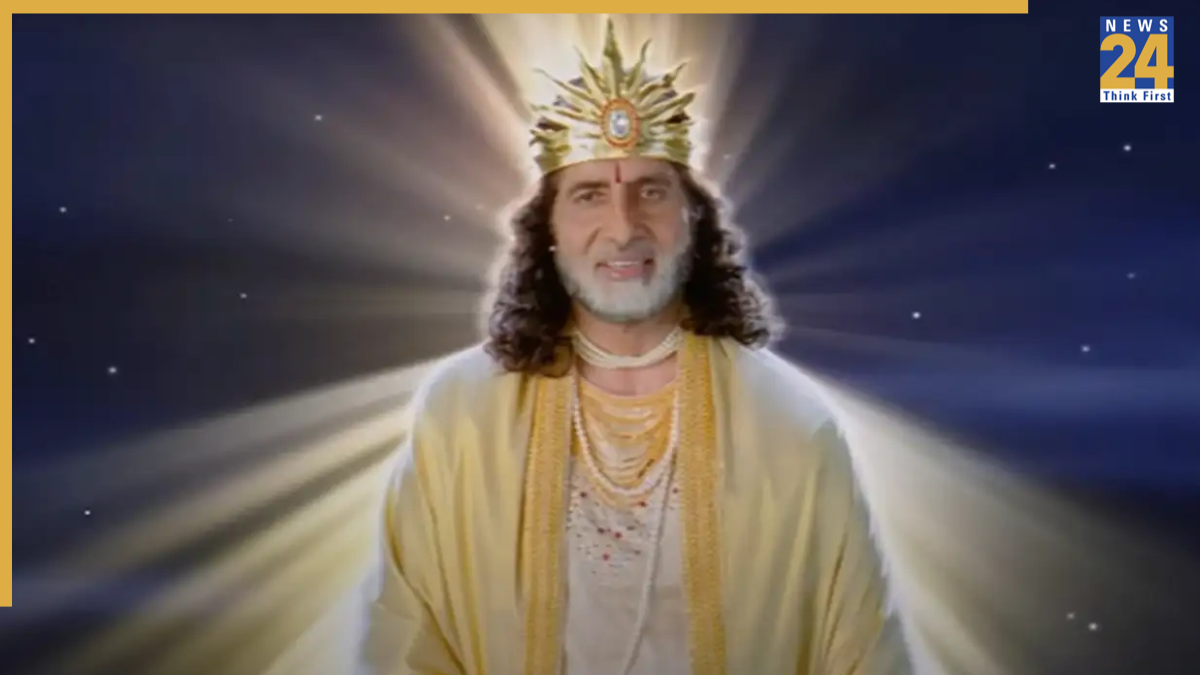
But the film is beautifully designed. Just one sequence where Nittilai says goodbye to her beloved Aravasu for the last time as dawn slowly envelopes the sprawling tribal village down below, is enough proof of Sajnani’s highly developed aesthetic sense. However, the climax where the mighty Amitabh Bachchan appears as the rain god is much too long-winded and allusive to hold the audience.
What finally rivets our attention are the performances, primarily Raveena Tandon and Milind Soman who seem to spontaneously embrace the craggy locales and the character’s motivations. Jackie Shroff is interesting in parts. Sportingly he takes the backseat when his screen wife chastises him for abandoning his spousal duties in pursuit of religious salvation and lets Raveena shine.
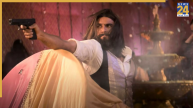
The most comic performance comes from Prabhu Deva as the demon conjured by Arvasu’s father to destroy Yavakri. Prabhu plays the rakshasa as an androgynous dancing dude, almost like Michael Jackson transposed to the era of the Mahabharat.
Thank God the other actors don’t introduce contemporary vanities into their roles. Everyone is very much in character. The film doesn’t lack vision. It lacks cinema.
In Arjun Sajnani’s Agni Varsha Amitabh Bachchan played the Hindu deity Lord Indra. Jackie Shroff was a head priest without his trademark moustache, Raveena Tandon was his wife, Nagarjuna was the head-priest’s jealous rival and Prabhu Deva as the Rakshasa (demon) in a film based on an episode from the Mahabharat!
Well-known Bangalore-based stage director Arjun Sajnani pulled off a masterly casting and thematic coup in his directorial debut. Agni Varsha, released in 2002, was shot in the sacred land of Hampi in Karnataka with the fascinating cast.
What fascinated Sajnani about Agni Varsha was the contemporary mood of the ancient drama. Since the mixture of periodicity and modernity worked wonderfully on stage, Sajnani decided to take the English language play to a wider audience by converting it into a Hindi film.
Anil Mehta who shot Hum Dil De Chuke Sanam and Lagaan captured the awesome rocky terrain of Hampi in splendid glory. When the director offered the role of a Rakshasa to the South Indian dancing star Prabhu Deva he wanted to know if there was any dancing for him to do in Agni Varsha. Immediately Sajnani incorporated a tandav-like dance number for Prabhu Deva. About Raveena’s role of the head-priest’s wife, the director says he required an actress who was tough and intelligent. As for Amitabh Bachchan, Sajnani and he know each other from the time when, as students, they acted in a play together in Delhi. The mega-star readily agreed to play the walk-on part of Lord Indra.
Speaking exclusively on the project Amitabh Bachchan says, “I am surprised you still remember this film. I had to get into costume and don a particular look. I am not too fond of doing costume dramas. Or of playing God.”
Also Read: Pradeep Sarkar’s ‘Parineeta’ Back In Cinemas For A Theatrical Re-Release