



It isn’t the writing. It’s the language that’s all wrong in Calcutta Mail. Coming from one of the most brilliant storytellers from off-mainstream cinema, the film leaves us with a bewildering sense of dissatisfaction and betrayal.
Sudhir Mishra’s Iss Raat Ki Subah Nahin and Dharavi were brutal, strong and focussed parables of urban dereliction. Now, when this sure-footed avant-gardist leans more to the mainstream than required, he goes as wrong in his narrative paradigm as Govind Nihalani in his first fitful foray into mainstream cinema.
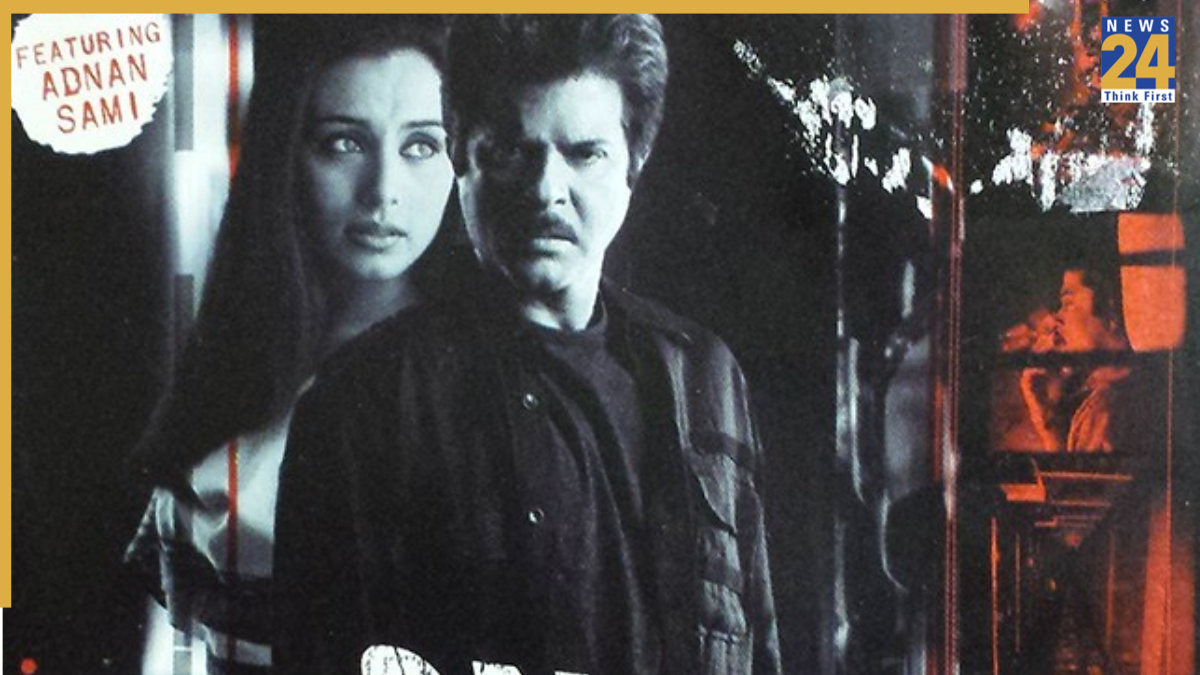
Like Nihalani’s Thakshak, Mishra’s Calcutta Mail is a dark, sporadically strong story about the city and the solitary fighter. Anil Kapoor, in another strong author-backed part, comes across in sincere colours. He plays Avinash, the Patna protagonist whose search for his lost son takes him into the crowded, rally-ridden streets and lanes of Kolkata.
The frantic search, designed as a thriller, starts in the middle and then, with a fashionable swoosh, goes back to recreate the events that brought Avinash to this sorry pass.
The nervous energy of Kolkata’s streets and the sleazy anxieties of the city’s underworld are impressive when they aren’t staged on studio sets. On several occasions the impressively staged cat-and-mouse game gets tedious and unconvincing. Mishra attempts to match the exteriors of the City of Joy with joyless, dimly lit interiors. The rites of synchronization just don’t seem to create the atmosphere of sweaty suspense. Every time Rani Mukherjee does her cute-and-scrubbed act in the brightly-lit chawl, we recall Kamal Haasan’s Hey Ram where Kolkata was a living, throbbing, constant character. In Mishra’s film Kolkata is neither a prop, nor a palpable presence. The city misses authenticity by just that little margin which could’ve made all the difference.
Also Read: Parvati Balagopalan’s ‘Rules (Pyar Ka Superhit Formula)’ Completes 22 Years
On a narrative level, Mishra has done well for his film by transposing the crime-and-the-civilian theme to Bihar and Kolkata. There’s a freshness to the locations described by the script. But the conventional conflict remains unaltered, as the working-class hero takes on the brutal mafia. We can see the director grappling to find a common ground between the tongues of the mainstream and his own vision. Alas, the film’s content is distractingly menopausal.
Nonetheless, there are pockets of pulsating thrills scattered across the plot. The scenes on the hurling train where Avinash rescues the politician’s daughter Sanjana (Manisha Koirala, as much the ‘surprise packet’ of this film as Arbaaz Khan in Kuch Na Kaho, though far less wooden) are clenched and compelling. The gifted Ravi K. Chandran and S. Kumar share the cinematography. The film’s exquisitely shot. The shoot-out on the train is rugged and riveting. Indrajit Sharma and Parikshit Sharma’s background score confers an extra dimension to the narrative.
But the songs credited jointly to Viju Shah and Anand Raj Anand are an astonishing anomaly. How could a creator of Sudhir Mishra’s convictions plunge so low into the abyss of gyrating jejuneness? When the narration moves from the bustle of Kolkata to a Swiss hamlet for Saroj Khan’s pelvic ritual, we know the ostensibly raw-and-real project is in deep trouble.
To a great extent Anil Kapoor’s sincere though static performance glosses over the glaring aberrations. Manisha Koirala is an enigmatic presence. She certainly makes us watch when she’s around. But Rani Mukherjee has nothing to do except look sweet and simple. She’s done it too often to merit a second glance.
The supporting cast has some watchable actors doing the gun-and-gaali routine. Satish Kaushik, Sayaji Shinde and Saurabh Shukla give a colour to the contract-going-on-contracted killings. The clumsy climax with our protagonist outwitting all the seasoned assassins with firecrackers is outrageously out-of-step with the Sudhir Mishra school of filmmaking.
Some imminently missing dimension dodges the film to the end. While the protagonist Avinash finds what he’s looking for, we aren’t that fortunate.
Also Read: Pankaj Tripathi Turns 49 On September, Talks Of His Ascent To Stardom