
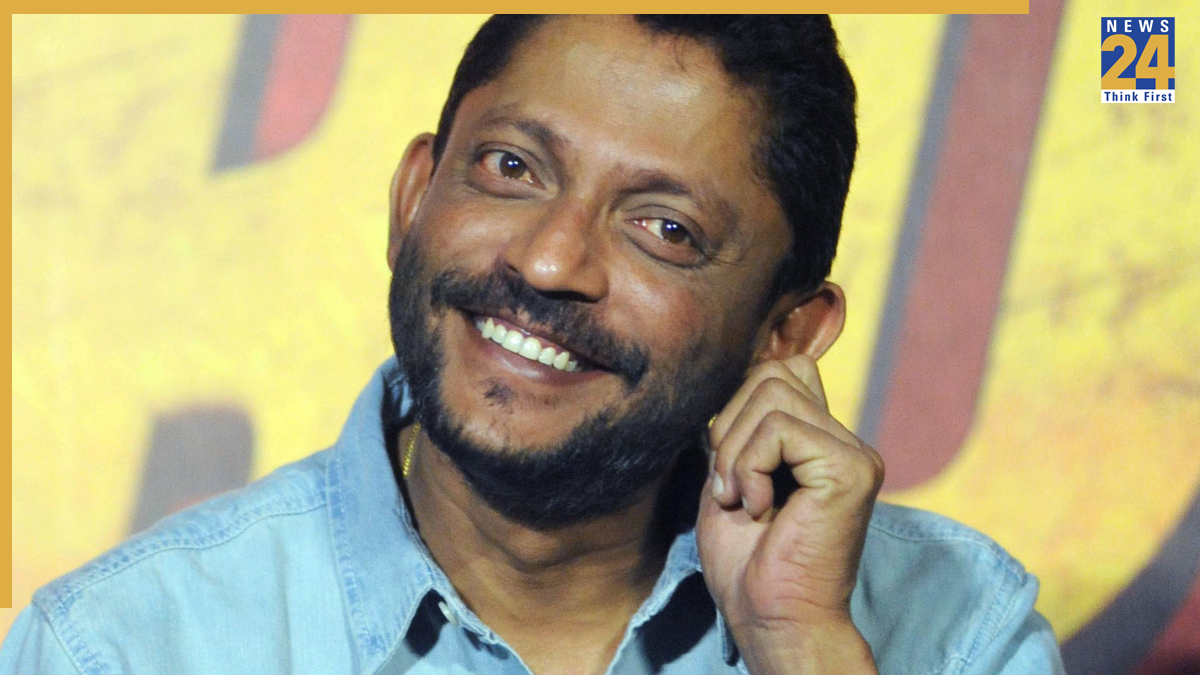


Nishikant Kamat died suddenly at age 50 on 17 August 2017. Coincidentally, Mumbai Meri Jaan was released during the same month and week as Nishikant’s death, though nine years prior to Nishikant’s untimely demise. Now that the verdict is out on the 11 July 2006 Mumbai train bombings, this is an opportune time to revisit a stunning film based on the catastrophic incident.
It is rare for a film based on a gruesome traumatic real-life tragedy to be made into a film where every character and almost every episode and moment is etched out with unwavering care, sensitivity, and resonance.
Nishikant Kamat’s Mumbai Meri Jaan is that rare gem of a film that makes your heart bleed, your eyes cry, and your spirits soar in hope for a better tomorrow. Even as it makes your heart sink, as fictional characters emerge from the horrific rubble of the train blasts that shook Mumbai on July 11, 2005, the reverberant drama brings to us moments that redeem the rapidly disintegrating status of our society.
Mumbai Meri Jaan is unarguably the best-written film of this year. All the principal characters are designed to represent real life and yet convey significances that take them beyond sensationalistic newspaper headlines.
Whether we live in Mumbai or not, each one of us is bound to find a bit of ourselves in one or the other of the protagonists.
There’s Soha Ali Khan giving a career-defining performance as a hard-nosed television journalist who finds herself on the other side of the ‘offence’ when her boyfriend goes missing after the blast. This is a terrific, terrifying, and intimate study of irony and ambition, done in striking strokes of black and ‘fright’.
Or take the Madhavan track. He’s a white-collar idealist who travels by train and almost gets killed in the blasts for his democratic principles. Madhavan brings a searching agony to his eyes, as suspicion and terror take hold of his heart, creating situations in the script that are poignant and funny.
Funniest in its savage cruelty is the jobless loiterer KayKay Menon’s suspicious trailing of a Muslim youth to a mosque… only to discover that the guy was to meet his girlfriend. Paresh Rawal (does he ever stop being brilliant?) as the jaded cop in conversation with the young spirited colleague (Vijay Mourya) would remind you of Nana Patekar and Nakul Vaid in Ab Tak Chappan.
Hold that thought… There’s a treasury of thought-provoking, challenging, and deeply moving moments in Mumbai Meri Jaan to remind us how engaging cinema can be without sacrificing the message.
My favourite moment, besides Soha’s obviously impressive breakdown sequence, is the one where the Islamophobic KayKay Menon character accosts a poor old Muslim bread seller on the night after the blast.
Even as such sequences make us cringe, we applaud the power of cinema to convey home truths in caustic and comic coatings.
Also Read: Rewind: The Last Song That Lata Mangeshkar Sang For Naushad Was For This Shah Rukh Khan Starrer
With exceptional candour and emotion, writer Yogesh Vinayak Joshi weaves in and out of the lives of the irreparably wounded characters (and we aren’t talking physical damage). Whether it’s the look of bewilderment, pain, and shock in Madhavan’s eyes as he sees his limbless friend in hospital after the blasts, or Irrfan’s look of triumph after he creates a false bomb scare in a shopping mall where he was insulted, Mumbai Meri Jaan discovers and celebrates the deep cleft between the haves and the have-nots.
Each of the 5 principal performances are outstanding in their sensitivity and warmth. And it would be criminal to single any of them out.
Seldom have we seen such a showcase of brilliant writing, directing, acting, and communicating the power of cinema in all its glory.
Nishikant considered Mumbai Meri Jaan one of his favourite films from his own repertoire. This writer and Nishikant had many discussions on the film.
Once Nishikant said, “There are many reasons why Mumbai Meri Jaan is one of my own favourite films. Two of them are: Maddy and Irrfan. If I had my way I would do many more films with them. Sadly they are very busy actors.”
There was a spate of films on different aspects of terrorism. Nishikant saw that as a sign of the times. “We’re going through very troubled times. Cinema is meant to reflect contemporary reality. All these films on terrorism coming together is just a bizarre coincidence. My idea behind making Mumbai Meri Jaan is to show how people survive a personal tragedy. I was more interested in the characters than the tragedy of the train blasts. The footage showing the blasts is palpable.”
Nishikant recreated the blasts rather than using news footage. It took him fifteen days to shoot the blast scenes. “By coincidence, my first three films are — Dombivali Fast, Evano Oruvan, Mumbai Meri Jaan — have trains as a backdrop. I don’t think I’ll make another film with trains as the backdrop for the next 10 years. That the blasts happened in trains was a grim fact I had to incorporate in my film. I did a lot of technical research about the locations and timings of the blasts. Beyond that everything in the film is fictional. Yes, the characters are made up. But I’m sure a lot of people went through the same emotions after the blasts. I haven’t experienced any of the things shown in my film. But I’m sure they’ve happened to people. I lived with my characters for two years. They drained me emotionally.”
Of the characters in Mumbai Meri Jaan, one played by Madhavan was Nishikant’s favourite. “I’m proud to be an Indian, like him. But when a tragedy like a bomb blast happens, it shakes your faith in the nation. I came very close to the 1993 Mumbai blasts. That traumatised me. Madhavan’s character expresses the fears that I felt 15 years ago. Any act of extremism over a city causes the anthill effect. A stone hits the anthill, the ants are traumatised. But they immediately get to rebuilding it. We’re truly tolerant. After each attack, people feel helpless. But Mumbaikars do have the inner strength to bounce back. I’ve only put across the problem in Mumbai Meri Jaan.”
Nishikant Kamat’s Mumbai Meri Jaan, which was released on 22 August 2008, remains resonant and relevant even fifteen years after release. It deals with the aftermath of the train explosions in Mumbai on 11 July 2006, by weaving in and out of the lives of various memorable characters in a what-were-you-doing-when-it-happened format.
R. Madhavan, who played a straitlaced upright Mumbai executive, recalls the film and its genial soft-spoken director with much affection. “Nishikant Kamat was one of the finest directors I worked with. Before Mumbai Meri Jaan I worked with him in Evano Oruvan, the Tamil version of his fabulous Marathi film Dombivali Fast. Coincidentally, both my films with him had a lot to do with local trains. He was a visionary way ahead of our times.”
Mumbai Meri Jaan was a film far ahead of its times.
Recalls Madhavan, “Episodic films became popular worldwide after Crash. Nishikant made Mumbai Meri Jaan with several stories interwoven into one plot. To this day it remains a classic of its kind. I miss Nishikant all the time. Why did he have to go so early?”
Also Read: Dharmendra On The Forgotten Blockbuster Director Pramod Chakravorty