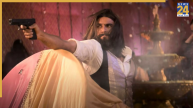

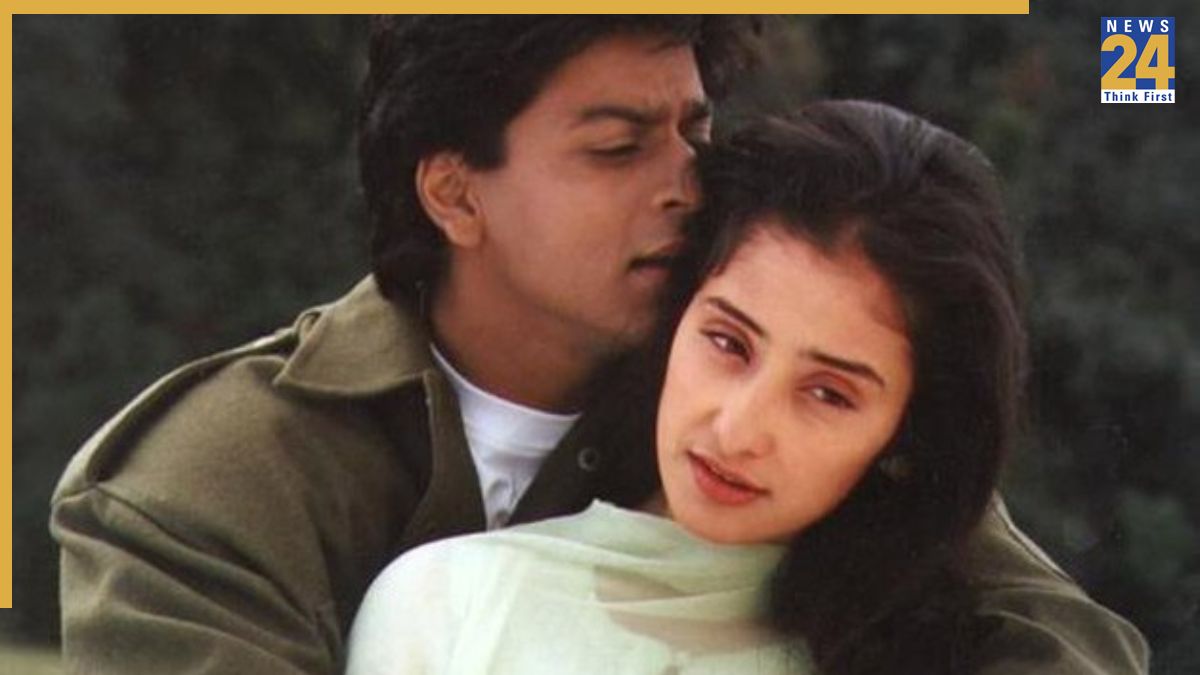


Twenty-seven years after release, much of Mani Ratnam’s visually plush Dil Se has dated. What stands out is not the terrorism-human bomb theme (which Ratnam’s poetic cinematographer Santosh Sivan did much better with Tabu in Terrorist) but the intense jaan-leva love story between the human bomb (and what a beautiful bomb!) Meghna and Amar, played by Manisha Koirala and Shah Rukh Khan.
I have not seen Shah Rukh share such intense impassioned vibes with any of his co-stars, not even with Kajol, certainly not with Juhi Chawla (they looked more like siblings).
When I ask Manisha Koirala why she never returned to SRK territory after Dil Se she laughs, “You will have to ask him. Actually we had worked together before Dil Se in a film called Guddu which nobody knows about. In this industry the heroes decide whom they want to work with, not the heroines. But Dil Se is an exceptional work from my repertoire. I count it among my best along with Mani’s Bombay and Sanjay’s Khamoshi and Heeramandi.”
Manisha’s introductory sequence in Dil Se where Shah Rukh spots her on a deserted windy railway platform, is comparable with Meryl Streep standing on the Cobb in Lyme Regis, Dorset in The French Lieutenant’s Woman.
Manisha laughs pleasurably. “That is a very precious compliment. For that introductory sequence I was supposed to look mysterious and beautiful. All credit to Santosh Sivan for shooting me the way he did.”
Kajol said no to Mani for money. Manisha Koirala grabbed the part in Mani Ratnam’s only Hindi language film Dil Se, released on August 21, 1998.
Manisha feels a sense of pride about being a part of Dil Se. “It is one of the landmarks of my career. Working with Mani Sir, Shah Rukh and AR Rahman Sir. It can’t get any better than that.”
This was Manisha’s second film with the magnificent Mani. “I had done Bombay with Mani Sir and I knew how he works, so I was well-prepared to work 15/17 hours. But luckily he didn’t require me to work that many hours, as mostly we shot in challenging outdoors, Ladakh, Himachal, Ooty, Delhi, places where it was impossible to shoot in the evenings. I remember we shot in so many places.”
She gives the credit for her scintillating performance to the director. “I’m a total student. When I have a good director I try and grasp his vision and bring it alive. It’s such a pleasure to work with directors like Mani Ratnam and Sanjay Leela Bhansali. I can’t tell you how much they inspire all the actors!! Actors crave to work with these two geniuses. I had the singular pleasure of working with both.”
Describing Mani’s work method Manisha says, “I love how Mani Sir describes his characters. As an actor I had to work within that framework. He wanted my character Meghna in Dil Se not to be a bitter and harsh typical terrorist. I had to work hard on getting what he wanted from within me. Eventually I got what he was asking for.”
Manisha felt the same sense of introspective challenge working with Bhansali. “With Heeramandi too, the way Sanjay sees his characters one has to work a lot to understand the psychology of that character and then only one can play the character the way he wants. It’s just not dialogues and physical movements. It’s more about the internal universe of the character: what are the internalized emotions and conversations going on inside that character.”
About the box office failure of Dil Se Mani Ratnam says, “My Hindi isn’t all that good. During Dil Se, I had to depend a lot on my actors to put the scenes across. If I can reach out to a wider audience through the Hindi language, then I see no reason why I should not make a Hindi film. The whole idea of making films is to share the experience with the largest number of people. It isn’t a burning ambition to be a Hindi movie maker, just to be a movie maker, Tamil or any other language. A whole chunk of my life goes into every film of mine. It’s important for the film to connect with people. To me the process of film-making doesn’t stop with the publicity alone. The marketing and projection need to be done properly, especially now when selling a product is as important as creating it. But I instinctively know when I’m making a mistake. When I was making my first Hindi film Dil Se I was sure I was getting it right. But it didn’t work. So I must have got something wrong. I still stand by it. Interestingly, now people say Dil Se is one of my best works.”
ALSO READ: ‘All Is Well’ Completes 10 Years: When Smriti Irani Left The Film After Shooting Nearly 30 Percent