



Satyajit Ray’s ‘Pather Panchali’ and Wong Kar-wai’s ‘In The Mood For Love’ feature on every list of all-time great films. Having recently seen Ray’s timeless, lucid take on a family during famine, I revisited ‘In The Mood For Love’, which clocks 25 years on September 29, to look for loopholes.
I couldn’t find any! ‘In The Mood For Love’ remains as pitch-perfect now as it was twenty-four years ago when it was released to unequivocal acclaim. Its intense, subdued tone and an anguished realisation that true love never lives for ever, are celebrated in saturated colours of ecstasy and melancholy.
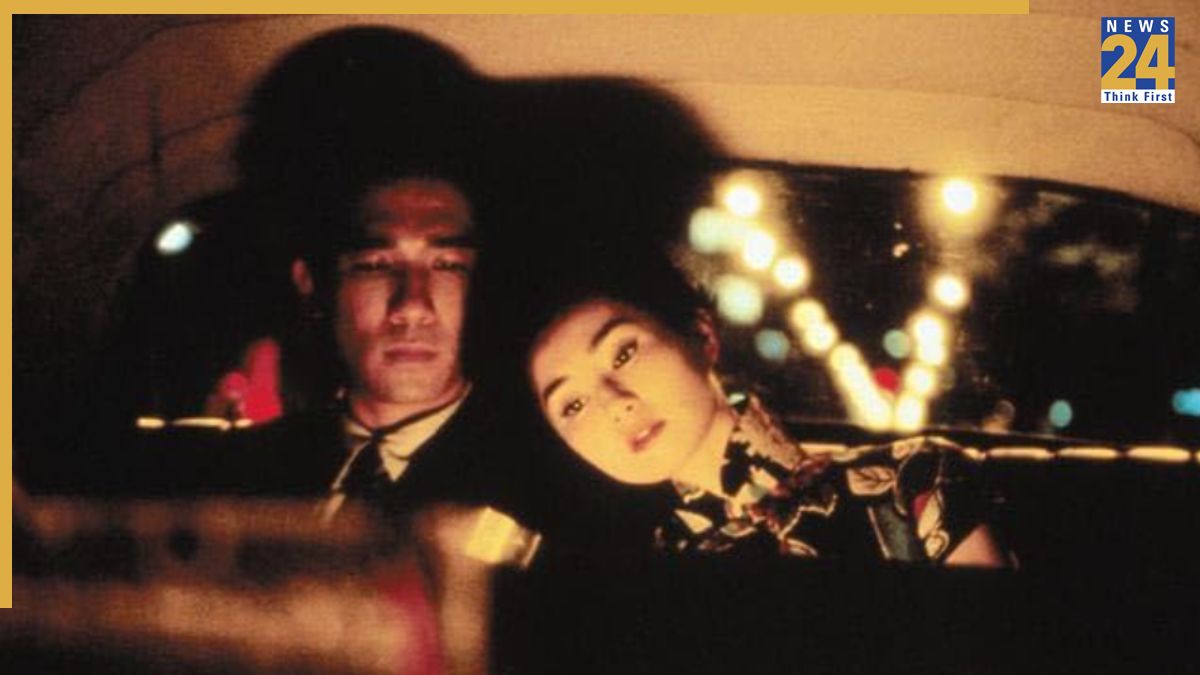
To begin at the start, Chow Mo-wan (Tony Leung Chiu-wai) and Su Li-zhen (Maggie Cheung) rent rooms in adjacent apartments. They are both married and as lonely as hell, and it doesn’t require herculean efforts to second-guess what will happen next.
Here, I must stop to talk about the colours of blinding beauty that the director splashes on the screen to show how pale a life can be even when surrounded by vibrant sounds and colours. While Su Li-zhen’s husband is perpetually away on business trips, she dolls up every evening to go out and buy her dinner. She doesn’t like to cook for herself.
Every move she makes is monitored by a gaggle of gossipy women in the cramped apartment who have nothing better to do than peep into the mysterious tragic life of the woman who has moved in the apartment next door.
“Looking like that to go out to buy dinner!” we hear a gossipy voice in the background.
One of this mysteriously enthralling movie’s talk-points is the way that extraneous characters are positioned as disembodied voices we hear from half-open doors while the camera focuses on the two protagonists. As if the outside world is just a prop for the couple. A necessary evil, if you will.
Su Li-zhen and Chow Mo-wan don’t take long to lean into each other’s empty hearts. At first, it’s just mutual comfort. Then it’s a lot more. And a lot more dangerous. The movement of their relationship is like a languorous symphony being played out at a muted unadorned pitch, whose sound can only be heard by the two people who willy nilly have fallen in love.
Director Wong Kar-wai values silences like no other great love story that I’ve seen. Every immortal cine-romance from David Lean’s Dr Zhivago to Sanjay Leela Bhansali’s Devdas has a love theme.
In The Mood For Love has the love theme playing in the heartbeats of the couple. The cinematography (credited to three cinematographers) captures the couple in mirror images or in rain soaked silhouettes, as if to suggest that it is not real, that the relationship will end abruptly, and the love will go on.
My most favourite sequence, and probably one of the most memorable moments of tragic love ever filmed, is when Su Li-zhen and Chow Mo-wan huddle up in a corner “rehearsing” for when they would have to part. As the play-parting gets deeper, we realise that this is the ending that awaits this passionate couple, an ending that we are never shown.
Some tragedies are better left unstated. Do we even deserve to be spectators in this sublime love story?