

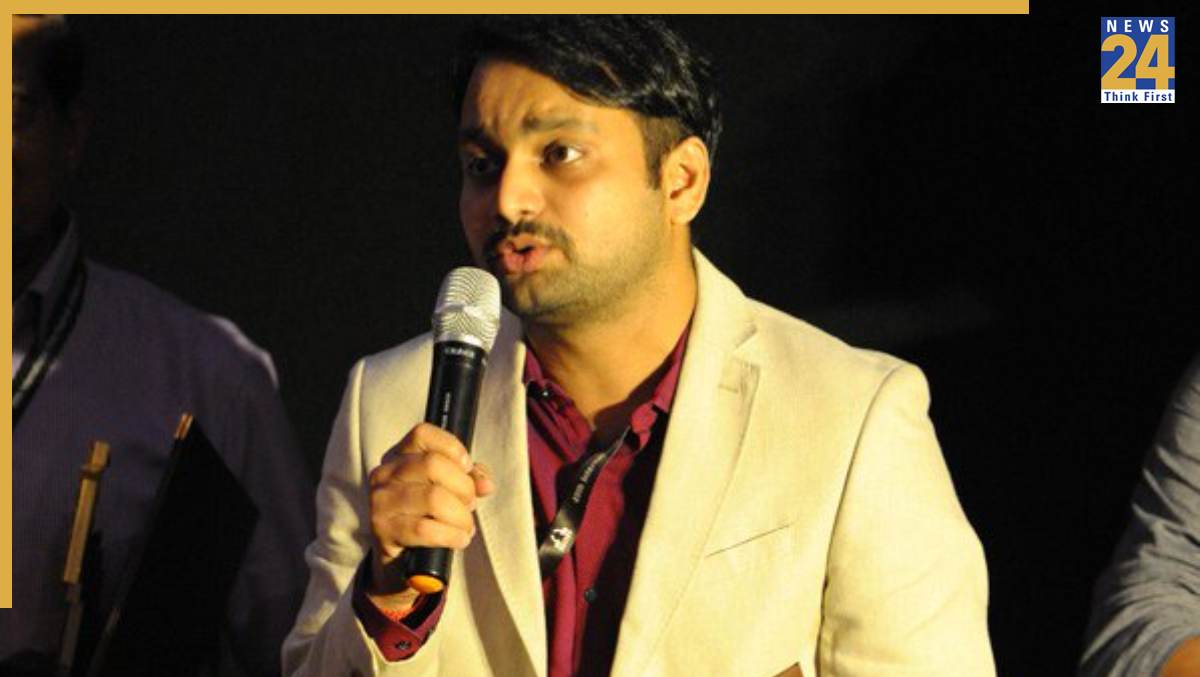


Filmmaker Aditya Suhas Jambhale believes cinema is more than just entertainment it’s a powerful medium for awareness, reform, and meaningful dialogue. Through his films like Article 370 and Baramulla, he explores political and social narratives with research-backed storytelling, aiming to spark reflection and debate among viewers.
Should political dramas like Article 370 and Baramulla be made?
Tomorrow it can be some other story, but political dramas should happen, because I feel that by doing this, the youth will be able to connect with politics. For any nation, the youth’s interest in politics is very, very essential. It is very important in India. If we don’t make political thrillers or political dramas or cinema out of fear, then there will be no healthy debate through cinema.
Should filmmakers be afraid to tell the truth?
No matter which side, which story, which struggle you want to talk about, there is no problem as long as it is research-backed. You can’t show a wrong thing. Don’t lie. It is very important to make political thrillers with truth. And if it is backed by real research, then it is perfect, like Article 370 was. So I think that is the need. I don’t think we need to get scared by political thrillers. If you go to a studio and say, I want to do this political thriller, they will get a little scared. They will say, don’t get involved in politics. Then there will be riots, then this will be banned, that will happen. So if we know the craft of making the politics balanced, then we should do that too.
Was Baramulla designed for OTT?
As a director also, I write for big screen. Because as a director, you are a creator, you want people to go to theatres and enjoy on big screens. But at the same time, there are different calculations that we know, that we should do. Because finally, it’s a market. There are different parameters that decide whether this film can go to theatres or not, what is the risk factor, what is not, what is the time, what is the slot. I feel that this was a very tough film. It took three years of hard work. This film was shot in 23 days. In 23 days, in Kashmir, not a single day was shot in Mumbai. In 23 days, in Kashmir, in minus -18 degrees, we shot this film. You can see the action, the treatment, it was a very tough shoot. And not just the shoot, also the post. This film was shot for three years. As soon as this film ended, Article 370 started. As soon as I started working on 370, as a director, I didn’t get much time for Baramulla. So there were a lot of complications in the post process.
But many times, I have seen on YouTube, many people have commented, why is it not releasing on theatres? For Baramulla, Netflix was the best collaboration possible. And we are really grateful for that. I think they loved the film. They are really excited for the film to reach so many nations. And because of this, our story, Kashmir’s story is reaching 190 countries. So I think that is great.
Should the purpose of cinema be more than entertainment?
Cinema elevates us, and I think it should be utilized. But with that comes a responsibility. When you are in a country like India, which is a diversified country, there is a lot of audience, there are different cultures. So with that comes a responsibility. Like in Article 370, I thought that I can’t make a mistake because the research should be very clear. Because I was talking about a very big national security issue. In Baramulla, there are two different stories which are separated by thirty years. And both have their own different religion, different cultural faith. But how their souls connect. I genuinely feel that cinema is for reform. And reform and awakening and revolution and a message, whether it is social or informative like how it was in Article 370. Yes, it has to be used. Otherwise, it will be just entertainment. It will not have a lineage. Even today, when we watch films which have an impact on us for generations, it is because there is some kind of reformative element in it. Some films about women empowerment. Some talk about some other social reform. So it is a very important tool. And if it is used, cinema becomes more meaningful. Genuinely.
Also Read: Aamir Khan & Raju Hirani’s Dadasaheb Phalke biopic shelved?