

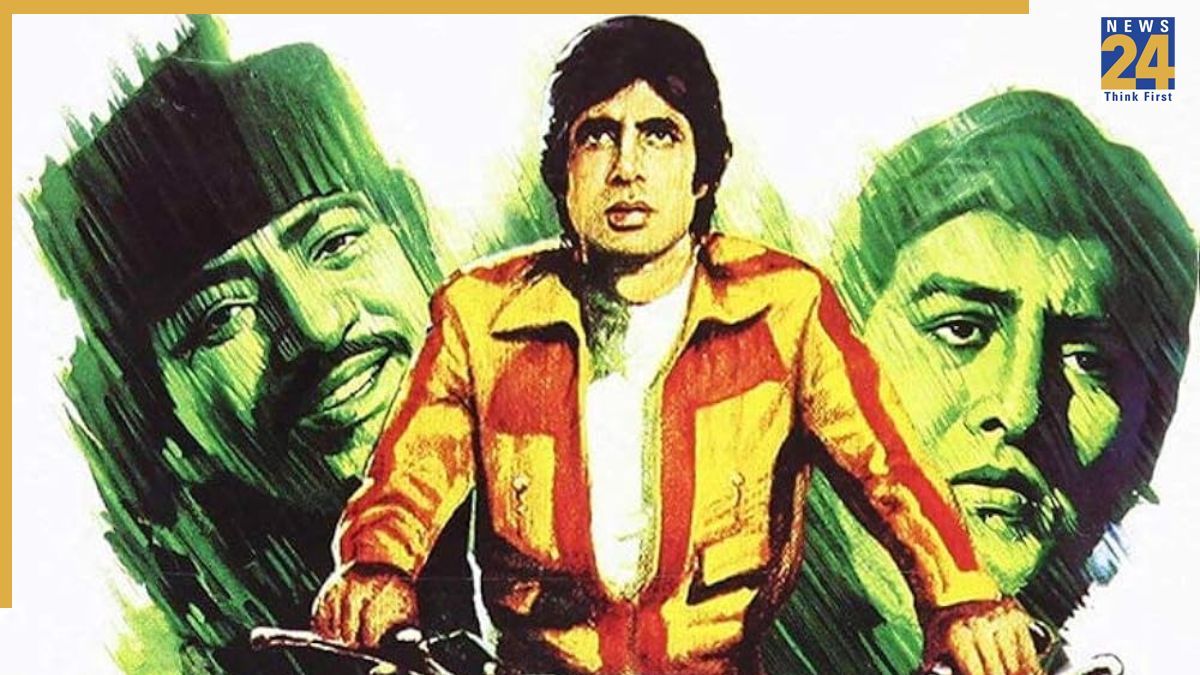


Prakash Mehra’s 1978 blockbuster ‘Muqaddar Ka Sikandar’ was the filmmaker’s affectionate homage to Sarat Chandra Devdas. This was a five-angled love tale about misplaced affections which seemed to have written itself out on the sets.
Bilawal (Amjad Khan) loves the stunning Kothewali Zohrabai (Rekha), who loves Sikandar (Amitabh Bachchan), who loves Kamna (Raakhee), who loves Vikas (Vinod Khanna). The film is today recalled mainly for Amitabh Bachchan’s powerhouse performance, and Rekha’s smouldering intensity as the kothewali who pines away to death for her beloved.
In fact, the Zohra-Sikandar-Kamna triangle was directly inspired by Saratchandra Chatterjee’s Devdas, though no one, least of all screenplay writer Vijay Kaul, was willing to attribute literary antecedents to a film as chalu as this. Nevertheless, Kamna and Zohrabai, as played by Raakhee and Rekha, seem direct descendants of Paro and Chandramukhi, respectively. Rekha was pretty unsure about her role. It was added to the film after almost the entire shooting was completed. She virtually fleshed out her character from nothing, using her Umrao Jaan role, get-up, makeup and mannerisms as reference points. The end result was mindblowing, to say the least.
The simmering chemistry between Amitabh Bachchan and Rekha ignited the stale tale. Kalyanji-Anandji, who were by now, nearing the end of their popular days, forged some gems for the charts, notably the Salaam-e-ishq Mujra, which brings the house down each time Rekha performs it on stage.
Everyone loves passionately in the film, whether it’s the villainous Bilawal or the intense Sikandar. All their crimes of excess are excused because everyone loves a lover. The only nambypamby character is Vikas (Vinod Khanna), who doesn’t seem to have the same grip on the grammar of love as the other characters.
Prakash Mehra’s other successful collaborations with Amitabh-Vinod Khanna, like Khoon Pasina and Hera Pheri, and even the solo Bachchan starrers, Zanjeer and Lawaaris, were predominantly action films. Muqaddar Ka Sikandar and later Sharaabi were the only two Bachchan-Mehra collaborations where love made the world go around. The long film, edited swiftly and efficiently, moves through the roads and highways of Mumbai, linking the Devdas theme to an urban setting. The ghetto and gallis were prominently created on studio floors. The film looked big in size and emotions.
The opening scenes where the junior Sikandar is shown to be slavishly devoted to the junior Kamna as she sits by the piano singing O saathi re tere bina bhi kya jeena in Asha Bhosle’s voice, are linked to the later version of the same song that Amitabh Bachchan sings on stage in Kishore Kumar’s voice, as a moving tribute to love. Rekha’s long death sequence mid-way through the film announces Amitabh Bachchan’s impending death. It’s almost as though the two characters were doomed from the start. Muqaddar Ka Sikandar was the tale of Sikandar’s muqaddar. It changed the muqaddar of the movie industry. It vied with the other Bachchan-Raakhee blockbuster that year, Yash Chopra’s Trishul, and emerged a bigger success in several centres.
Amitabh Bachchan recalls Prakash Mehra and Muqaddar Ka Sikandar with much affection. “I owe my career to Prakashji. If Zanjeer hadn’t happened to my career perhaps I would still be a struggler, who knows! I think Muqaddar Ka Sikandar came five years after Zanjeer. Prakashji was very passionate about all his films, this one was special. As you say there were elements of Devdas here, though we didn’t consciously play it out as Devdas. But yes, the them of star-crossed love was there between me and Raakheeji. She played my character’s mother in Prakashji’s Laawaris, though we didn’t have any scenes together. Do you know, whenever we worked together Raakheeji spoke in Bengali to one another. Muqaddar Ka Sikandar is also memorable for Kalyanji-Anandji’s music. O saathi re tere bina bhi kya jeena and of course, Zindagi toh bewafaa hai ek din thukrayegi, maut mehbooba hai apne saath lekar jayegi…Amazing!”