



Reported By: Deepak Mahaan
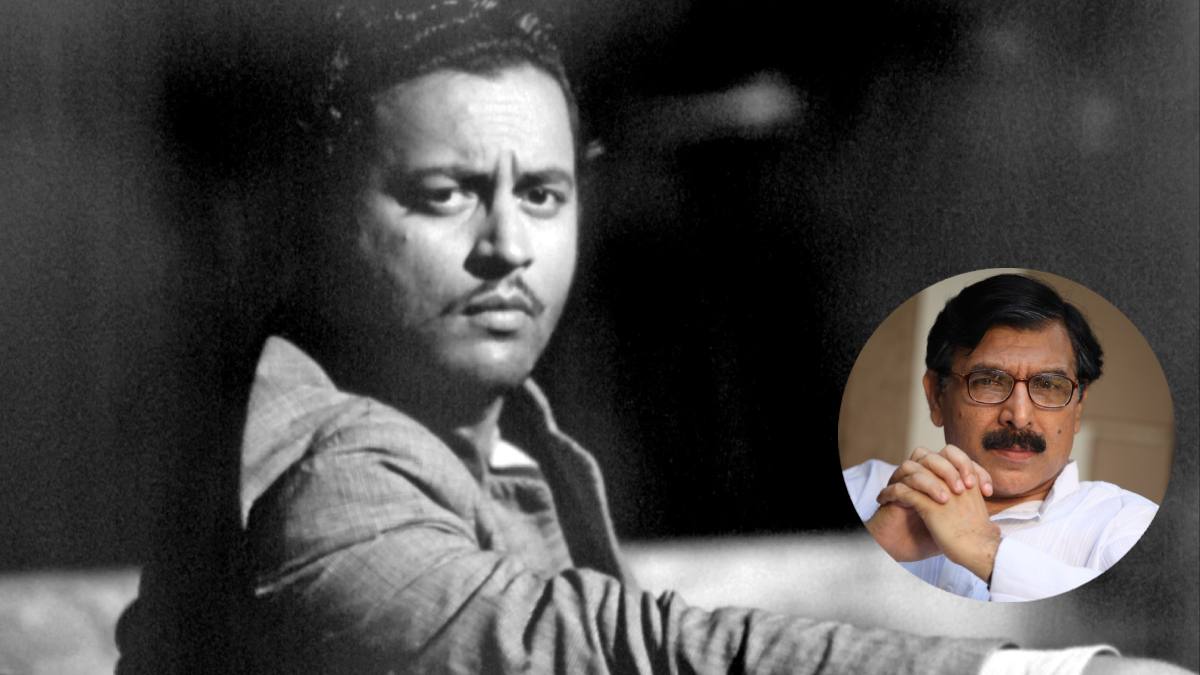
Vasanth Kumar Shivashankar Padukone’s change of name to Guru Dutt was probably destiny’s way of stamping its approval on his innate brilliance. In hindsight, that early rechristening seems prophetic as it marked the arrival of a rare, creative visionary whose sensitivity and empathy would leave an indelible mark on Indian cinema. In fact, it does seem that no other sobriquet could have been befitting the genius who gave us the finest bouquet of Indian films; unparalleled and unsurpassed in content, quality and feel till this day!
For Guru Dutt, movies were not mere recordings of reality but painting of “moving poems” on a celluloid canvas. Treating light, shadow, silence and song as his palette, he forged cinematic metaphors that resonate like timeless stanzas. Each frame lingers in our collective memory since our personal dilemmas, injuries and interactions have been painstakingly scripted to resonate universal truths. Greater the artist, the greater is the personalised interpretation imbued with rarest of insights and universality of an experience and Guru Dutt was one such master cinematic painter whose films are nothing short of inimitable blend of intimacy and grandeur.
It is difficult to give expanse to a gigantic talent in the space of a brief article. But suffice to say that Guru created images that are still viewed with reverence and just the elaboration upon a few scenes would show why Guru Dutt is held in such high esteem by the film fraternity. With all its pathos and heart breaks, “Pyaasa” would not have made such a telling impact in the end if poet Vijay had not been put up like a crucified Christ across the doorway. Haloed by a backlight as if crucified upon stakes of greed and indifference, the explosive “Yeh Duniya Agar Mil Bhi Jaaye To Kya Hai” shatters the veneer of success and fame.
The crescendo of the Sahir- SD Burman melody in Rafi Sahab’s mesmeric rendition is possibly one of the greatest songs of Indian cinema. However, its effect is heightened by brilliant shot taking whereby viewers are made aware of being the exploiters as well as victims of the system. It is to Guru Dutt’s credit that the poet, who lashes out at capitalism’s cruelty and abandons the commercial world, is admired despite his rejection of an unjust system. Although many have attributed this as a defeatist attitude, results proved Guru’s overruling of writer Abrar Alvi’s scene to script a new end was correct as most saw it as a powerful indictment of the system and a noble repudiation of injustice by a very strong and noble character.
Also Read: Shoojit Sircar On Guru Dutt: ‘He Was Going Through Such…’
Few cinematic moments rival the searing intimacy of the “twin souls” merging scene of “Kaagaz Ke Phool” that has become part of film folk lore. If it enunciates the affinity in more effective manner than words could ever do, it also is an extension of the unspoken but eloquent union of lovers that was conveyed in “Pyaasa” through Geeta Dutt’s hauntingly tender “Aaj Sajan Mohe Ang Laga Lo”. The ironic dissonance of lyrics, the fragile beauty of love and the poignant helplessness of individuals against the invisible barriers of society have been captured with a rare feeling and brilliance.
So, whether he was weaving romance, comedy, suspense, or action, Guru Dutt maintained an uncanny edge over his contemporaries. It is well known that even in films like “Sahib, Biwi aur Ghulam” and “Chaudhvin ka Chand” which he did not direct himself, the captivating song sequences were all his creations and they bear his unmistakable stamp of elegance, grace and breathtaking visual poetry.
It still baffles how a man who breathed rhythm and lyric in every cell could choose to exit the stage so soon. Whether the deadly mix of liquor and pills proved fatal or something deeper took him away at the age of 39, the tragedy lingers as hauntingly as the final shot of “Kagaz Ke Phool”. His life may have been brief yet it had an everlasting legacy in the blooming bouquet of films that echo with the bittersweet ache of what might have been.
His collaboration with cinematographer V.K. Murthy introduced the chiaroscuro lighting in Hindi films, evoking deep emotions through stark contrasts of light and shadow. This aesthetic standard remains a benchmark for filmmakers seeking to blend art-house sensibility with popular appeal. Even six decades after his demise, his fearless experimentations with form, theme and style continue to shape the language of Indian cinema, reminding filmmakers that true artistry lies at the intersection of light, song, and soul.
Many illustrious directors have graced the film screen after him but none has been able to tackle alienation, injustice and existential despair as sensitively as Guru Dutt did. Film director Mahesh Bhatt has held Dutt’s emotionally charged storytelling as setting a benchmark for truth-seeking in cinema but none has ever been able to surpass him in intensity and grace. Bhatt is correct as we still have no searing critique of capitalist exploitation (“Pyaasa”), the plight of the creative individual (“Kagaz Ke Phool”) or a filmmaker who explores the socio-economic fractures, personal disillusionments and denouements as deeply as Dutt did with films like “Mr & Mrs 55”, “Aar Paar” “Sahab Biwi Aur Ghulam”, “Chaudhvin ka Chand”.
Guru Dutt’s influence on modern Indian cinema and in creating a poetic cinematic language is worthy of a thesis. Pioneering camera as “writer,” he scripted musical moments through framing, pace and editing whereby film songs became integral devices of the script to advance the character and theme. No less than the skilled director Sudhir Mishra has acknowledged his gratitude for learning to “write using the camera” from Dutt. Indeed, the testament of Guru’s genius is that even after six decades, his cinema continues to speak, stir and inspire every aspiring filmmaker who dares to dream in light and shadow.
BRIEF:
A diehard humanist, Deepak Mahaan is a pioneering documentary filmmaker, author and columnist with many accolades and awards from around the world.
Also Read: Vicky Kaushal Eyed For Lead In Guru Dutt Biopic? Details Inside