
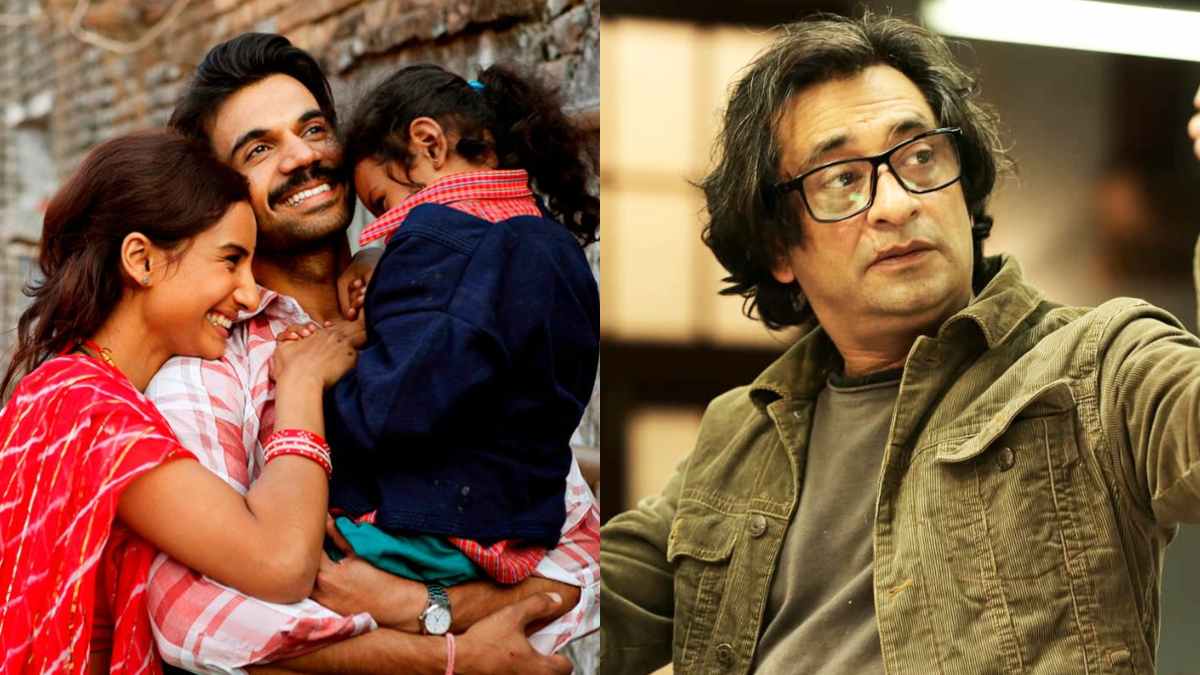


We’ve read a whole lot on the B.A. Pass Director Ajay Bahl’s walk-out of the Bhatts’ camp over the project City Lights, which clocks 11 years on May 30. What is not known to the public is the real reason why the fallout happened. The flash-point that severed Ajay Bahl’s relationship with the Bhatts was the film’s pretty Sikkimese model-turned-actress Geetanjali Thapa’s remuneration.
The problems started early. Ajay Bahl had no stress with Mahesh Bhatt. It was Mukesh who first declared that City Lights would have a budget of Rs 5 ½ crores. But when Ajay insisted on Raj Kumar Yadav for the film’s leading man, Mukesh further cut the budget as he felt Raj was not a box office pull. Ajay said it was impossible to make the film for any less money, as 80 per cent of the shooting had to be done on outdoor locations in Mumbai. But Mukesh wouldn’t budge over the budget. He kept tightening the purse strings until they became a noose around Ajay’s neck. Ajay decided that no noose was the good noose. He decided to opt out of the project and its stifling budgetary conditions before things got uglier.
The flashpoint between Mukesh Bhatt and Ajay was the leading lady Geetanjali Thapa’s remuneration. Mukesh wanted Geetanjali to share her remuneration for her next three films. This is when Ajay protested vehemently on his heroine’s behalf. He had brought in the leading lady and he found this kind of a financial demand on a semi-newcomer to be unreasonable.
Apparently, Mukesh Bhatt announced to Ajay Bahl that all the heroines who worked for the Bhatts signed a similar 3-film contract whereby 20 per cent of the remuneration for their 3 successive films went to Vishesh Films.
This is when the showdown happened. Ajay Bahl said he wouldn’t make the film for the Bhatts. And he walked out. There were other issues. For example, Ajay wanted to bring in 10 theatre actors for cameo roles, but Mukesh insisted they hire junior artists for those roles as they came much cheaper. But the breaking point was Geetanjali Thapa’s remuneration issue. Ajay found the demand on her to be exploitative. He walked out.
City Lights passed on to director Hansal Mehta. The Bhatts had never seen the work of Raj Kumar Yadav. Ajay Bahl arranged a DVD of Hansal Mehta’s Shahid for Mukesh and Mahesh Bhatt so that they could view Raj Kumar Yadav’s performing abilities. The Bhatts loved Raj and the film. They immediately agreed to let Ajay Bahl sign Raj Kumar Yadav for City Lights. Since they liked the film Shahid so much, the Bhatts decided to rope in Hansal as director after Ajay’s exit,” says the source.
Apparently, Ajay Bahl’s rapport with Mahesh Bhatt remains untarnished.
But it was Hansal Mehta who directed this haunting film.
Also Read: Hansal Mehta On 11 Years Of Citylights: ‘Where Storytelling Was Instinct…’
Citylights is Hansal Mehta’s ode to the invisible people, those people populating the pavements we often see from our moving cars. Mehta zooms in on the life of one such family. He sucks us into their lives with such intensity and passion that we never can bear ourselves to come out of their world even when their lives become unbearably hurtful. Citylights secretes a heart large enough to break in front of our eyes. As Deepak Singh (Rajkummar Rao, that ‘non-actor’ par excellence), his wife Rakhi (Patralekha) and his little daughter relocate from their little universe in Rajasthan to Mumbai, we watch in numbed silence their initiation into the world of disillusionment and heartbreak. As the happy little family’s world comes apart at the seams, Hansal Mehta’s camera captures them in unadorned stark colours. Citylights shoots its saga of the brutal cruelty of the concrete jungle with a candour that leaves us flummoxed and frozen. The plot as it thickens in the second half, doesn’t allow any elbow room for distractions. The protagonist’s journey into the heart of darkness is immediate and irreversible. What Hansal Mehta does is show us the fatality and finality of lives thrust into the bowels of the city.
Not that Mumbai is shown to be entirely lacking in kindness and compassion. Deepak and his wife encounter good people too. It’s not the people who are callous. It’s the daily grind that makes them self-centred and uncaring.
Hansal Mehta’s ode to the remorseless city is suffused in a lived-in pain. Only an artiste who has suffered the first-hand humiliation of rejection and compromise could do the sequence such as the one where Rakhi auditions for a bar girl’s job. Mehta furbishes such stark moments with astute and rigorous honesty. In that scene, Patralekha strips herself of dignity. She’s a revelation. But then, so is the actor (Vinod Rawat) who plays the bar owner. If she epitomizes the exploitative underbelly of the city, he too is a victim of a system that thrives on exploitation.
Moving completely away from the original material (Sean Ellis’ Metro Manila), Hansal Mehta constructed a vertiginous spiral of desolation and dejection. It is not easy to watch destiny destroy an innocent family’s simple will to survive. And yet, if there’s so much cruelty happening all around to the people who know no better life than the one that the city doles out to them, there are also bursts of empathy from the most unexpected places. The arrival of the character played by the very accomplished actor Manav Kaul signals the ‘thriller’ movement of the plot. Miraculously, Mehta never loses grip of the film’s exacerbated emotional quotient. He charts the migrant family’s craggy path to doom and destruction with a fatal inevitability. The film uses natural sounds and incidental images from everyday life to imbue a visceral vividness and vitality to everyday experiences.
Take a sequence like the one where, at the outset, Deepak and his wife are duped by fake house brokers. Here, as in other sections of the narrative, the victim and the perpetrator of deceit are both shown without prejudice.
A remarkable equilibrium runs through the moral fibre of the film. Ritesh Shah’s sensitive script doesn’t look for villains to make his protagonists look sympathetic.
Mehta could have avoided the wall-to-wall songs in the background. Though the music is evocative, it tends to overplay its welcome. This is a film that doesn’t depend on adornments for effect.
Also Read: Revisiting David Dhawan’s Biwi No 1 As It Clocks 26 Years
Most unadorned being the actors. Rajkummar Rao’s stark performance is no performance at all. To call what he does a ‘performance’ is an insult to what he does to his character. Just like the city that swallows the impoverished migrant, Rajkummar Rao disappears into his character, much like Balraj Sahni in Bimal Roy’s Do Bigha Zameen, the classic tale of the homeless migrant to which Hansal Mehta’s haunting saga of the indignity of poverty owes emotional allegiance. Patralekha, with her haunted eyes and evocative pain-lashed voice, is the find of the year.
The epic tale of the ‘invisible’ family’s struggle to survive in the city gets its power and strength from the seamless merger of body and soul that editor Apurva Asrani and sound designer Mandar Kulkarni achieve in the physical and emotional structure of the plot.
Gripping, glorious, and unforgettable, it is a shattering, life-changing experience.
Speaking on the experience of producing Citylights, Mahesh Bhatt tells Subhash K. Jha: “They say a drop of sincerity in a sea of hypocrisy is the ultimate act of rebellion. When I think of Citylights, I am reminded of that famous quote from Mahatma Gandhi: ‘A single drop of purity can cleanse an ocean of corruption.’ Citylights were made at a time when the environment in our production halls was completely box-office-driven. The objective was to soar with every film and achieve higher numbers. That’s when Citylight happened to us. It came as a suggestion from Fox. I remember Vijay Singh, who headed Fox, brought us the remake rights of the British film Metro Manila. It was a very moving film about migration. India was a country waking up to the peril and anguish of rural migration and the misery that followed when those innocent people from rural India came to the city and could not find the means to sustain their livelihood.
Rajkummar Rao suggested that the only director who could do justice to the film was Hansal Mehta. Hansal and I had worked together earlier on a film called Dil Pe Mat Le Yaar, in which he cast me opposite Tabu. It was a Manoj Bajpai film. I knew about Hansal and had heard about his rebellious streak, but I was astounded by his passion. What is unique about Hansal is that once he heard the narrative, he did not refer to the original work at all. He said, ‘No, I will resist seeing the film on which we are supposed to model our film.’ Then he went on to make Citylight in a way that reminded me of my days with Arth and Saaransh, where nothing but the fire of integrity and passion was our lifeblood. Rajkumar Rao and Patralekha dazzled me. Patralekha was stunning in her smaller role compared to Rajkumar’s pivotal role. However, Patralekha astounded me, and I still cannot recover from that scene where she goes to audition at the bar to help her husband deal with his economic woes. Another sensational discovery in Citylights was Manav Kaul. He had a small role, but he was staggering in his performance.”
Mahesh Bhatt has a special word of praise for the music of Citylights. “The music of the film was the most enjoyable experience. Jeet Ganguly gave his heart to it, and I discovered the greatest lyric writer of those times, Virag, who wrote some fantastic songs. The marketing of Citylight made my chest swell with pride, and I held my head high as we took the film everywhere. Everyone who saw the film said, ‘Oh, this reminds us of the vintage Mahesh Bhatt, the man who made Arth and Saaransh and those memorable films.’ They said I had degenerated to the likes of Murder and Jannat, etc. I found that very moving, and I am very happy that I could inspire the young, vibrant team to give their best. The integrity of the entire team was astounding. They would shoot outside our office but not come up to the air-conditioned office for lunch because Hansal said, ‘No, I want my technicians and actors to feel the sweat and grime of the city because that’s where I want to keep them.’ Hansal is indeed a unique filmmaker, and you have yet to see the best of him. Citylights is one oasis in the desert of movies we made solely to generate box-office numbers and did not have the soul that Citylights boasted of.”
Also Read: Phobia Turns 9: When Radhika Apte Had Her Audrey Hepburn Moment In A Psychological Thriller