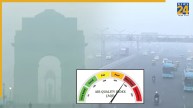

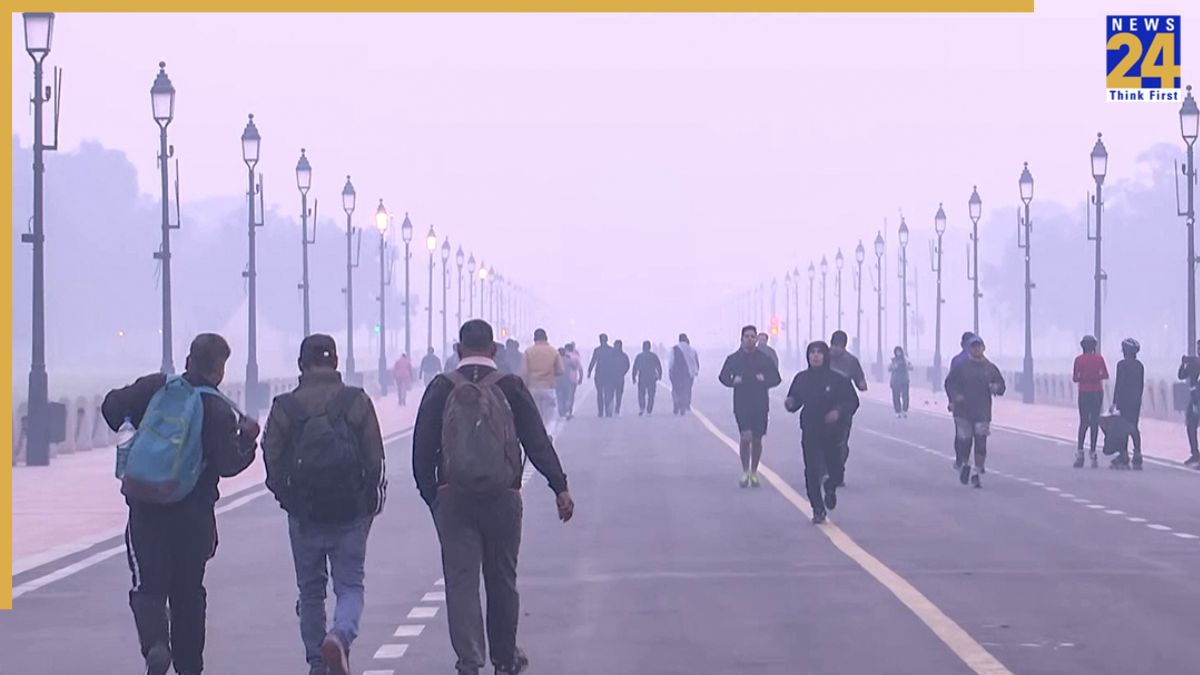


Delhi AQI: Delhi’s air quality continues to remain in the very poor category, with the Air Quality Index (AQI) recorded at 346 on Monday, November 10. The air quality in the national capital has stayed in the very poor range for over a week, with no signs of relief as winter conditions set in, trapping pollutants and worsening smog across the region.
According to data from the Central Pollution Control Board (CPCB), Delhi’s AQI was recorded at 346 on Sunday, at 6 am. The city has been struggling with worsening pollution levels for the past week, as dropping temperatures, stagnant winds, stubble burning, meteorological conditions and rising vehicular and industrial emissions continue to trap pollutants near the ground. Anand Vihar, Akshardham, AIIMS, and ITO reported a thick layer of smog as the AQI remains ‘severe’ in these areas.
#WATCH | Delhi | Latest visuals of toxic smog from the area around AIIMS. AQI around the area is 378, categorised as 'Very Poor' as per the Central Pollution Control Board (CPCB). pic.twitter.com/Jcjz6Gcf6N
— ANI (@ANI) November 10, 2025
---Advertisement---
Delhi AQI: Latest readings as of 6 am
In several areas of Delhi, AQI readings crossed the 400 mark, placing them in the ‘severe’ category. Bawana, Rohini, Anand Vihar are among the worst hit.
Bawana (412), Anand Vihar (379), Ashok Vihar (373), Chandni Chowk (365), Dwarka-Sector 8 (355), ITO (378), Jahangirpuri (394), Mundka (378), Narela (368), Patparganj (376), Punjabi Bagh (325), Pusa (348), Rohini (390), RK Puram (363), Shadipur (328), Wazirpur (397), Vivek Vihar (372), Alipur (361).
Notably, the air quality had deteriorated sharply on Sunday, November 9, with the city’s AQI climbing to 391 at 6 am, the highest level of the season so far. With winter now setting in, the AQI is expected to deteriorate further without aggressive mitigation measures.
Residents raise concern
Amid deteriorating air quality levels, residents in Delhi have raised concerns over the rising pollution and its impact on health. Residents have complained of respiratory problems, dry eyes, bleeding nose and difficulty in commuting due to the morning smog. Stage II of the Graded Response Action Plan (GRAP) remains in force across the NCR to curb pollution levels. Measures under this stage include a ban on the use of diesel generators (except for essential services), increased frequency of mechanised road cleaning and water sprinkling, and enhanced enforcement against open burning of waste.
People protest in Delhi
Earlier on Sunday, Delhi Police detained people protesting at India Gate, demanding that the government formulate policies to curb air pollution in the national capital. New Delhi district DCP Devesh Kumar Mahla said, “India Gate is not a protest site. The designated protest site in New Delhi is Jantar Mantar, as per the Supreme Court’s directions. That is why we have advised everyone to follow the guidelines. At India Gate, people come along with their families to enjoy, and it is a national monument. There are VIP routes here; we are deployed here regularly.”
Also Read: Forget Sarojini Nagar! Shop trendy woollens at these top 5 cheapest winter markets in Delhi