

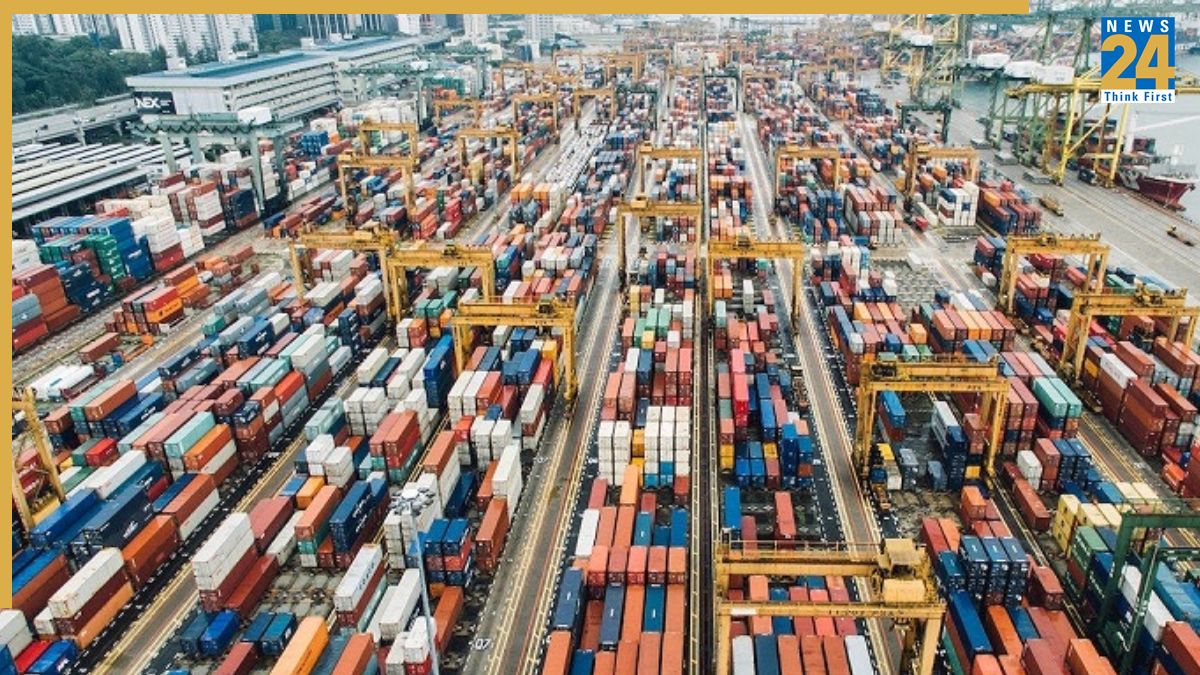


Vizhinjam International Seaport has achieved a major milestone by handling over 1 million TEUs of containers in just less than nine months of starting commercial operations. The port, which is operated by Adani Ports and Special Economic Zone (APSEZ), has not only surpassed the expected targets but also added a new chapter to India’s maritime sector map.
At the event organised to mark the milestone, Kerala Ports Minister V.N. Vasavan called it a proud moment for both India and Kerala. He also announced that the second phase of the port project will be launched soon, with priority given to the development of railway and road connectivity.
Commissioned on 3 December 2024, the port has handled over 460 vessels so far, including 26 ultra large container vessels (ULCVs). While only 30% capacity utilisation was expected for the first year, Vizhinjam has surpassed all estimates by reaching full capacity.
This unprecedented success has been driven by the strong synergy between the government, local communities and APSEZ. This partnership not only reflects the strategic location and structural strength of the port, but is also a testament to the management capabilities of the Adani Group. It also underlines India’s potential to challenge traditional maritime hubs like Colombo and Singapore.
Vizhinjam’s performance is at par with top ports globally. For instance, a record exchange of 10,576 TEUs was carried out on a single vessel called MSC Paloma, the largest container exchange ever in India.
According to the port management, this performance is a result of planned crane operations, better berth management and higher efficiency. These initiatives are taking Vizhinjam towards becoming the largest container terminal in South India.
Both location and technology have contributed significantly to the port’s success. It is located near the east-west sea routes, reducing transit time and cost. The natural depth of 18.5 metres allows even the largest ships to pass through without dredging, a rare feature.
Technologically, the port is equipped with 8 ship-to-shore cranes and 24 automated CRMG cranes. Its operations are equipped with AI and IoT based systems, ensuring real-time cargo tracking, faster operations and full automation for future growth.
Industry experts believe that the rapid growth of Vizhinjam is changing the nature of trade in India. The port has established direct connectivity to Europe, America, Africa and East Asia, eliminating the need for Indian goods to be sent through foreign transshipment hubs.
This change is making India self-reliant in the field of maritime logistics and reducing both cost and time for exporters and importers.
The port will become an important gateway for global trade for South India once EXIM (export-import) operations begin in the fourth quarter of this financial year.
From an environmental perspective too, Vizhinjam is emerging as a green port. The port adopts renewable energy solutions, eco-friendly infrastructure and strictly adheres to MoEFCC guidelines. It is spearheading India’s “Green Shipping Revolution”.
By incorporating energy efficiency, emission reduction and sustainable development into its operations, Vizhinjam is proving that growth and environmental responsibility can go hand in hand.
Crossing the 1 million TEUs mark is just the beginning. As EXIM operations and green initiatives grow, Vizhinjam will establish itself as an ideal deep-sea port model for the world, highlighting India’s ability to build futuristic world-class infrastructure.