

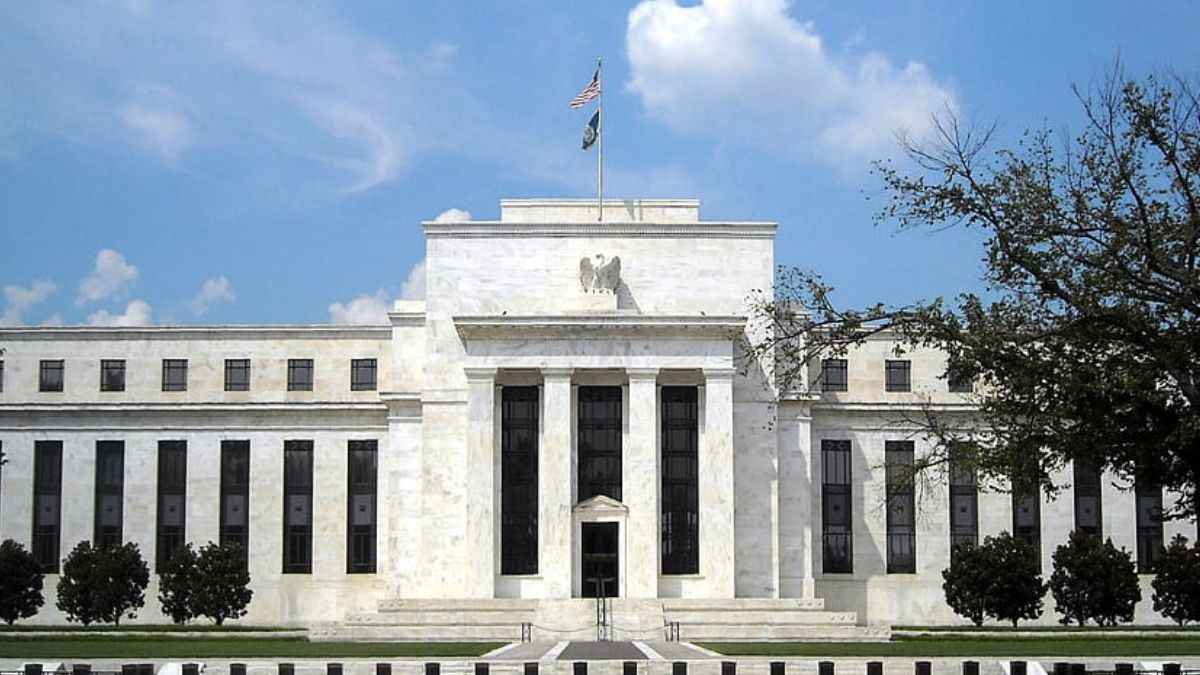


The US Federal Reserve (US Fed) announced its move to keep the interest rate cuts unchanged in 4.25-4.50% range in its second major decision under President Donald Trump’s second term. The decision was made after US Fed’s meeting.
The US Fed indicated that two quarter-point interest-rate cuts were likely later this year, the same median forecast as three months ago. The central bank also forecasted slower economic growth and higher inflation.
Last year, the central bank of the USA had cut the benchmark rate 3 times in a row. Furthermore, the rate cut got started in September, marking the first decrease in four years.
Moreover, investors continue to gauge how President Donald Trump’s tariff policies affect the economy and inflation.
Policymakers disagreed over the best course of action due to uncertainty surrounding the impact of Trump’s policies. This uncertainty has created a divide among members, making it challenging to determine the most effective way to address the potential effects of these policies.
The Federal Reserve announced that it will slow down the reduction of its large balance sheet, citing difficulties in evaluating market liquidity due to the ongoing stalemate in the US Congress over raising the government’s debt ceiling.
What US Fed Rate Cut Means For India’s Economy?
The Reserve Bank of India (RBI) might cut interest rates, making borrowing cheaper in India. Furthermore, the rate cut may weaken the US dollar, causing the Indian Rupee to rise in terms of value. However, a stable rate can lead to larger dollar-rupee divide. A stronger rupee makes imports cheaper, which helps to lower down the inflation in India.
When the US cuts interest rates, investors find investments in the US less appealing. However, now investments can be re-shifted to the world’s largest economy. Notably, the increased foreign investment can boost up the stock market sentiments, leading to a rally.