

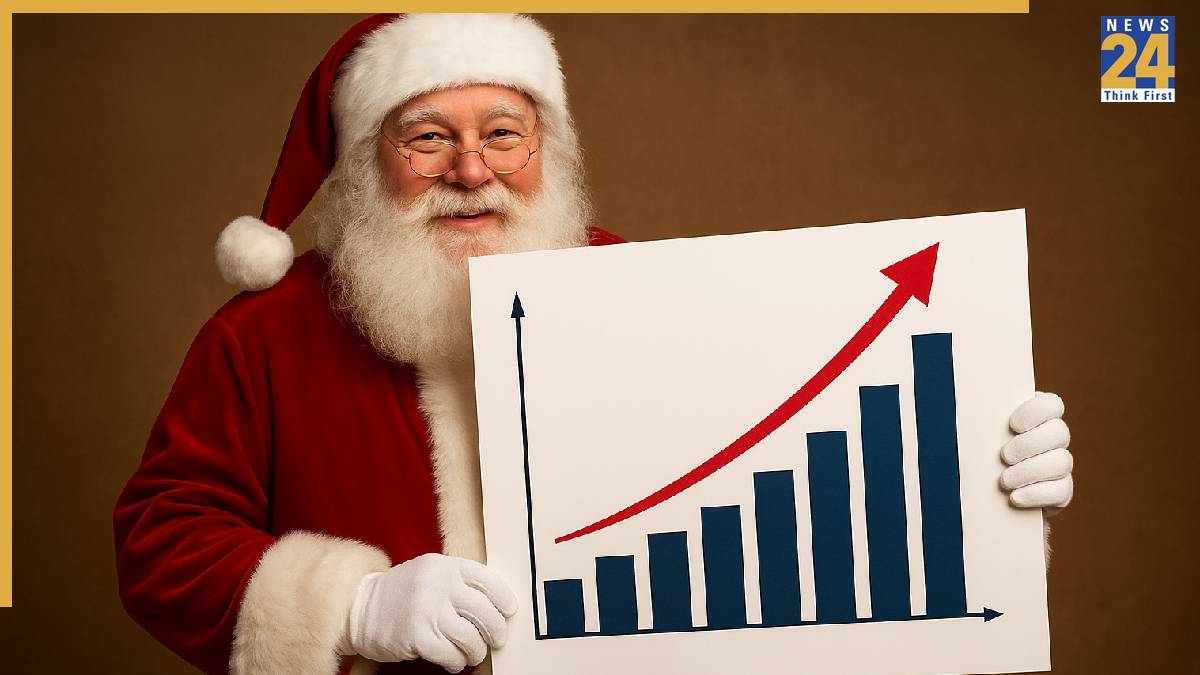


The phrase “Santa Claus Rally” was popularised by analyst Yale Hirsch in his Stock Trader’s Almanac around 1972. The term refers to a historical tendency for stock markets, particularly in the US, to gain during the last five trading days of December and the first two trading days of January. Empirical data shows that over time markets have showcased gains of about 1.3% over this period since 1950.
The story behind the Phenomenon
The phrase “Santa Claus Rally” was popularised by analyst Yale Hirsch in his Stock Trader’s Almanac around 1972. While the effect may date back to the 1920s, the consistent documentation began post-1950. Over the years, studies conducted to analyze the rally pattern showcase that the period has been able to give positive returns around 75%–80% of the time in US markets. The average positive return is modest, meaning while it happens frequently, it’s not dramatic.
Why It Might Happen again?
There is no single reason behind why this happens. Factors cited are:
- Portfolio rebalancing and year-end tax strategies drive buying.
- Holiday optimism and lower trading volume make markets more prone to small upward moves.
- End-of-the-year bonus deployment and fewer institutional traders may aid upward drift.
Chances of Its Occurrence
There are meagre chances of it appearing again and again. It has appeared in the market in an erratic manner. Santa Claus Rally may itself signal towards weaker market conditions or lower performance ahead. Analysts remain cautious; market conditions are different—inflation, interest rates, global uncertainty. For example, some recent pieces argue that a rally may not “come reliably,” so while possible, it’s not a guarantee.
What investors can learn
The Santa Claus Rally is a well-documented calendar effect: markets usually rise slightly in the final trading days of December and early January. Past occurrences do not guarantee that such an occurrence will appear again and again.
Historical Data
The period has historically shown higher stock prices about 79% of the time since 1950. The S&P 500 index has averaged a 1.3% gain during the time. The rally has often preceded significant market downturns. Notable examples include 1999, when a 4.0% decline during the Santa Claus Rally period was followed by the Dow’s 37.8% slide over the next 33 months, and 2007, which preceded the 2008 financial crisis.
Also Read: ITR Refund Delays: What causes the delay in your income tax refund? Know these five major reasons