

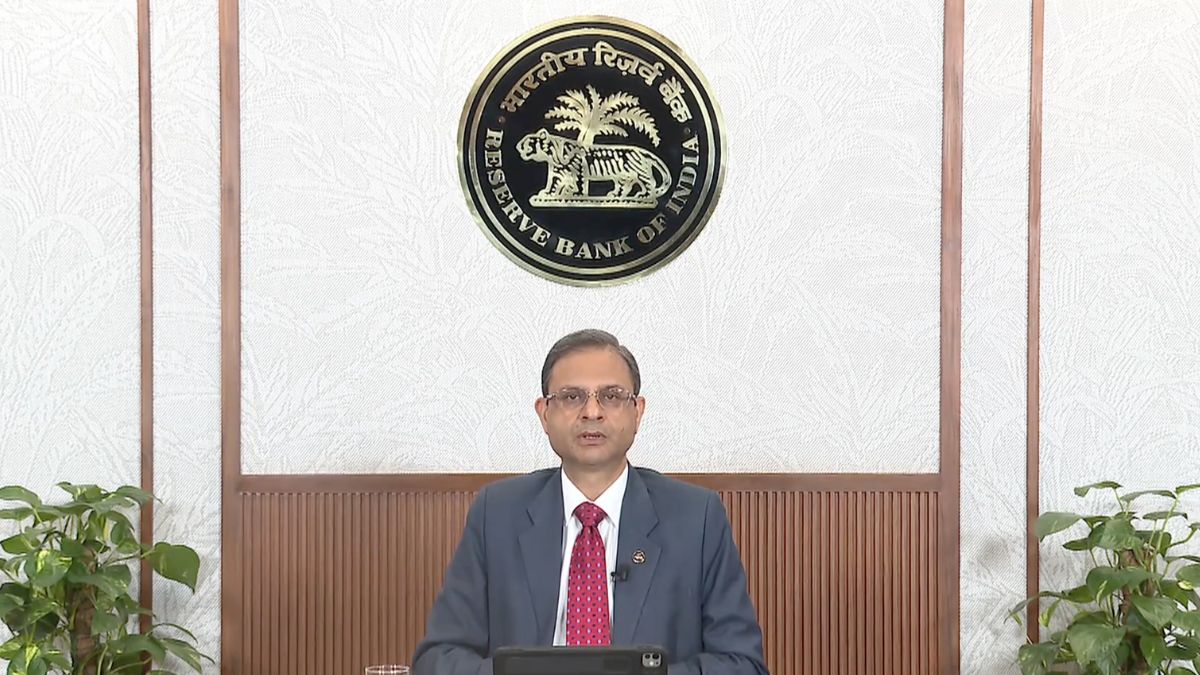


The Reserve Bank of India (RBI) has announced its first monetary policy of Fiscal Year (FY) 2025-26 today, April 9. The RBI has reduced the benchmark repo rate by 25 basis points (bps) to 6.00% from 6.25%. This decision was taken unanimously by the monetary policy committee (MPC). This is the second consecutive rate cut, with the last reduction done in February, this year. Moreover, the marginal standing facility rate stands at 6.25% as of now.
Between May 2020 and February 2025, the central bank has raised interest rates seven times, reaching 6.50%. Until February 2025, RBI had kept the benchmark rates unchanged since February 2023.
This meeting of the Monetary Policy Committee (MPC) was headed by the RBI Governor, Sanjay Malhotra. It was scheduled from April 7 to 9 and the credit policy decision are announced today, April 9. Notably, this was the second MPC meet under the leadership of Malhotra and also the second one after the Union Budget 2025-2026.
RBI Governor Malhotra unveiled the decision in the monetary policy statement on Wednesday. The MPC decided to change its policy stance to “accommodative”.
During his address, Malhotra pointed out towards the global uncertainties following the reciprocal tariffs announcement by US President Donald Trump.
Monetary Policy Statement by Shri Sanjay Malhotra, RBI Governor- April 09, 2025, 10 am https://t.co/0OCWkvfgc3
— ReserveBankOfIndia (@RBI) April 9, 2025
Reports and market experts had earlier predicted that RBI could slash the benchmark repo rate by 25-50 bps. This decision is likely to reduce the interest rate on loans for the middle class including the home loans, car loans etc.
RBI MPC: Reasons Behind MPC Decisions?
There was a wide split among economists on what the RBI may decide. While some experts advocated for a 50 basis points (bps) cut in the policy rate to support economic growth, others predicted a more cautious approach. The other expected a smaller 25 bps cut, citing concerns over inflation, which continues to be a key challenge for the central bank.
Moreover, central banks across the world are struggling to maintain economic stability amid rising uncertainties. One major concern is the recent tariff announcements by U.S. President Donald Trump. These protectionist measures have added pressure on the economies around the world, making it harder for central banks to strike a balance between supporting growth and controlling inflation.
ALSO READ: US Tariffs: India Will Emerge Stronger From Fallout, Says Union Minister Hardeep Puri