

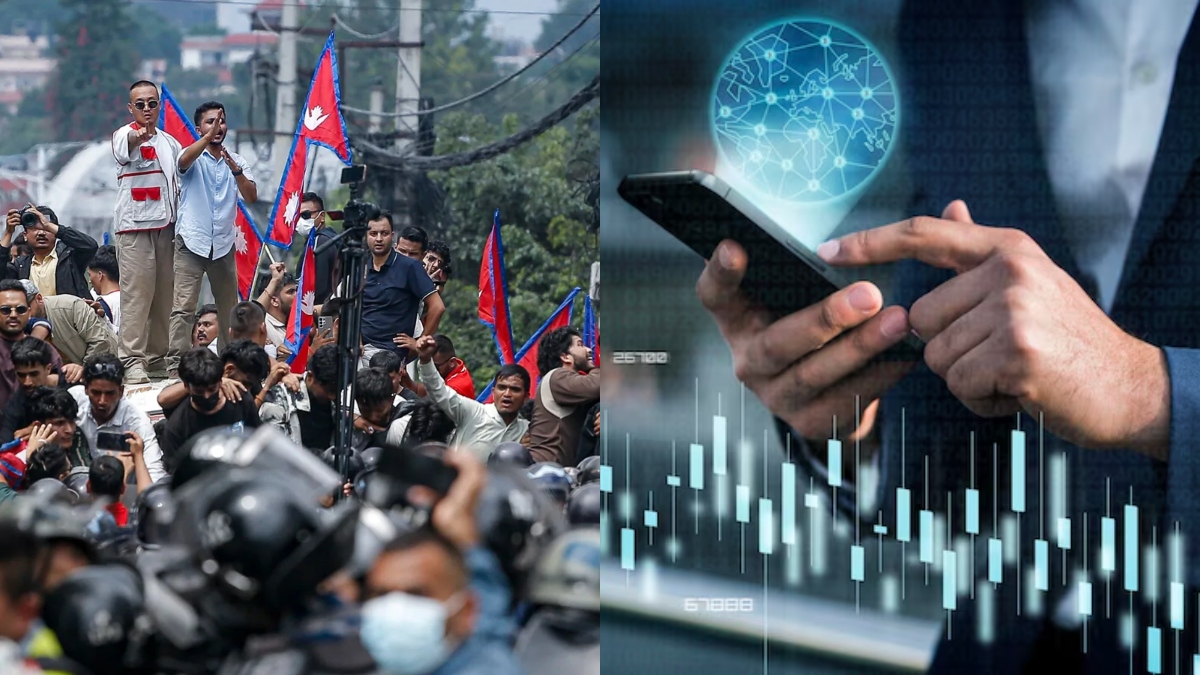


The deepening political crisis in Nepal is not limited to its internal politics, but its effects can also be serious for India. Due to open borders, strong trade relations and strategic partnership between the two countries, the current situation in Nepal is becoming challenging for India in terms of economic and security.
Impact on cross-border trade and logistics system
The most immediate impact of Nepal’s instability can be seen on cross-border trade. There are obstructions in movement on major routes like Raxaul-Birgunj and Sunauli-Bhairahawa. This is affecting the supply chain, due to which on the one hand Indian exporters are suffering losses, while on the other hand Nepali consumers may also have to face shortage of essential commodities.
Negative impact on investment environment
More than 150 Indian companies are operating in Nepal, which contribute more than 35 percent of the total foreign direct investment (FDI) coming into the country. But due to the current political instability, the investment environment is becoming uncertain. Companies working in sectors such as industry, telecom and energy may face situations like project delays and economic losses.
Clouds of crisis on cooperation in the energy sector
Energy cooperation between India and Nepal has increased significantly in recent years. Indian companies have invested heavily in cross-border hydropower projects, which are now surrounded by uncertainty due to political turmoil. If this instability continues for a long time, the progress of these projects may be hampered.
Increasing Chinese interference and threat to regional balance
Nepal’s internal instability is also creating geopolitical threats for India. Taking advantage of this situation, China can further strengthen its political and economic hold in Nepal. India has already been trying to balance China’s influence in the infrastructure and energy sector. But long-term instability can also lead to security risks on the India-Nepal border, such as smuggling and cross-border crimes. India has recently increased security vigilance on the border.
Impact on India’s sensitive economic sectors
Religious and general tourism to Nepal may also be affected, which could be a loss-making deal for India’s tourism industry. Additionally, Nepali citizens working in India and remittances coming through them may also be negatively affected. At the same time, bilateral connectivity projects such as railway networks and integrated check posts may also slow down or stop due to political uncertainty.
Treaties and cooperation: The way forward
Although the situation is complex, the possibilities of stability through diplomatic efforts are still alive. In a high-level meeting held in August 2025, there was an agreement to increase cooperation between the two countries. India continues to stick to its “Neighbor First” policy. At this time, India and Nepal should focus on shared interests like energy and infrastructure, so that the impact of this crisis can be reduced.
The ongoing political instability in Nepal can have a negative impact on India in many aspects such as trade, investment, tourism, remittance, energy cooperation and security. Both China and India are closely monitoring this situation and are engaged in protecting their sphere of influence. In such a situation, strong diplomatic initiatives will be necessary to maintain stability and balance in the future so that regional stability can be maintained in South Asia.
Also Read: Suspected ISIS Terrorist Azhar Danish Arrested In Ranchi’s Islamnagar