
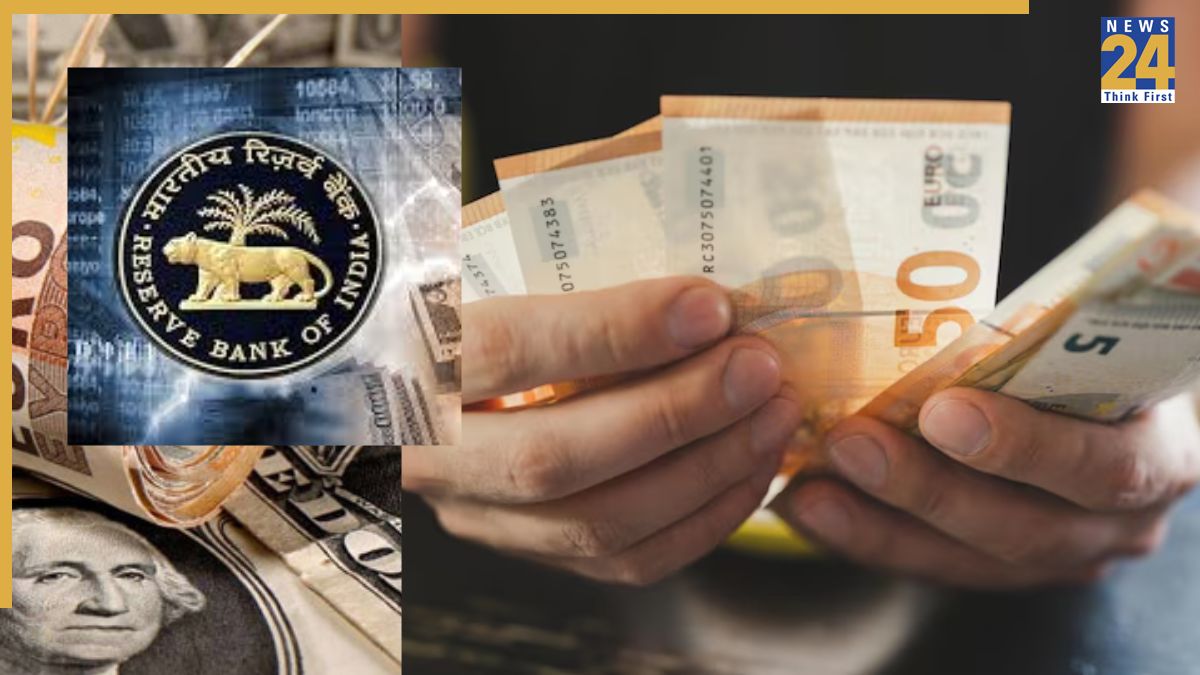


According to the latest weekly data released by the Reserve Bank of India (RBI), India’s foreign exchange reserves fell by $1.8 billion to $686.2 billion. This follows a previous drop of $4.4 billion in the last week of reporting. This reflects a continued pressure on the forex kitty over recent weeks, where the total kitty went down to $688.1 billion as per the official report. The fall happened because both foreign currency assets and gold reserves decreased.
For several weeks now, India’s overall forex reserves have mostly been moving downward.
Significant factor
Foreign currency assets are the biggest part of India’s forex reserves, and they were a major reason for the overall drop. These assets fell by $3.5 billion and came down to $557 billion in the latest week, according to the RBI’s Weekly Statistical Supplement.
What happened to Gold reserves?
In contrast, gold reserves rose by USD 1.613 billion to USD 105.795 billion, supported by a global surge in gold prices amid heightened geopolitical uncertainty and strong safe-haven demand. The price of gold has been on a sharp uptrend for months.
What about the other components?
Apart from the gold, Special Drawing Rights (SDRs) and the Reserve position in the International Monetary Fund (IMF) also contributed to the nation’s foreign exchange arsenal. SDRs increased by USD 63 million to USD 18.628 billion, while India’s reserve position with the IMF grew by USD 16 million to USD 4.772 billion.
Overall, despite recent weekly declines, India’s forex reserves have grown by about USD 48 billion in 2025, following increases of USD 20 billion in 2024 and USD 58 billion in 2023.
What are foreign exchange reserves?
Foreign exchange reserves are assets kept by a country’s central bank. Most of these reserves are held in major currencies like the US dollar, while smaller amounts are kept in the euro, yen, and pound.
India added around $58 billion to its foreign exchange reserves in 2023, contrasting with a cumulative decline of $71 billion in 2022. Whereas, in 2024, the reserves rose by a little over $20 billion.
What RBI do?
The RBI sometimes sells dollars to control money flow and stop the rupee from falling too much. It buys dollars when the rupee is strong and sells them when the rupee starts to weaken.